 Dwi Wanna
On May 12, 2026, TikTok officially shifted from a platform of pure entertainment to a formidable player in the travel distribution ecosystem with the launch of TikTok GO in the United States. This in-app booking feature allows users to discover, research, and reserve hotels, tours, and attractions without ever leaving the TikTok ecosystem. For hoteliers, this development represents a seismic shift in how discovery—the "dreaming" phase of travel—is monetized.
However, beneath the hype of viral travel content lies a nuanced reality: TikTok GO is not a new direct distribution channel, but rather a powerful, high-reach discovery layer built upon the existing infrastructure of Online Travel Agencies (OTAs). As the industry adapts to this new reality, understanding the distinction between discovery and distribution has never been more critical.
What Is TikTok GO for Hotels?
TikTok GO functions as an integrated booking engine embedded directly into the TikTok app. By leveraging location tagging and video discovery, the feature allows users to move seamlessly from watching a travel influencer’s tour of a boutique hotel to checking real-time availability and finalizing a booking.
The Mechanics of the Feature
The user experience is designed for friction-free conversion. When a user interacts with a video tagged with a hotel or experience, they are redirected to a native landing page within the app. Here, they can view property details, read reviews, and select dates. Once a user clicks "book," the transaction is processed by a partner OTA.
The scale of this operation is significant. With over 200 million monthly active users in the United States alone, TikTok provides a top-of-funnel reach that legacy metasearch engines simply cannot match. Adam Presser, CEO of the TikTok USDS Joint Venture, encapsulated the platform’s vision at launch: "TikTok GO connects that moment of inspiration directly to the businesses behind it."
Chronology: From Experimental Beta to National Launch
The path to the May 2026 launch was not an overnight endeavor. TikTok spent significant time stress-testing the conversion funnel to ensure that the "inspiration-to-booking" loop was seamless.
- 2025: The Testing Phase: Recognizing the potential for travel commerce, TikTok initiated a quiet trial with Booking.com. This allowed a select subset of US users to book accommodations directly within the app. By treating these early tests as a closed-loop experiment, TikTok ensured that the backend infrastructure—integrations, payment security, and OTA synchronization—was battle-tested before the public release.
- 2025: The Japanese Precedent: Japan served as the critical proving ground for TikTok’s travel ambitions. The platform’s performance in the Japanese market, where it partnered with giants like Rakuten Travel and Agoda, offered a roadmap for global expansion.
- May 12, 2026: Official US Launch: TikTok GO officially went live in the US, accompanied by a robust list of partners including Expedia, Trip.com, Viator, GetYourGuide, and Tiqets.
Supporting Data: The Japan Experience
The success of TikTok GO in Japan provides a compelling look at the future of the platform. Over the six months leading up to its US launch, Japan saw a 270% increase in bookings through the feature.
Beyond the raw volume, the data revealed a fascinating trend: the platform became a conduit for cross-border tourism. Users from Thailand, Indonesia, and the United States began utilizing the feature to book Japanese properties, proving that TikTok GO acts as a powerful demand generator that transcends geographical boundaries. For hoteliers, this suggests that visibility on TikTok is not just a local marketing win, but a potential entry point for international travelers.
Implications for Hoteliers: A New Strategic Reality
For property owners and revenue managers, the primary takeaway is that TikTok GO is a discovery surface, not a distribution channel.
The OTA Plumbing Problem
It is vital for hoteliers to understand that there is no direct connection between a hotel’s Property Management System (PMS) and TikTok GO. The entire ecosystem is powered by third-party OTAs. If a hotel does not have a robust, updated, and active listing with a partner OTA like Expedia or Booking.com, they effectively do not exist on TikTok GO.

This creates a "garbage in, garbage out" scenario. If your OTA content—photography, room descriptions, and rate parity—is subpar, TikTok’s algorithm will amplify that weakness to millions of users.
The Financial Math
Because TikTok GO utilizes OTA inventory, the reservations arrive with the standard commission structures and limitations associated with third-party bookings. You are not bypassing the middleman; you are paying the middleman to be featured on the world’s most popular social platform.
Consequently, the goal for hotels should be twofold:
- Optimize the OTA Feed: Ensure your inventory, imagery, and pricing on partner sites are pristine.
- The "Second Stay" Conversion: View the first booking via TikTok as an acquisition cost. Once the guest arrives at the property, it is the hotel’s responsibility to provide a superior experience, capture their data, and incentivize them to book directly for their next visit.
The Role of Creators: The New Sales Force
The human element is what differentiates TikTok GO from traditional search engines. Creators are the lifeblood of this feature. Because the platform rewards authentic, localized storytelling, creators who feature hotels now have a direct financial stake in the booking process through commissions and campaign rewards.
Moriya Rockman, Chief of Marketing at Smiling House Luxury Global, notes the importance of this shift: "Utilizing behind-the-scenes footage, local attractions, and special amenities, along with leveraging user-generated content and influencer partnerships, can significantly enhance reach and authenticity. While TikTok’s user base skews younger, making it more effective for brand awareness rather than direct conversions, its importance in an integrated digital marketing strategy shouldn’t be underestimated."
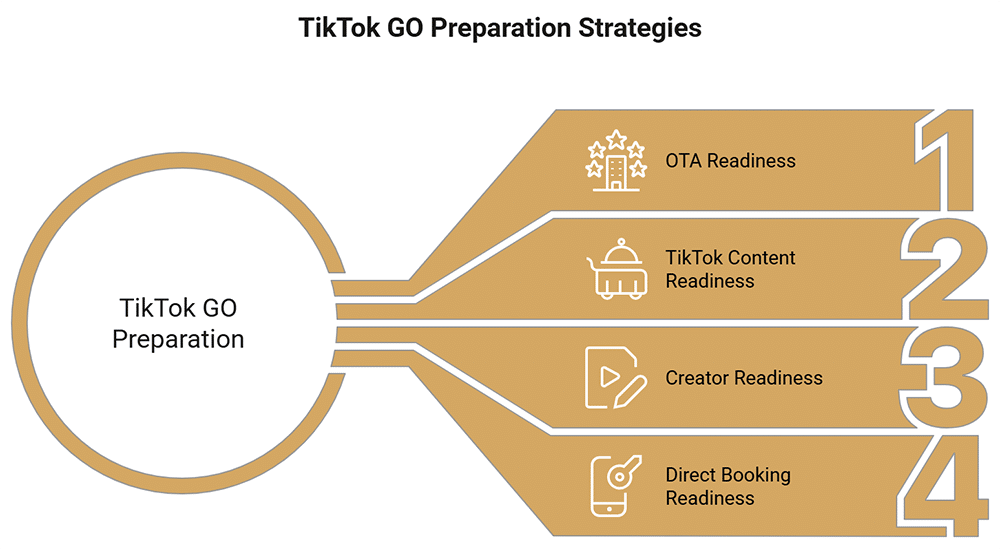
Hotels should stop judging influencers solely on "vanity metrics" like likes and views. The new KPI is conversion. Identifying creators who align with your specific guest persona—be it family travelers, luxury seekers, or adventure tourists—is the key to ensuring that the traffic generated by TikTok is high-intent traffic.
Risk Assessment: Is Your Hotel Prepared?
While the potential for increased bookings is high, the risks are equally pronounced:
- Loss of Guest Data: As with all OTA bookings, the hotel is often cut off from the guest’s primary contact information, making it difficult to nurture loyalty.
- Limited Creative Control: You cannot "design" your TikTok GO page. The content is pulled from your OTA listings and organic TikTok videos. If the platform pulls a negative or low-quality review to highlight on your landing page, you have little recourse.
- Brand Mismatch: A viral video can sometimes attract the wrong guest segment—travelers who are looking for a party atmosphere, for instance, when your property is a quiet wellness retreat. This can lead to poor reviews and operational strain.
Conclusion: How to Win in the Age of TikTok GO
The emergence of TikTok GO signals that the future of travel discovery is visual, social, and immediate. Hotels that wait for the platform to mature before taking action risk losing significant "share of voice" to competitors who are already leaning into influencer partnerships and OTA content optimization.
To prepare, hotels should audit their presence across the six primary partner OTAs (Booking.com, Expedia, Trip.com, Viator, GetYourGuide, and Tiqets) to ensure that every asset—from room photos to policy language—is optimized for a mobile-first, high-conversion environment.
Ultimately, your strategy should be simple: Use TikTok GO to capture the dream, and use your on-property experience to capture the loyalty. By treating the platform as a top-of-funnel discovery tool rather than a replacement for your direct booking engine, you can leverage the power of 200 million American users to drive your business forward without sacrificing the long-term goal of owning the guest relationship.


 Evan Lee Salim
 Iffa Jayyana