Iffa Jayyana
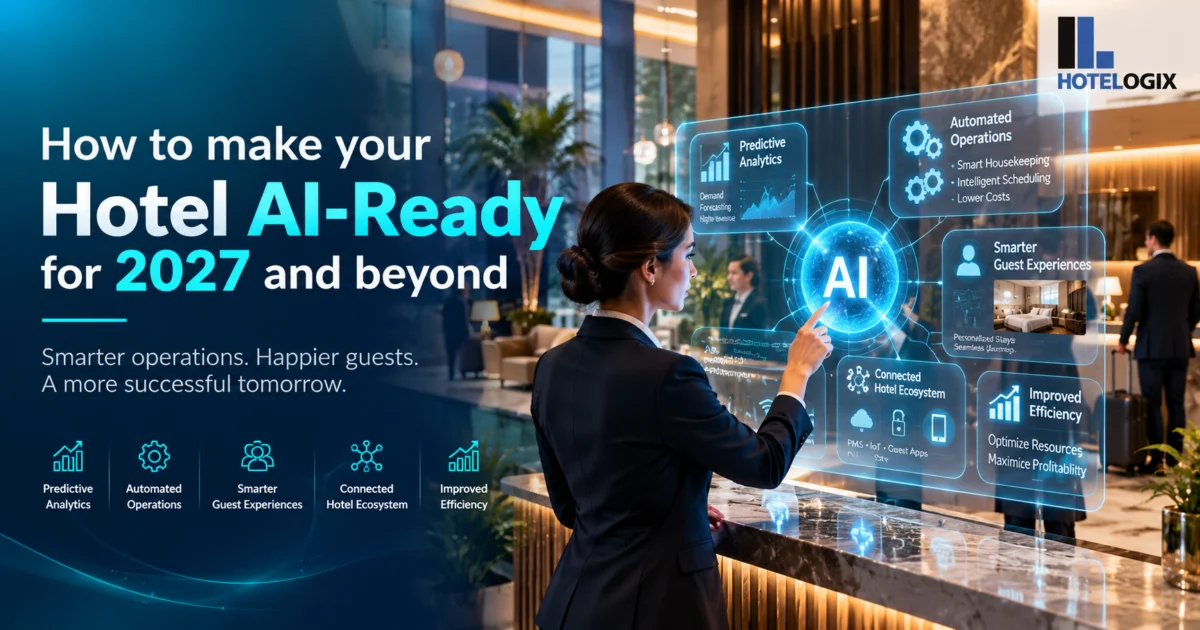
Artificial Intelligence (AI) has transcended the realm of science fiction to become the defining operational layer of the modern hospitality industry. With approximately 50% of hotels already integrating AI into their daily workflows, the technology is no longer a "nice-to-have" luxury; it is becoming a foundational necessity. As global adoption rates climb, hoteliers are increasingly leveraging AI to master demand forecasting, dynamic rate optimization, hyper-personalized guest offers, and the automation of labor-intensive tasks.
However, a critical question remains for property owners and management groups: Is your hotel merely "experimenting" with AI, or is it truly AI-ready? The difference between successful implementation and a costly technological misstep lies in your infrastructure. This article explores the roadmap to building an AI-ready foundation, ensuring your property is prepared for an era where AI dictates not only how you operate but how you are discovered by the next generation of travelers.
The Myth of the "AI-Ready" Hotel
Many hoteliers mistakenly believe that deploying a chatbot on their website constitutes an AI strategy. This is a fundamental misconception. True AI readiness requires a fundamental shift in how your technology stack communicates. If your property remains shackled by disconnected, disparate systems, reliance on manual spreadsheets, inconsistent guest data silos, and outdated interfaces, your AI initiatives will inevitably underperform.
An AI-ready hotel is an intelligent ecosystem where the Property Management System (PMS), Revenue Management System (RMS), Customer Relationship Management (CRM), booking engines, and workforce tools function as a single, unified organism. Without a cloud-native infrastructure that facilitates real-time data sharing and open, secure integrations, the data feeding your AI will be fragmented—and in the world of machine learning, poor data quality yields poor results.
Step 1: The Foundation of Cloud-Native Core Systems
The journey to AI readiness begins with a modern, cloud-based PMS. Unlike legacy, on-premise systems, cloud-native platforms offer the agility and scalability required for enterprise-grade AI applications.
Cloud architecture is non-negotiable for AI use cases that rely on real-time data. Whether it is demand forecasting, dynamic room rate adjustments, or personalized upselling, these processes depend on information that fluctuates throughout the day. For example, consider an AI-driven upselling engine. To function correctly, it must cross-reference a guest’s historical preferences with current room availability and the specific hotel policy for that guest segment. If the PMS data is delayed or incomplete, the recommendation will either arrive too late or fail to resonate, resulting in significant lost revenue.
Step 2: Architecting an Open Integration Ecosystem
Successful AI deployment hinges on the seamless, secure, and bidirectional flow of information across departmental lines. This is achieved through well-documented, robust Application Programming Interfaces (APIs).
Your PMS must act as the "source of truth," pushing and pulling data to specialized AI tools. For instance, when a guest submits an early check-in request, an intelligent messaging platform should trigger an AI assistant to verify the reservation, cross-reference it with real-time housekeeping status, and check the hotel’s policy—all within seconds. If the request is cleared, the system automatically updates the status and notifies the appropriate department. This level of automation doesn’t just improve efficiency; it elevates the guest experience by removing the friction of manual administrative back-and-forth.
Step 3: Achieving Data Hygiene and Semantic Consistency
AI output is only as dependable as the data behind it. While most hotels are data-rich, they are often "information poor" due to fragmented, duplicated, or inconsistently defined datasets.
To overcome this, hoteliers must introduce a semantic layer that ensures all systems—from the CRM to the data warehouse—interpret core business terms in the same way. What defines a "no-show"? How is a "loyalty guest" segmented? By standardizing definitions across all your technology vendors, you prevent the AI from producing contradictory insights. This consistency is particularly vital for hotel groups managing multiple properties, where data discrepancies can lead to fractured brand standards and inaccurate reporting.
Step 4: Defining Governance and Agent Permissions
Not all AI agents should have the same level of access. Governance is a cornerstone of responsible AI deployment. You must establish a tiered permission structure:
- Read-Only Access: For agents handling guest inquiries and general information.
- Operational Access: For agents capable of modifying bookings or scheduling services.
- Financial Access: For highly restricted agents authorized to process payments or issue refunds.
By strictly defining these permissions, you mitigate the risks of unauthorized data access or accidental financial errors.
Step 5: The "Shadow Mode" Pilot Phase
Before fully automating any process, run a "controlled pilot" or "shadow mode." In this stage, the AI processes real-time data and generates recommendations, but your human staff must review the output before any action is taken. This allows you to audit the AI’s logic, identify potential biases, and ensure that the system’s output aligns with your hotel’s service philosophy. Only after the AI consistently demonstrates accuracy should you move to full, autonomous execution.
Step 6: Strengthening the Cybersecurity Posture
As AI increases the volume of data moving through your ecosystem, your cybersecurity posture must be equally robust. Your infrastructure should include end-to-end encryption, regular penetration testing, and multi-factor authentication (MFA) for all API endpoints. In the hospitality sector, where guest privacy is a core brand asset, AI security is not an IT issue; it is a guest-trust issue.
Step 7: Training, Culture, and Human-AI Synergy
The most common mistake hoteliers make is viewing AI as a replacement for staff. In reality, AI is a tool for empowerment. Training your team to use these new systems is essential. Staff must understand not only how to interact with AI, but also where human judgment remains paramount—such as in complex service recovery situations or high-touch concierge interactions. By framing AI as a way to "do more in less time," you can foster a culture of technological adoption rather than fear.
Beyond Internal Operations: AEO and AAO
Once your internal house is in order, you must pivot toward how you are discovered in an AI-dominated search landscape. This requires a focus on Answer Engine Optimization (AEO) and AI Agent Optimization (AAO).
Answer Engine Optimization (AEO)
Travelers are increasingly skipping traditional search engines in favor of AI-powered conversational tools like ChatGPT, Claude, and Google AI Overviews. If your content is not structured for these "answer engines," your hotel will be invisible to a growing segment of the market. AEO involves creating high-quality, structured data that makes it easy for AI to "read" your hotel’s unique selling propositions, amenities, and policies. When a traveler asks an AI, "Which hotel in [City] is best for families and offers a shuttle service?", your hotel must be the one the AI cites.
AI Agent Optimization (AAO)
While AEO helps you be found, AAO focuses on the ability of an autonomous AI agent to perform a task. If a traveler asks an AI agent to "book a room at [Hotel] for these dates," the agent needs the API connectivity to interact with your booking engine directly. This requires your systems to be "agent-ready," allowing AI to check availability, process the transaction, and confirm the booking without a human intermediary.
Implications for the Future
The shift toward AI is irreversible. By 2027, the hotels that have invested in a robust, cloud-native technology foundation will hold a distinct competitive advantage. They will be the properties that offer the most personalized service, the most efficient operations, and the highest visibility in AI-driven search environments.
For the independent hotelier, the first step is a dependable, cloud-based PMS. For the large hotel group, it is the creation of a centralized, data-driven platform that balances corporate oversight with local property autonomy. Regardless of your size, the message is clear: The AI revolution is here. The question is no longer whether you should adopt AI, but whether you have the structural integrity to support it. Those who prioritize their data architecture and integration strategy today will lead the market tomorrow.


 Evan Lee Salim

 Jia Lissa