 Basiran
In the modern hospitality industry, the Meetings, Incentives, Conferences, and Exhibitions (MICE) segment is far more than a secondary revenue stream—it is a critical pillar of commercial stability. Unlike transient leisure guests, MICE business provides high-volume, multi-departmental revenue that can anchor a property’s performance during mid-week troughs and low seasons. However, the days of relying on static brochures and traditional sales calls are over. Today, MICE hotel marketing is a sophisticated digital-first discipline that requires precision, speed, and a data-driven approach to win over increasingly discerning corporate planners.
The Anatomy of MICE: Defining the Segment
At its core, MICE is an acronym representing the four pillars of the business events sector: Meetings, Incentives, Conferences, and Exhibitions (sometimes referred to as Conventions and Events). For a hotelier, understanding these segments is not merely an exercise in terminology; it is the first step toward effective market segmentation.
- Meetings: Typically smaller, high-frequency events such as board gatherings, training workshops, and client seminars. These require high-speed connectivity, breakout spaces, and consistent, all-inclusive pricing.
- Incentives: High-value experiences designed to reward corporate achievement. These buyers prioritize exclusivity, unique local experiences, and high-touch service over standardized amenities.
- Conferences: Large-scale, multi-day events that drive significant room blocks and F&B revenue. These require complex coordination, reliable technology, and proximity to transportation or city hubs.
- Exhibitions: Events often tied to convention centers. The primary need here is accommodation for attendees, though successful hotels often leverage the secondary demand for satellite meetings and private networking dinners.
The Events Industry Council and Oxford Economics report a staggering global footprint for this sector: 1.65 billion participants annually, with direct spending averaging US$785 per delegate. For a hotel, this represents a massive opportunity to capture not just room revenue, but ancillary income from audiovisual rentals, banquet catering, and parking.
Chronology of the Modern Sourcing Process
The modern corporate planner follows a rigid, highly digitized path to shortlisting a venue. Before a single human interaction occurs, a planner has already narrowed down their options based on objective, publicly available data.
1. The Discovery Phase
Planners begin their search via sourcing platforms (like Cvent), destination marketing organization (DMO) websites, and increasingly, AI-driven search assistants. They are looking for specific constraints: Can the room hold 120 people theater-style? Is there high-speed internet? Is the property accessible?
2. The Shortlisting Stage
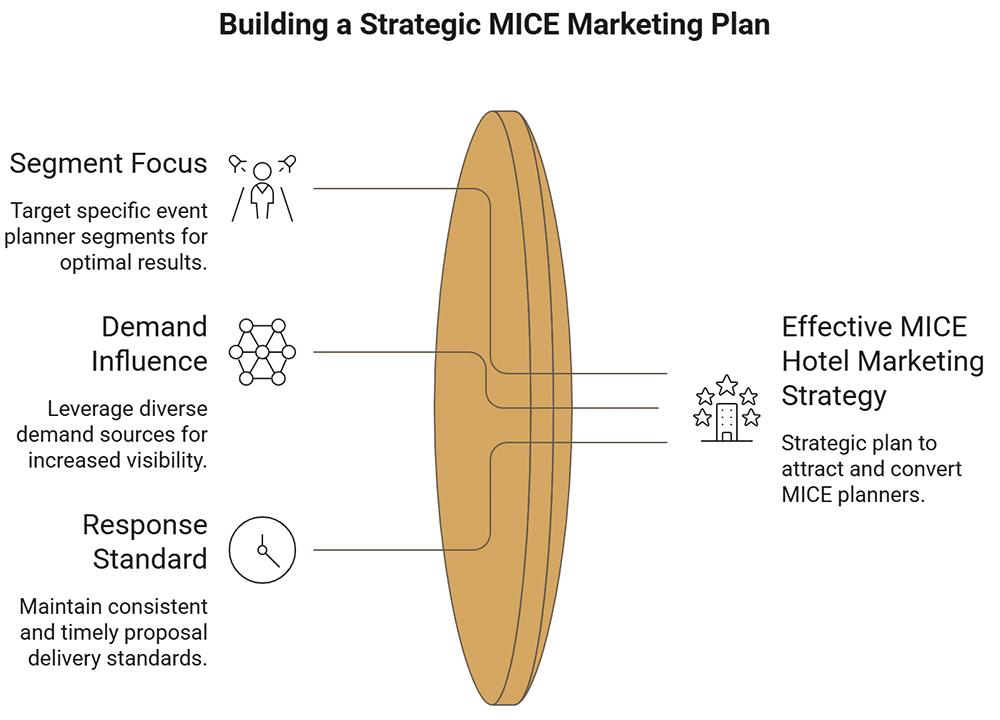
During this phase, the planner acts as a filter. They are not looking for marketing "fluff"—they are looking for technical specifications. If a hotel does not publish clear, readable floor plans, capacity charts, and high-resolution photography, it is immediately discarded. According to industry data, nearly 50 percent of planners will not even send an Request for Proposal (RFP) to a venue that fails to display necessary technical specs upfront.
3. The RFP Response
Once a shortlist of three to six properties is established, the RFP process begins. This is where the clock starts ticking. Planners now expect responses within four business days. A delay in the response time is often interpreted as a lack of operational efficiency, causing the hotel to be dropped from the list regardless of the property’s quality.
Supporting Data: Why Strategy Must Replace "More"
A common, fatal error in hospitality is setting a sales goal of simply "getting more group business." Quantity without quality is a recipe for margin erosion. The sophisticated hotelier must look at the Total Event Value (TEV).
Total Event Value Formula:
- (Room Revenue + Room Rental + F&B + Audiovisual/Ancillary) – Displaced Transient Revenue = True Profitability
If a hotel accepts a large group at a discounted rate during a peak-demand period, they may actually lose money by displacing higher-paying transient guests. Conversely, filling a hotel on a "dead" Tuesday with a lower-rate group that spends heavily on catering and AV services is a massive win for the bottom line.
According to CoStar and STR data, U.S. group demand has seen consistent growth, particularly in secondary markets. As ADR (Average Daily Rate) growth faces pressure from market saturation, the ability to protect yield through intelligent, data-led MICE pricing is the primary differentiator between struggling and thriving properties.
Official Industry Perspectives
The consensus among industry leaders is that the venue of the future must be a storyteller. Julien Houdebine, Global Chief Sales and Revenue Officer at Accor, has noted that "a great venue has to be capable of storytelling through design." This means the physical space must align with the brand promise and the specific needs of the event.
Cory Falter of Lure Agency adds a vital perspective on the human element: "Sell experience, not space." Falter argues that independent hotels have a unique advantage over major chains. By highlighting the expertise of their staff and providing personalized, consultative service, independent properties can win over "newbie" planners who need guidance, not just a price quote. By educating prospects on how to host a better event, sales teams build the trust necessary to close the deal.
Implications for Future-Proofing
To succeed in the current market, hoteliers must pivot their operations to reflect three major shifts:
The Rise of AI and Searchability
The rise of AI search assistants means that data must be "crawlable." A capacity chart buried in a password-protected PDF is invisible to a generative AI model. Hotels must publish their data in clean, HTML-based tables. This technical optimization is now as important as traditional SEO.

Empowerment of the Sales Force
The "bottleneck" effect—where a sales manager must wait for multiple levels of internal approval before sending a quote—is a primary cause of lost business. Empowering sales teams to negotiate rental and catering costs within predefined, yield-managed parameters is essential for maintaining the two-to-three-day response window that planners now demand.
Specialization Over Generalization
Trying to be everything to everyone leads to weak positioning. A hotel should define its "MICE identity." Is it a destination for high-end incentive retreats, or is it a lean, efficient hub for corporate training sessions? By targeting a specific buyer profile, a hotel can craft marketing materials that speak directly to the pain points of that demographic, significantly increasing conversion rates.
Conclusion: The Independent Advantage
Independent hotels, while lacking the global distribution muscle of major chains, hold a distinct advantage in agility. They can pivot faster, offer more personalized experiences, and tailor their packages to the specific needs of the local market. By mastering the digital sourcing process—being findable, credible, and fast—independent operators can own the small-to-medium meeting segment.
MICE hotel marketing is no longer just a sales function; it is a holistic operational strategy. It requires the integration of marketing, revenue management, and guest experience. The hotels that win will be those that realize that an RFP is not just a document, but a reflection of their commitment to the planner’s success. As the industry continues to evolve, the winners will be those who stop selling "ballrooms" and start selling "solutions."


 Evan Lee Salim
 Iffa Jayyana