Jia Lissa

In a landmark move to address the dual-edged nature of frontier artificial intelligence, the United Kingdom government has officially launched the AI Biosecurity Lab (AIBL). Backed by a substantial investment of £100 million ($134 million), the initiative represents one of the world’s most ambitious attempts to marry high-level computational power with the critical field of biological defense. By establishing an independent, non-profit entity dedicated to monitoring and mitigating AI-enabled biological risks, the UK is positioning itself at the epicenter of the global conversation regarding AI safety and national security.
The initiative, part of the broader National AI Biosecurity Strategy, has secured an unprecedented level of support from the world’s leading AI firms, including OpenAI, Anthropic, and Google DeepMind. This collaboration aims to leverage the very technology that poses potential risks to create the tools necessary to neutralize them, marking a pivot toward a proactive rather than reactive stance on biotechnology.
The Genesis of the AI Biosecurity Lab: A Strategic Overview
The establishment of the AIBL is not merely an investment in hardware or software; it is a structural response to the rapid acceleration of generative AI. As large language models (LLMs) and specialized biological AI systems evolve, the threshold for designing synthetic pathogens or manipulating biological processes is dropping.
Key Objectives
The AIBL is designed to function as a bridge between the digital and the organic. Its primary mandate is threefold:
- Threat Detection: Utilizing advanced AI models to scan for and identify potential biological threats that could be facilitated by malicious actors using frontier AI.
- Accelerated Innovation: Harnessing AI to speed up the development of vaccines, therapeutics, and medical countermeasures against emerging pandemics.
- Standardization: Establishing the gold standard for "responsible AI" in life sciences, creating a framework that can be adopted by other nations to ensure that biotech research remains safe and ethical.
Operating as an independent, non-profit organization, the lab is designed to be agile, allowing it to collaborate seamlessly with the public sector, academia, and private industry without the bureaucratic friction that often stifles national research programs.
A Chronology of the Initiative
The road to the AIBL’s launch follows a series of escalating concerns regarding the intersection of computing and biology.
- 2023: The Awareness Phase: Following the rapid public release of generative models, international summits, including the Bletchley Park AI Safety Summit hosted by the UK, began highlighting "catastrophic risks." Biosecurity was identified as one of the most pressing, yet least understood, threats.
- Early 2024: Policy Formulation: The UK government began formal consultations with industry giants. The goal was to determine how "frontier" models—those capable of high-level reasoning—could be safely utilized in laboratory settings.
- Mid-2024: Establishing Partnerships: Negotiating the contribution of computational credits from OpenAI and Anthropic became the cornerstone of the funding model. These partnerships ensure that the AIBL has access to the most powerful, state-of-the-art models available.
- Late 2024 (The Launch): The official announcement of the £100 million commitment and the operational structure of the AIBL, confirming that the facility will integrate both physical lab work and digital AI simulation.
Supporting Data: Why the AI-Biology Convergence Matters
The necessity for such a lab is supported by recent real-world incidents that highlight the power of modern algorithms. An AI research lab in California recently made headlines by successfully creating a virus via AI, which was subsequently administered to a human patient. While the experiment was designed to infect antibiotic-resistant bacteria and save a life—not to cause harm—it served as a "shot across the bow" for the global scientific community.
If an AI can design a custom-built virus to target bacteria, the potential for that same capability to be repurposed for nefarious ends is statistically significant. The UK government’s internal risk assessment notes that frontier AI models have the potential to "lower the barrier to harmful activity," effectively democratizing the knowledge required to synthesize dangerous biological agents.
The Power of Collaborative Resources
The sheer scale of the investment is bolstered by the contributions of the tech sector:
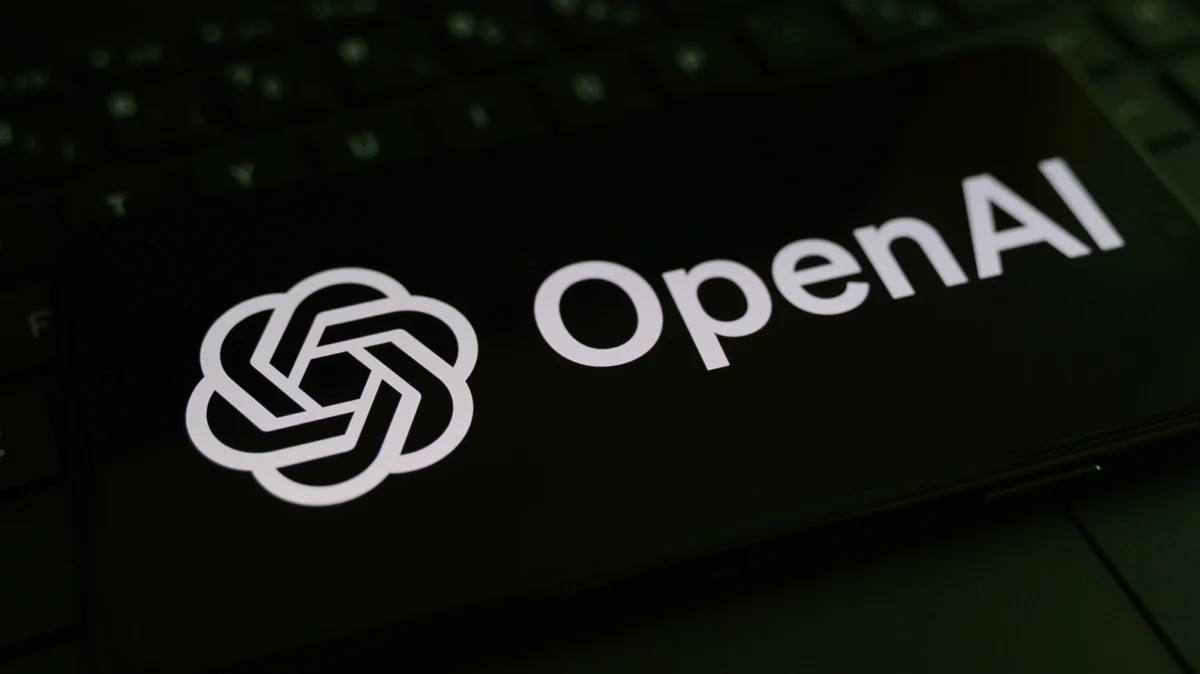
- OpenAI: Committing £100 million in compute credits, enabling the AIBL to run large-scale simulations that would otherwise be cost-prohibitive.
- Anthropic: Also providing £100 million in model credits, ensuring that the lab has access to diverse, safety-optimized architectures.
- Google DeepMind: Providing deep expertise and access to its frontier Gemini models, alongside a partnership with Basecamp Research to integrate proprietary biological datasets.
Official Responses and Ministerial Vision
The political appetite for this project is robust, reflecting a cross-party consensus that the UK must lead in the regulation and application of AI.

Kanishka Narayan, Britain’s AI Minister, emphasized the global necessity of the project during the launch. "The AI Biosecurity Lab will be a major new global institution," Narayan stated. "It brings together world-leading scientific expertise to protect people from emerging biological threats. By doing so, we ensure that Britain not only leads the world in AI safety but also provides a template for how democratic nations can secure themselves in the age of rapid technological disruption."
The consensus among stakeholders is that the AIBL will not act as a restrictive regulator but as a "center of excellence." By proving that AI can be used to solve the world’s most complex biological problems—such as designing vaccines for future pandemics—the UK hopes to shift the narrative from one of fear to one of utility.
Implications for the Global Scientific Landscape
The creation of the AIBL has profound implications that extend far beyond British borders.
1. Setting Global Standards
By operating as an independent, non-profit entity, the AIBL is positioned to become an international clearinghouse for biosecurity standards. If the AIBL successfully creates a framework for "safe" AI-biology interaction, other nations are likely to adopt these protocols to remain competitive and safe in the global biotech market.
2. The Shift in AI Development
Historically, AI labs have been protective of their models, often keeping them behind "black boxes." By providing massive computational credits to the AIBL, companies like OpenAI and Anthropic are acknowledging a new reality: the biggest tech firms have a moral and fiduciary duty to participate in the safety infrastructure of the nations where they operate.
3. The Future of Pandemic Preparedness
The ability to respond to a new pathogen is currently measured in months or years. The AIBL’s objective is to reduce this to weeks. By using AI to map protein structures and simulate immune responses at an unprecedented scale, the lab could fundamentally change the trajectory of public health crises.
4. Economic and National Security
For the UK, this is a strategic investment in "hard" soft power. By becoming the world’s hub for AI biosecurity, the UK attracts top-tier scientific talent from around the globe, fostering a domestic ecosystem that combines pharmaceutical prowess with digital dominance. This is a direct play to ensure that the "AI revolution" creates economic value within the UK while simultaneously securing the population against the inherent risks of that same revolution.
Conclusion: A Proactive Defense
The £100 million investment into the AI Biosecurity Lab is a recognition of a simple truth: technology does not exist in a vacuum. As artificial intelligence continues to bleed into the life sciences, the distinction between a "software threat" and a "biological threat" will continue to erode.
The UK’s initiative is a bold, necessary step toward ensuring that the next generation of AI-led breakthroughs is defined by life-saving discovery rather than accidental or intentional destruction. As the lab begins its work, the world will be watching—not just to see what discoveries emerge, but to see if this model of public-private cooperation can serve as the blueprint for securing our future in an increasingly complex digital age.

 Azzam Bilal Chamdy
 Laily UPN