
 Asep Darmawan
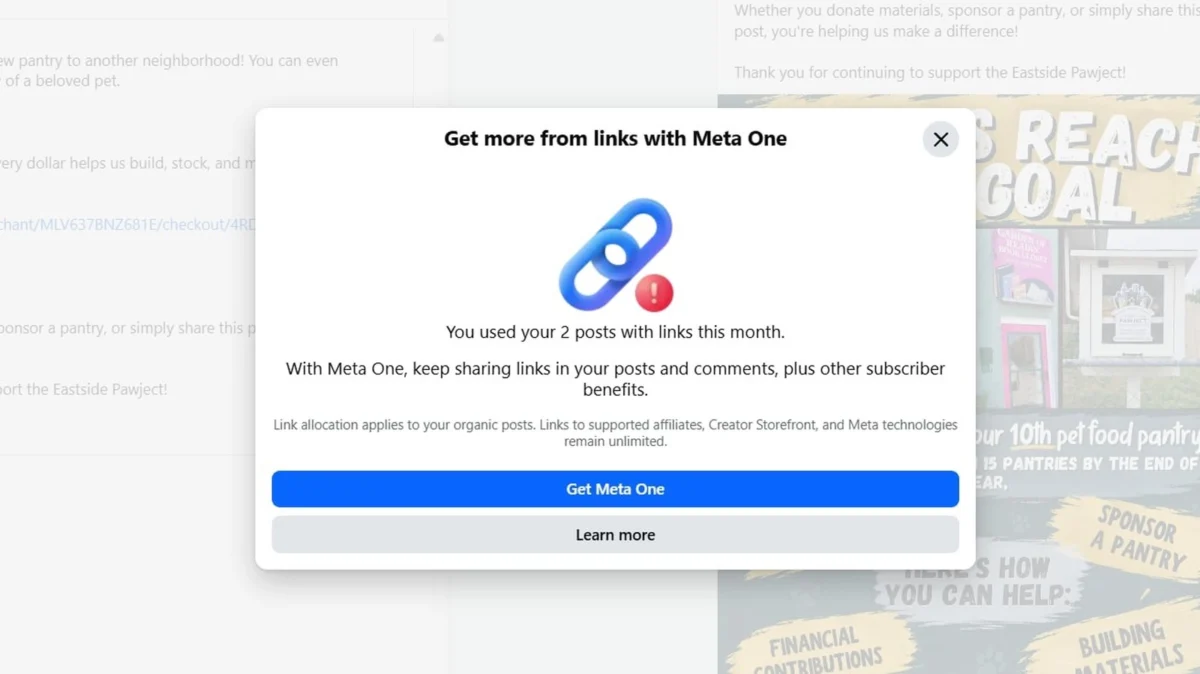
In a development that has sent ripples of frustration through the nonprofit sector and municipal governance, Meta has begun testing a restrictive subscription model that limits the ability of certain pages to post links on Facebook. While Meta maintains that these restrictions were never intended to impact government entities or nonprofit organizations, the reality on the ground—as reported by numerous page administrators—tells a different story.
The test, which effectively "paywalls" the core functionality of sharing external URLs, is part of a broader push by Meta to incentivize the adoption of its new "Meta One" subscription tiers. These plans, which emphasize AI-driven tools and enhanced business features, are now gatekeeping one of the internet’s most fundamental utilities: the ability to direct users to off-platform information.
The Mechanics of the Test: Turning Links into a Premium Feature
For nearly a year, Meta has been experimenting with various forms of paid access. What began as an integration within the Meta Verified program has now evolved into the Meta One suite. Under this new framework, standard users and unverified business pages are seeing their reach and functionality severely curtailed.
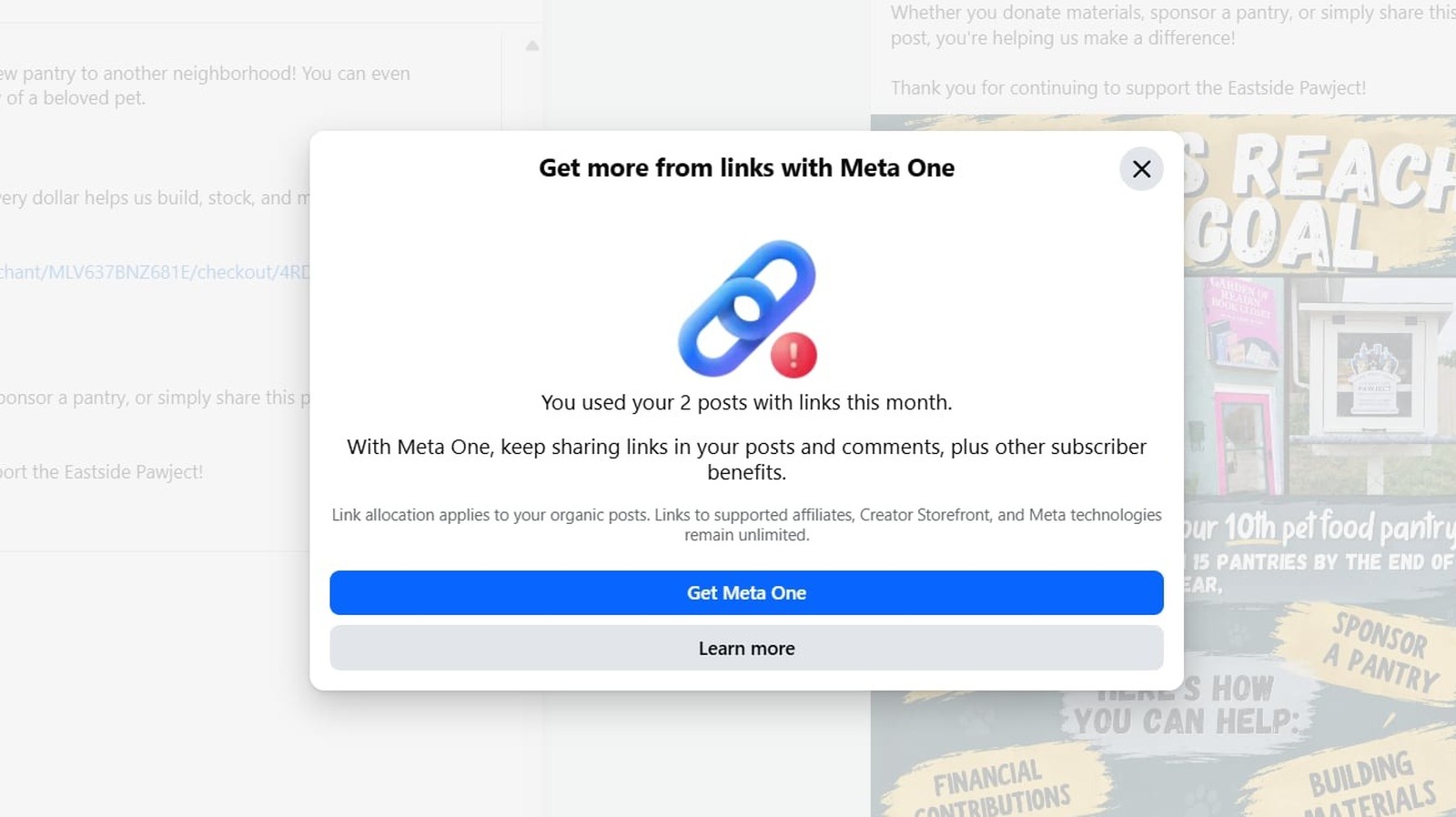
The limitations are stark: many affected users are being notified that they have a monthly quota of only two links. Once that limit is reached, they are prompted to upgrade to a Meta One subscription to restore functionality. The costs are significant:
- $14.99/month: The entry-level tier, which provides no additional link-sharing privileges on Facebook.
- $49.99/month: Grants users the ability to post eight links per month.
- $149.99/month: Increases the allowance to 20 links per month.
- $499.99/month: The top-tier plan, marketed as providing "unlimited" link-sharing capability.
For many small organizations, these figures are not merely inconvenient—they are prohibitive.
A Chronology of Confusion: When "Not Affected" Means "Severely Impacted"
The rollout of these restrictions has been characterized by a lack of transparency and a series of technical inconsistencies that have left administrators scrambling.
The Greenville Experience
Daniel Starks, the communications manager for the City of Greenville, Texas, serves as a primary case study in the administrative chaos caused by this test. Overseeing nearly a dozen Facebook pages, Starks manages the digital footprint of a city of 35,000 residents. Recently, the City Library’s Facebook page was hit with a notification: "You can add links to 2 posts per month, and you’ve used them all."
For a city government, this is not just a nuisance; it is a fundamental disruption of public service. "More than half of what we do as a city is linking back to information on our website," Starks explained. Forced to pivot, Starks has instructed his staff to cease posting direct links entirely, opting instead to place URLs in the comments section—a workaround that significantly degrades the user experience and lowers engagement rates.
The Nonprofit Struggle
The impact on the nonprofit sector has been equally severe. Bethany English, co-president of the East Side Pawject in Indianapolis, encountered the same wall. Her organization, which relies on social media to coordinate pet food pantries and solicit donations, was blocked from posting event links after just two uses. For an organization with limited resources, the prospect of paying $150 a month for the "expert" plan is entirely unsustainable.
The Sporadic Reversal
In a move that highlights the unpredictable nature of the test, some users have reported seeing the restrictions vanish as abruptly as they appeared. David Diskin, president of California Freethought Day, found himself unable to post links days before a major fundraising event. Following the event, the restriction was removed without explanation. This lack of clarity has left many organizations wondering if their current ability to post is permanent or merely a temporary reprieve.
Supporting Data: The ROI of Social Media for Small Entities
The financial implications of these changes are profound. When a small nonprofit like East Side Pawject—which operates with a limited budget and a modest following of roughly 1,000 people—is told that digital visibility now carries a monthly subscription fee, the return on investment (ROI) often turns negative.
Jeff Bannister, marketing manager for the North Carolina-based nonprofit SparkPoint, summarized the sentiment of many affected parties: "Fifty bucks for eight links a month is crazy. That’d be crazy for a corporation or a small business. The ROI seems almost negative."
For these entities, social media is not a luxury; it is the primary infrastructure for civic engagement, public safety alerts, and charitable fundraising. By tying the ability to post links—a feature that has been free for two decades—to AI-centric subscription tiers, Meta is effectively taxing the dissemination of public information.
Official Responses and the Corporate Stance
When pressed for comment, Meta’s official stance has remained vague. A spokesperson for the company stated, "We’ve been testing whether sharing links on Facebook should be part of the Meta One subscription. We will continue to evolve the experience based on the feedback we receive and what we learn."
Crucially, the company has failed to address why government entities and nonprofits, which are supposedly exempt, are being swept up in the test. The company’s own help center documentation does not clearly define the link-sharing limitation as a "test," but rather as a feature of the new subscription plans. This misalignment between public communication and internal testing protocols has eroded trust among the platform’s most dedicated power users.
Furthermore, there is a fundamental philosophical question regarding the "AI-centric" nature of these plans. Meta One is marketed as a suite of "specialized capabilities" and AI tools. However, the ability to post a hyperlink is a core architectural component of the World Wide Web. By bundling this feature into an AI subscription, Meta is conflating a basic communication utility with premium software services, leading many to view the move as a transparent cash grab.
Implications: The Future of Digital Public Squares
The long-term implications of this policy shift are potentially devastating for the "digital public square."
1. Fragmentation of Information
If government agencies and nonprofits are forced to move away from Facebook, the platform may lose its status as a centralized hub for community information. As seen in Greenville, Texas, the result is a move toward more cumbersome user experiences, such as burying links in comments. This reduces the efficacy of communication, making it harder for citizens to access official resources or for community members to support local causes.
2. The Digital Divide
Small, volunteer-run organizations are far less likely to be able to afford the $150 or $500 monthly fees required for "unlimited" or even moderate link sharing. This creates a two-tiered system where only well-funded organizations can effectively communicate their mission, while smaller, grassroots initiatives are pushed to the fringes of the algorithm.
3. Erosion of Trust in Social Platforms
The arbitrary nature of these restrictions—where some pages are limited and others are not, and where some see the restrictions removed without warning—creates an environment of extreme uncertainty. For organizations that rely on long-term planning for events and fundraising, this instability is unacceptable. Many are already looking for alternatives, exploring ways to build their own email lists or independent web portals to minimize their reliance on Meta’s infrastructure.
4. Regulatory Scrutiny
By interfering with the ability of government entities to communicate with their constituents, Meta may eventually invite regulatory attention. In many jurisdictions, government communication is protected by laws ensuring accessibility. If a private platform becomes the sole gatekeeper for that information, and subsequently places a price tag on that access, it could trigger investigations into the role of tech giants as essential public utilities.
Conclusion: A Precarious Crossroads
Meta stands at a critical juncture. While the drive to monetize its platform through Meta One is understandable from a shareholder perspective, the collateral damage currently being inflicted on public-sector and nonprofit communication is immense.
As these organizations continue to "scramble" for workarounds, the value proposition of Facebook itself is being called into question. If the platform becomes a place where essential information is paywalled, it risks losing the very community-centric fabric that made it a dominant force in the first place. For now, users like Daniel Starks and Bethany English remain in limbo, waiting to see if Meta will listen to the feedback it claims to be soliciting or if it will continue down a path that prioritizes subscription revenue over the fundamental utility of the internet.


 Azzam Bilal Chamdy

 Laily UPN




