 Iffa Jayyana
The Indian hospitality landscape is undergoing a seismic shift. With domestic travel surging, international interest peaking, and the complexities of the modern digital economy weighing on hoteliers, the choice of a Property Management System (PMS) has evolved from a simple back-office decision to a critical strategic imperative. In 2026, the success of a property—whether a boutique homestay in the hills or a sprawling urban hotel chain—hinges on the agility, connectivity, and intelligence of its digital infrastructure.
The State of Indian Hospitality: A Macro-Economic Perspective
To understand why the demand for advanced hotel management software has reached a fever pitch, one must look at the numbers. According to recent projections from ICRA, India’s hotel industry is poised for robust growth, with revenues expected to climb by 9–12% in FY2026. Premium hotel occupancy is forecasted to stabilize at a healthy 72–74%, while average daily rates (ADR) are climbing to the INR 8,200–8,500 bracket.
Crucially, supply growth (5–6%) is trailing demand growth (8–9%). This disparity provides hoteliers with significant pricing power, but it also creates a "bottleneck effect." When demand outstrips supply, operational efficiency becomes the only differentiator between a profitable property and one that loses revenue to administrative errors.
The Chronology of Digital Transformation in India
The evolution of hotel technology in India has moved in three distinct phases:
- The Manual Era (Pre-2015): Dominated by physical ledgers, Excel spreadsheets, and fragmented manual record-keeping. Communication between departments was verbal, leading to high rates of human error and "ghost bookings."
- The Desktop/Legacy Era (2015–2020): Hotels began adopting server-based software. While this digitized records, it trapped data on-premises. Managers were tethered to the front desk, and backups were a manual, high-risk chore.
- The Connected Cloud Era (2021–Present): The current standard. Cloud-based PMS solutions have become the backbone of the industry, offering real-time synchronization across OTAs, housekeeping, and finance. The 2025 HVS India study highlights that 84% of Indian hoteliers report significant improvements in operational speed after adopting cloud-native systems.
Why Modern Software is Non-Negotiable
The operational pressure on Indian hotel teams—who are increasingly lean—is immense. Modern PMS solutions serve as the "digital nervous system" of the property, addressing five critical pain points:
1. The OTA Complexity Trap
Indian hotels are heavily dependent on Online Travel Agencies (OTAs). Managing inventory across platforms manually is a recipe for disaster. A modern PMS integrated with a Channel Manager acts as a centralized brain, instantly updating availability across all platforms the moment a booking is made. This eliminates overbookings and ensures rate parity.
2. The GST Imperative
Billing accuracy is not merely an operational goal; it is a regulatory requirement. In India, GST compliance requires precise tax calculations, folio management, and detailed reporting. An integrated PMS links POS charges (restaurant, spa, laundry) directly to the guest’s final invoice, ensuring no revenue leakage and flawless tax reporting.
3. Real-Time Housekeeping Coordination
"Room readiness" is the most frequent cause of guest dissatisfaction during peak check-in hours. A modern PMS allows housekeeping staff to update room status via mobile devices. As soon as a cleaner marks a room as "clean," the front desk sees it on their dashboard, enabling instantaneous check-ins.
4. Remote Management for Owners
The days of the hotel owner needing to be present at the front desk to see a report are over. Cloud-based systems provide mobile dashboards, allowing owners to monitor revenue, occupancy, and guest feedback from anywhere in the world.
5. Direct Booking Engines
Reducing OTA commission dependency is a top priority for 2026. By integrating a booking engine directly into the hotel’s website, properties can capture "direct revenue," fostering guest loyalty and saving on third-party commissions.
Comparative Landscape: Evaluating Leading Solutions
The Indian market is flooded with vendors, but they are not created equal. Below is a breakdown of the primary players currently shaping the ecosystem.
The Powerhouse: Hotelogix
Hotelogix remains a dominant force for independent hotels and groups seeking "connected" operations. Its strength lies in its ecosystem—offering a seamless transition from front-desk management to global distribution. It is particularly effective for properties looking to scale, as it offers a robust Multi-Property Management System (MPMS) that allows corporate teams to view performance across multiple units in real-time.
The Enterprise Choice: Oracle OPERA Cloud
Oracle remains the gold standard for large-scale enterprise operations. For luxury chains and massive resorts that require deep customization, high-level security, and complex integration ecosystems, OPERA is the industry benchmark.
The Mid-Market Contenders: eZee (Yanolja) and Cloudbeds
eZee has built a massive footprint in India by offering a wide range of modules suitable for small to mid-sized hotels. Cloudbeds, meanwhile, offers a more global, "all-in-one" platform that is highly intuitive, making it a favorite for boutique properties and hostels that want to balance ease of use with powerful distribution tools.
The Specialized Challengers: DJUBO, MyCloud, and MettaStay
These platforms are gaining traction by focusing on specific niches. DJUBO excels in revenue management and OTA distribution, while MettaStay is pioneering the use of AI in hospitality to assist in predictive booking and guest communication.
The Buying Checklist: What to Ask During a Demo
When evaluating a vendor, do not be swayed by slick presentations. Demand answers to these critical questions:
- Total Cost of Ownership (TCO): Ask for the "all-in" price. Does the subscription include support, training, and integration fees, or are those add-ons?
- Data Migration Support: How exactly will my historical guest data and current reservations move into your system? What is the risk of data loss?
- Support Response Time: What is the SLA (Service Level Agreement) for critical issues? In a 24/7 industry, "email-only" support is insufficient.
- Offline Functionality: What happens if the internet goes down? Can the front desk continue to check guests in?
- Integrations: Can this PMS talk to my existing accounting software (like Tally or Zoho) and payment gateways?
The Strategic Implication: Moving Toward Automation
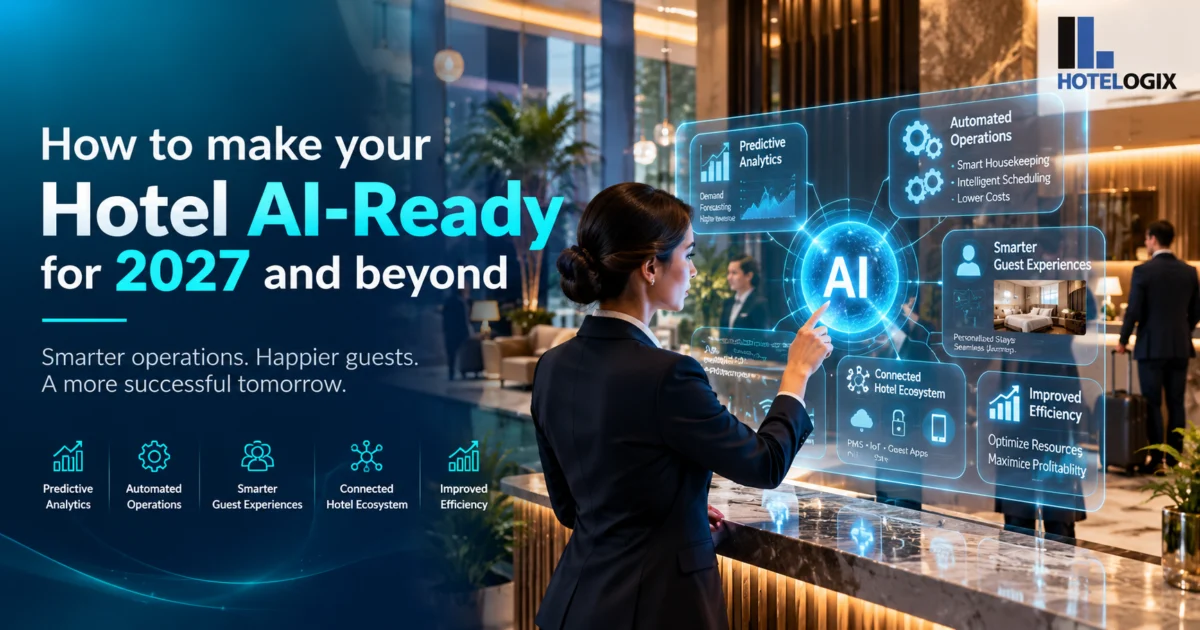
The industry is moving toward "Touchless Hospitality." By 2026, guests will increasingly expect self-service check-in kiosks, digital keys, and automated post-stay feedback loops. Hotels that operate on legacy desktop systems will find it impossible to integrate these emerging technologies.
Choosing a cloud-based PMS today is an investment in future-proofing. It is about shifting the staff’s focus from administrative "data entry" to "guest experience." When the computer handles the billing, the inventory sync, and the reporting, the hotel team is free to do what they do best: provide world-class hospitality.
Final Verdict
For the Indian hotelier, the decision-making process should prioritize connectivity over complexity.
- For the Small Independent Hotel: Choose a platform like Hotelogix or RunHotel that offers a simple, mobile-first interface. You need speed, not a 500-page manual.
- For the Resort: Look for robust POS and package management capabilities. Your PMS must handle room revenue and restaurant revenue under one roof.
- For the Expanding Group: Prioritize Multi-Property scalability. Ensure your chosen vendor has a clear roadmap for adding properties without requiring you to switch software later.
In conclusion, the Indian hospitality market is on the cusp of its most profitable era yet. The hotels that will win in 2026 are those that have moved past the friction of manual operations. By investing in a high-quality, cloud-native PMS, hoteliers are not just buying software—they are buying the ability to scale, the accuracy to thrive, and the freedom to focus on their guests.
To see how a modern, cloud-based system can transform your property’s performance, book a live, personalized demo with industry-leading providers today. The future of your hotel starts with the software you choose now.


 Evan Lee Salim