
 Rifan Muazin
As the Indian hospitality landscape gears up for 2027, the divide between hotels that thrive and those that struggle is increasingly defined by their technological infrastructure. With a surge in domestic tourism, business travel, and a growing appetite for luxury and boutique experiences, Indian hoteliers are moving away from disconnected legacy systems toward integrated, cloud-based Property Management Systems (PMS). Whether managing a 25-room independent boutique hotel or a sprawling 100-room resort chain, the ability to centralize reservations, automate GST billing, and synchronize inventory across multiple channels has become a fundamental business imperative.
The Evolution of Hospitality Tech: Why 2027 is a Turning Point
The hospitality sector in India has undergone a radical transformation over the past five years. Driven by digital-first consumer expectations and the need for operational agility, hotels are no longer viewing software as a "nice-to-have" expense, but as the backbone of their commercial strategy.
In the pre-cloud era, Indian hotels were often shackled by on-premise servers, frequent downtime, and significant IT maintenance costs. Today, the focus has shifted to "connected" ecosystems. A modern PMS in 2027 is expected to handle more than just check-ins and check-outs; it must function as a central hub for OTA connectivity, revenue management, AI-driven analytics, and real-time financial reporting.
Understanding the Core Requirements: A 12-Point Evaluation Framework
Selecting the right software is a high-stakes decision. To avoid the "feature creep" trap—where hotels pay for bloated software they don’t need—owners should evaluate potential platforms against a rigorous framework:
- Core PMS Functionality: Does the system handle reservations, room allocation, and guest history with minimal clicks?
- Front Desk Usability: Can new staff be trained on the system in under two hours?
- GST-Compliant Billing: Does it handle the nuances of the 5% and 18% GST brackets automatically?
- OTA Connectivity: Is the two-way integration with platforms like MakeMyTrip and Booking.com robust enough to prevent overbookings?
- Direct Booking Engine: Can the hotel capture commission-free bookings via its own website?
- Payment Reconciliation: Does the system support UPI, credit cards, and instant payment gateway settlements?
- Housekeeping Automation: Does the front desk receive real-time updates on room cleaning status?
- Reporting & Analytics: Are occupancy, ADR, and RevPAR data available on-demand?
- Integration Ecosystem: Does it "talk" to Tally, POS systems, and other accounting software?
- Multi-Property Capability: Can it aggregate data across several locations for a bird’s-eye view?
- Onboarding & Support: Is there a dedicated implementation team available for local Indian support?
- Total Cost of Ownership (TCO): Beyond the monthly subscription, what are the setup, training, and integration fees?
Top 10 PMS Solutions for the Indian Market in 2027
The Indian market is unique, characterized by a mix of international players and home-grown solutions tailored for local tax laws and regional operational patterns.
1. Hotelogix – Best for Connected Cloud Operations
Hotelogix remains a leader for properties ranging from independent boutiques to growing chains. Its strength lies in its ability to connect disparate operations—reservations, housekeeping, and billing—into a unified cloud interface. Its success in India is bolstered by its ability to handle complex multi-property reporting, making it a go-to for groups scaling their footprint.
2. eZee PMS / Yanolja Cloud
eZee is a long-standing veteran in the industry, offering a comprehensive suite that covers both PMS and robust distribution management. It is particularly popular among mid-sized properties that require reliable OTA connectivity and stable billing modules.
3. IDS Next
Catering to the high-end and full-service segment, IDS Next is designed for properties with complex, multi-departmental operational needs. Its architecture supports the heavy lifting required by large resorts and luxury hotels with multiple outlets.
4. DJUBO
DJUBO positions itself as a "commercial" PMS. Its focus on distribution and direct bookings makes it a favorite for independent hotels that prioritize aggressive online visibility and revenue optimization.
5. Cloudbeds
A global player with a strong footprint in the boutique sector, Cloudbeds offers an intuitive, user-friendly interface. While powerful, Indian operators should verify that its tax-reporting modules are fully aligned with the latest GST notifications.
6. Stayflexi
Focusing on automation and flexible stay models, Stayflexi is ideal for properties that move away from traditional 24-hour check-in/check-out cycles, offering a modernized, streamlined approach to inventory management.
7. RMS Cloud
RMS is a scalable enterprise solution suitable for accommodation groups and serviced apartments. It offers a wide range of modules, making it a "one-stop-shop" for properties with complex inventory types.
8. mycloud Hospitality
Known for its cloud-native architecture, mycloud excels in offering a seamless, integrated experience that connects front-desk operations with back-office accounting, ideal for lean management teams.
9. Little Hotelier
Targeting the "B&B" and guesthouse segment, Little Hotelier strips away the complexity of enterprise software to provide a simple, effective tool for small owners who need to manage inventory without a dedicated IT staff.
10. Oracle OPERA Cloud
The industry standard for large chains and global hotel brands. Its enterprise-grade capability is unmatched, though it comes with a higher TCO and longer implementation cycles, making it suitable only for large-scale enterprise deployments.
The Financial Reality: Total Cost of Ownership (TCO)
A common pitfall for Indian hoteliers is focusing solely on the "base subscription fee." When calculating the cost of a PMS, one must account for:
- Implementation/Setup Fees: The cost of data migration from legacy systems.
- Channel Manager Fees: Often a separate charge, even if bundled in marketing.
- Support/Training: The cost of continuous support after the initial rollout.
- Integration Add-ons: Costs associated with linking to Tally, payment gateways, or third-party revenue managers.
A 20-room hotel might see a monthly subscription of ₹5,000, but when integrations and training are added, the annual TCO often exceeds the initial headline price. Requesting a written, itemized quotation is essential.
Implementation: A Roadmap to Zero Disruption
Switching PMS providers is akin to performing surgery on a running engine. To avoid operational paralysis, follow this chronology:
- Data Audit (Month 1): Clean your guest history and current room mapping.
- Configuration (Month 2): Set up GST rules, tax slabs, and payment gateways.
- Integration Mapping (Month 3): Test the "handshake" between the PMS and OTAs.
- Staff Training (Weeks 1-2): Role-based workshops (Front Desk vs. Housekeeping).
- Soft Launch: Run the new system in parallel with the old one for 48 hours.
- Full Go-Live: Sunset the old system and finalize the cut-over.
Implications of AI and Data Protection (DPDP)
As we approach 2027, the Indian hospitality industry faces two major technological shifts: the integration of AI and the enforcement of the Digital Personal Data Protection (DPDP) framework.
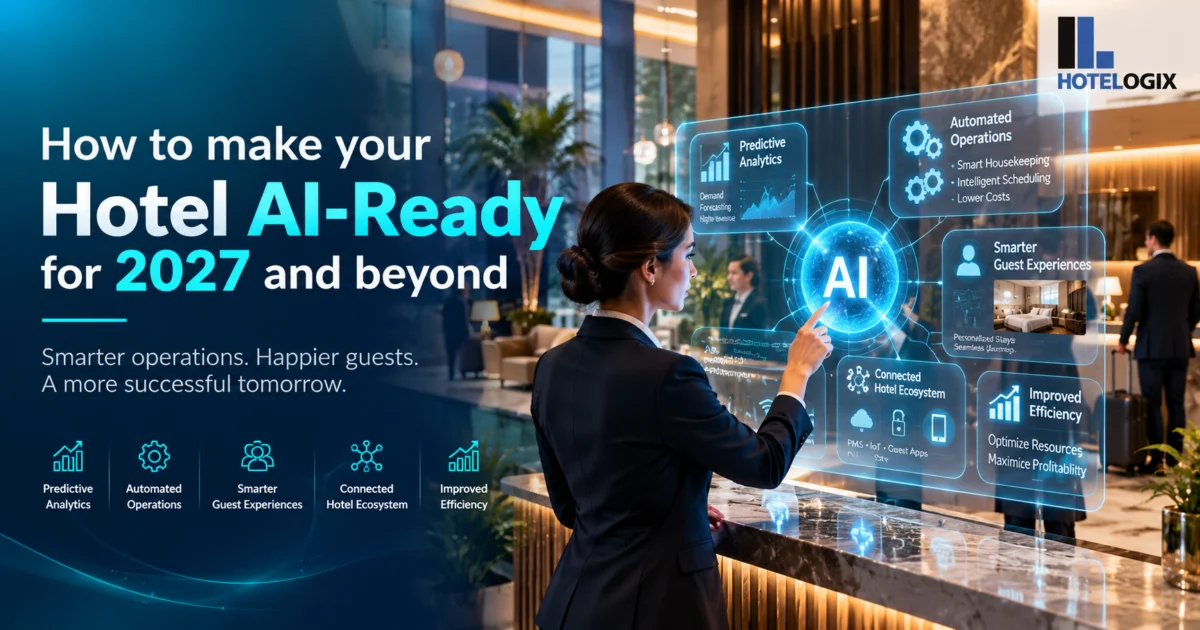
AI in Hospitality: Hoteliers should be wary of marketing fluff. True AI in 2027 should provide tangible value, such as dynamic pricing suggestions based on local demand or predictive housekeeping schedules. If a system claims "AI," ask: How does this improve my RevPAR or reduce my man-hours?
Data Privacy: With the DPDP framework in effect, hotels are now the custodians of sensitive guest data. Choosing a PMS that is "Privacy-by-Design" is no longer optional. Ensure your vendor provides robust data encryption, secure backups, and clear user-permission protocols to protect against data breaches.
Conclusion: Making the Right Choice
There is no single "best" PMS; there is only the best PMS for your specific business model. A large resort in Kerala has vastly different needs than a business hotel in Bangalore or a boutique stay in Jaipur.
Hoteliers must prioritize platforms that offer connected operations—where the front desk, housekeeping, and distribution work as one. As seen in success stories from brands like Country Inn and Mint Hotels, the ROI of a properly implemented, cloud-based PMS can be transformative, often resulting in double-digit increases in revenue and thousands of hours saved in manual administrative work.
By following the 12-point evaluation checklist and conducting live, workflow-based demonstrations, owners can ensure they invest in a system that not only solves today’s operational headaches but scales with their ambitions for 2027 and beyond.


 Evan Lee Salim
 Iffa Jayyana






