Lina Irawan
In a move that has sent ripples through the cybersecurity community, Citrix has issued an urgent advisory regarding a new, high-severity vulnerability discovered in its NetScaler Application Delivery Controller (ADC) and NetScaler Gateway products. The flaw, officially tracked as CVE-2026-107406, poses a significant risk to enterprise infrastructure, potentially allowing unauthenticated, remote attackers to execute arbitrary code or force a system crash, resulting in a denial-of-service (DoS) state.
As IT administrators scramble to secure their perimeters, the discovery serves as a stark reminder of the persistent targeting of edge-network appliances by sophisticated threat actors. With thousands of devices currently exposed to the public internet, the urgency of the situation cannot be overstated.
The Technical Core: What is CVE-2026-107406?
At its core, CVE-2026-107406 is a memory overflow vulnerability—a class of security flaw that occurs when a program attempts to write data beyond the boundaries of a pre-allocated block of memory. In the context of NetScaler appliances, this weakness is specifically triggered when the system is configured to act as a Security Assertion Markup Language (SAML) Identity Provider (IdP) or a Service Provider (SP).
When these specific configurations are active, an attacker can send specially crafted packets to the appliance. By exploiting the memory overflow, the attacker can hijack the execution flow of the system. In the most severe scenarios, this allows for Remote Code Execution (RCE), effectively granting the attacker the ability to run malicious commands on the appliance with the privileges of the service. Alternatively, if the exploit fails to gain full system control, it will almost certainly crash the process, leading to a denial-of-service condition that cuts off remote access for legitimate users.
Citrix has confirmed that the vulnerability affects these appliances regardless of whether they are on-premises or deployed in cloud-hosted environments, provided the SAML configuration is enabled.
A Timeline of Escalation: 2026 and the War on Edge Devices
To understand the gravity of the current alert, one must look at the turbulent history of Citrix security throughout 2026. This year has been characterized by a relentless cycle of zero-day disclosures and rapid exploitation, positioning NetScaler appliances as a primary target for cyber-espionage groups and ransomware syndicates alike.
The Spring Offensive
In March 2026, the security landscape shifted when Citrix identified two critical flaws, CVE-2026-3055 and CVE-2026-4368. Despite the company’s swift issuance of patches, threat actors moved with alarming speed. Within days of the disclosure, researchers observed active exploitation in the wild, forcing organizations to perform emergency patching over weekends to avoid total system compromise.
The September Zero-Day Crisis
The situation reached a boiling point in September 2026. Citrix released security updates for two RCE zero-days (CVE-2026-88771 and CVE-2026-88772) that had already been weaponized. Attackers used these vulnerabilities to gain deep, persistent access to corporate networks. By deploying custom web shells and tunneling malware, these actors were able to exfiltrate sensitive credentials, gain root-level administrative access, and pivot laterally into internal network segments, effectively bypassing traditional firewall protections.
The October Emergency
Barely a month later, in early October, another emergency patch was pushed to address a DoS zero-day (CVE-2026-88779). While initially described as a stability issue, subsequent forensic analysis by security researchers revealed that the flaw could be chained with other techniques to achieve RCE, further underscoring the "cat and mouse" game currently being played between developers and threat actors.
Supporting Data: The Scope of Exposure
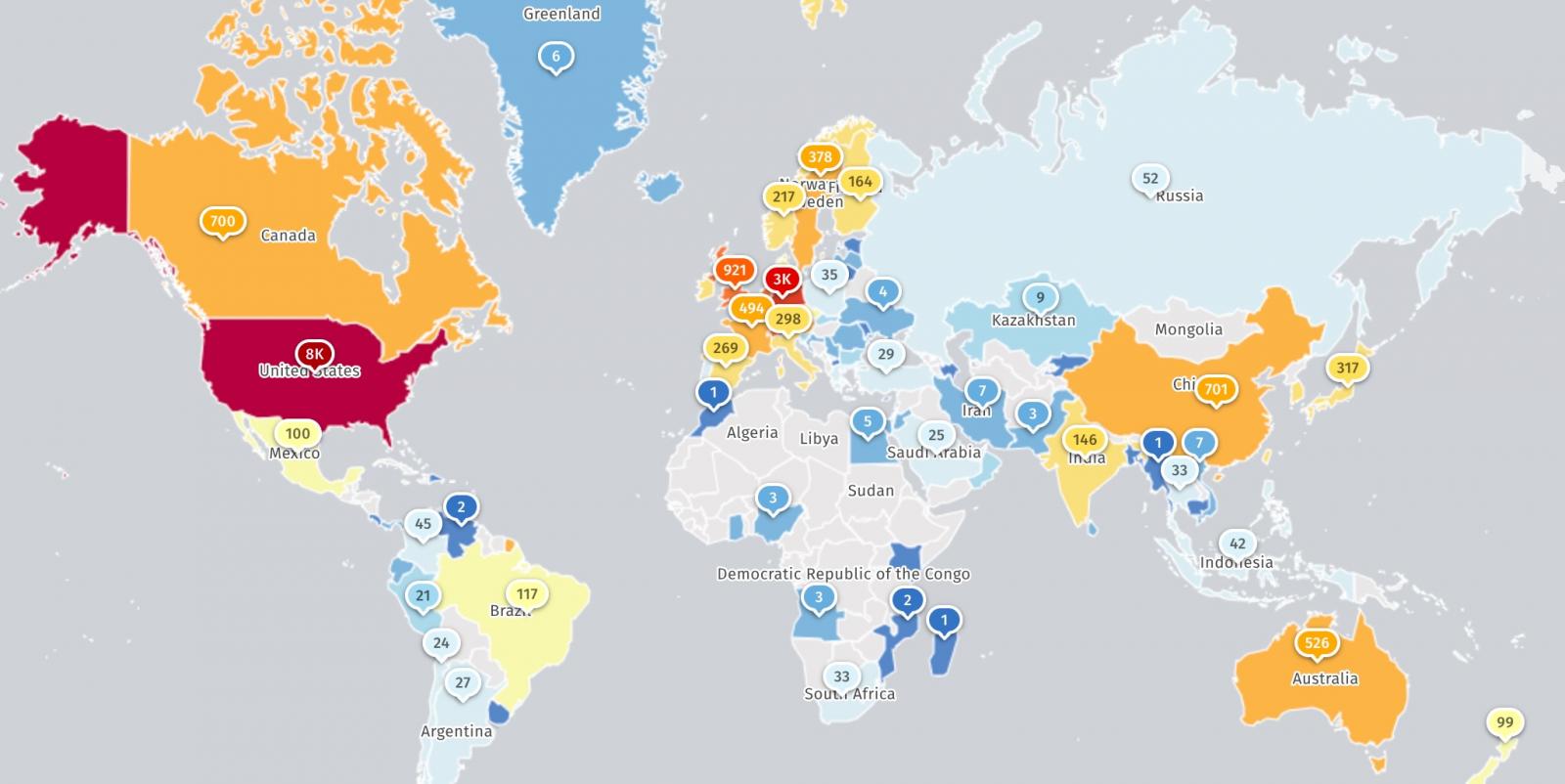
The risk profile associated with CVE-2026-107406 is magnified by the sheer number of NetScaler devices exposed to the public internet. According to telemetry provided by the internet threat watchdog Shadowserver, there are currently over 21,000 IP addresses identified with NetScaler fingerprints globally.
This includes:
- 1,500+ Gateway Instances: These are the most critical, as they provide the front door for secure remote access. A compromise here can lead to full credential theft and unauthorized access to internal VPNs.
- 20,000+ NetScaler ADC Appliances: These manage traffic flow for enterprise applications. A disruption here can effectively cripple an organization’s digital operations.
While it is difficult to determine exactly how many of these devices have been patched or are configured as honeypots, the volume of exposed hardware provides a massive surface area for automated scanners to identify and exploit vulnerable configurations. The presence of these devices on the open web, often used to facilitate work-from-home initiatives, makes them high-value targets for groups looking for an easy entry point into corporate infrastructure.
Official Responses and Remediation
In their official advisory, Citrix has been direct and uncompromising: "We strongly urge affected customers to review the advisory and upgrade impacted NetScaler instances to the recommended versions as soon as possible."
The company maintains that, as of the publication of this bulletin, they have not identified any evidence of unmitigated exploits in the wild for CVE-2026-107406. However, given the track record of recent months—where patches were followed almost immediately by widespread exploitation—this "no evidence" window is likely to be very narrow.
Recommended Steps for IT Administrators:
- Inventory Assessment: Immediately identify all NetScaler ADC and Gateway appliances within the environment.
- Configuration Audit: Determine which appliances are configured with SAML IdP or SP features.
- Prioritized Patching: Apply the latest firmware updates provided by Citrix. If an immediate upgrade is not possible due to business continuity constraints, administrators should evaluate the feasibility of disabling SAML configurations temporarily as a compensating control, though this may disrupt existing authentication workflows.
- Network Hardening: Restrict management access to NetScaler appliances to trusted, internal IP ranges only. The practice of exposing administrative interfaces to the public internet is a major security liability.
The Broader Implications: A Pattern of Vulnerability
The persistent nature of these vulnerabilities has caught the attention of federal authorities. The U.S. Cybersecurity and Infrastructure Security Agency (CISA) has flagged 27 separate, actively exploited Citrix vulnerabilities since November 2021. Seven of these have been directly linked to devastating ransomware attacks, where attackers used the initial entry point to encrypt backups and demand massive payouts.
The implications for the broader cybersecurity landscape are profound:
- The "Edge" is the New Frontline: As companies move to hybrid work models, the appliances that manage remote access have become the most important—and most vulnerable—part of the stack.
- Speed is the Only Defense: The historical pattern of 2026 shows that once a CVE is public, threat actors are capable of developing functional exploit code in less than 72 hours.
- Validation at Machine Speed: Organizations can no longer rely on traditional manual update cycles. The requirement to "validate, decide, fix, and re-validate" at machine speed is no longer a luxury but a fundamental necessity for survival in an era of AI-powered cyberattacks.
Conclusion
The discovery of CVE-2026-107406 is yet another chapter in a challenging year for Citrix administrators. While the vulnerability itself is a technical memory management issue, its potential impact on organizational security is immense. The combination of high-privilege access, widespread internet exposure, and a proven history of rapid weaponization by malicious actors makes this a "drop everything" priority for IT security teams.
As the industry looks toward the future, the lessons of 2026 are clear: perimeter security appliances are the Achilles’ heel of the modern enterprise. Until these devices are managed with the same rigor as internal servers—and perhaps more so—they will continue to be the primary gateway for those who seek to do harm. For now, the only path forward is the immediate application of patches and a comprehensive review of the security posture surrounding every NetScaler deployment.


 Sagoh
Sagoh
 Neng Nana