Raul Delapena Setiawan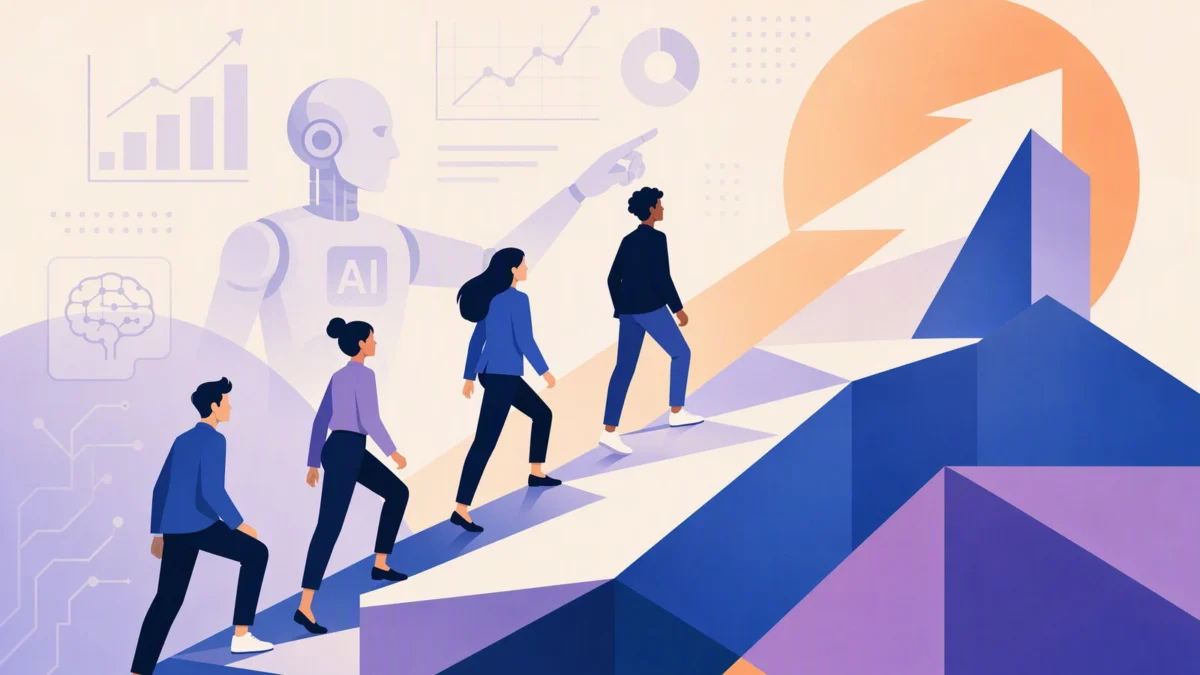
The traditional corporate ladder, once defined by decades of incremental experience and long-tenured mentorship, is undergoing a profound structural shift. As artificial intelligence (AI) integrates into the bedrock of organizational operations, a new phenomenon is emerging: the "Z-Suite." According to the latest research from the International Workplace Group (IWG), we are witnessing an unprecedented compression of the leadership timeline, with Generation Z professionals ascending to executive roles at a pace that would have been unimaginable to their predecessors.
The Z-Suite Report: How a New Generation is Evolving the Boardroom provides compelling evidence that AI is not merely a tool for productivity—it is a catalyst for career acceleration. As younger employees leverage generative AI and advanced analytics to bridge experience gaps, the C-suite is opening its doors to a generation that views digital fluency as a foundational leadership skill.
Main Facts: A Paradigm Shift in Leadership
The core findings of the IWG study, conducted between June and July 2026, suggest a fundamental realignment of how talent is identified and promoted. The survey, which polled 1,000 senior leaders across the UK and the US, reveals that 80% of respondents acknowledge that younger employees are reaching leadership positions earlier than in any previous generation.
Perhaps most striking is the openness of established leadership to this change. A staggering 92% of senior leaders indicated they would consider appointing Gen Z talent to senior roles. This indicates that the barrier to entry is no longer solely about tenure; it is about the ability to synthesize AI-driven insights into actionable business strategy.
The research identifies three primary drivers of this trend:
- Skill Compression: AI enables younger workers to access institutional knowledge and technical expertise that previously required years of hands-on experience.
- Strategic Capability: The ability to leverage AI tools allows younger staff to contribute at a high level far earlier in their careers.
- Confidence and Ambition: The digital-native workforce feels empowered by technology, with 95% of Gen Z respondents believing they will attain senior leadership roles by the age of 30.
Chronology of the Shift: From Traditional Paths to AI-Driven Ascent
To understand the current state of the workplace, one must look at the evolution of the "leadership journey."
The Pre-AI Era (Pre-2020): Leadership was historically characterized by the "Tenure Model." Employees were expected to spend 15 to 20 years in specialized roles, moving through middle management before reaching the executive tier. Experience was synonymous with "time served," and institutional knowledge was siloed within the minds of veterans.
The Digital Transformation Period (2020–2024): The shift to remote and hybrid work models forced organizations to rely on digital collaboration tools. During this period, the definition of "presence" began to change, and the ability to navigate digital workflows became a prerequisite for management.
The AI Acceleration (2025–Present): The integration of generative AI has acted as a force multiplier. Younger generations, who grew up as digital natives, adapted to AI tools with higher velocity than their older counterparts. This allowed them to automate rote tasks, perform complex data analysis, and draft strategic communications in minutes—tasks that once occupied the schedules of mid-level managers. Consequently, the "experience gap" between a 25-year-old and a 45-year-old has narrowed significantly in terms of output and strategic insight.
Supporting Data: The Quantitative Impact of AI
The IWG report provides granular data on how AI is impacting the professional trajectory of the 21–29-year-old cohort. The metrics suggest that AI is effectively serving as a "mentor-in-a-box," providing the guidance and technical capability that was previously the sole domain of senior mentors.
- Knowledge Acquisition: 80% of Gen Z leaders report that AI grants them access to high-level information that would have previously required years of experience to synthesize.
- Performance Beyond Rank: 79% of young leaders state that AI allows them to execute tasks that are technically above their current seniority level, effectively "punching above their weight."
- Strategic Confidence: 78% of young respondents noted that AI has significantly boosted their confidence in making high-stakes decisions.
- Accelerated Growth: A significant 86% of Gen Z employees feel they are progressing in their careers at a speed far greater than that of their predecessors.
These figures illustrate that the current generation is not just waiting for their turn; they are utilizing technology to earn their seat at the table.
Official Responses and Perspectives: The Generational View
The discourse surrounding the "Z-Suite" is marked by a unique blend of optimism from younger cohorts and a pragmatic reassessment from veteran leaders.
The Gen Z Perspective: Empowerment Through Tech
For the emerging leaders, AI is an equalizer. By delegating data processing and preliminary research to AI agents, they are able to focus their cognitive energy on the "human" aspects of leadership: empathy, culture building, and complex interpersonal strategy. They view their rapid advancement not as a shortcut, but as a more efficient way to deliver value to the organization.
The Senior Leadership Perspective: A Necessary Evolution
Conversely, senior leaders are recognizing that they cannot rely on traditional succession planning. With the market moving at an unprecedented pace, the "wait your turn" philosophy is becoming a liability. Many leaders view the inclusion of Gen Z in the C-suite as a way to "future-proof" their organizations. By integrating younger perspectives, companies gain an inherent understanding of emerging consumer behaviors and technological trends that are vital for long-term survival.
Implications: The Future of Organizational Structure
The rise of the Z-Suite carries significant implications for human resources (HR) departments and executive boards worldwide.
1. Redefining "Experience"
HR departments must pivot from evaluating candidates based on "years of experience" to evaluating them on "years of impact." If a 26-year-old can deliver the same strategic output as a 40-year-old through the intelligent use of AI, the chronological age of the candidate becomes irrelevant. Hiring and promotion processes will need to move toward skill-based assessments.
2. The Evolution of Mentorship
Traditional mentorship—where the elder teaches the younger—is becoming a bidirectional exchange. While veterans provide the context of institutional history and soft-skill nuance, younger leaders are providing "reverse mentorship" regarding AI integration and digital innovation. This creates a more dynamic, flattened hierarchy.
3. Cultural Challenges
Integrating younger leaders into senior roles is not without risk. Organizations must ensure that the rapid ascent of Gen Z does not alienate mid-career employees or result in a lack of institutional memory. Leadership training must evolve to help these younger leaders navigate the complexities of managing older, more experienced direct reports.
4. The Global Perspective
While the IWG research focuses on the UK and US, the implications for the Asian market are profound. In a region characterized by rapid digital adoption and a highly competitive talent landscape, the "Z-Suite" phenomenon is likely to accelerate even faster. Companies in Asia that leverage this trend early will likely gain a competitive advantage in global markets.
Conclusion: Preparing for the New Boardroom
The rise of the Z-Suite is not a temporary trend, but a permanent shift in the corporate landscape. As artificial intelligence continues to lower the barrier to complex strategic thinking, the traditional timeline of the corporate career is being rewritten.
Organizations that resist this change, clinging to rigid, seniority-based structures, risk falling behind in an economy that rewards agility and digital mastery. Conversely, those that embrace the "Z-Suite" by fostering environments where AI-enabled talent can thrive, stand to gain a generation of leaders who are as technically proficient as they are ambitious.
Ultimately, the future of the boardroom will belong to those who can harmonize the wisdom of experience with the velocity of AI. The "Z-Suite" is not just arriving—they are already here, and they are ready to lead.
Disclaimer: While the survey was conducted in the US and UK, the results offer a clear roadmap for organizations across the Asia-Pacific region to rethink their leadership pipelines in an age of rapid technological change.
Follow us on Telegram and Instagram @humanresourcesonline for all the latest HR and manpower news from around the region.


 Laily UPN
 Jia Lissa