
 Iffa Jayyana
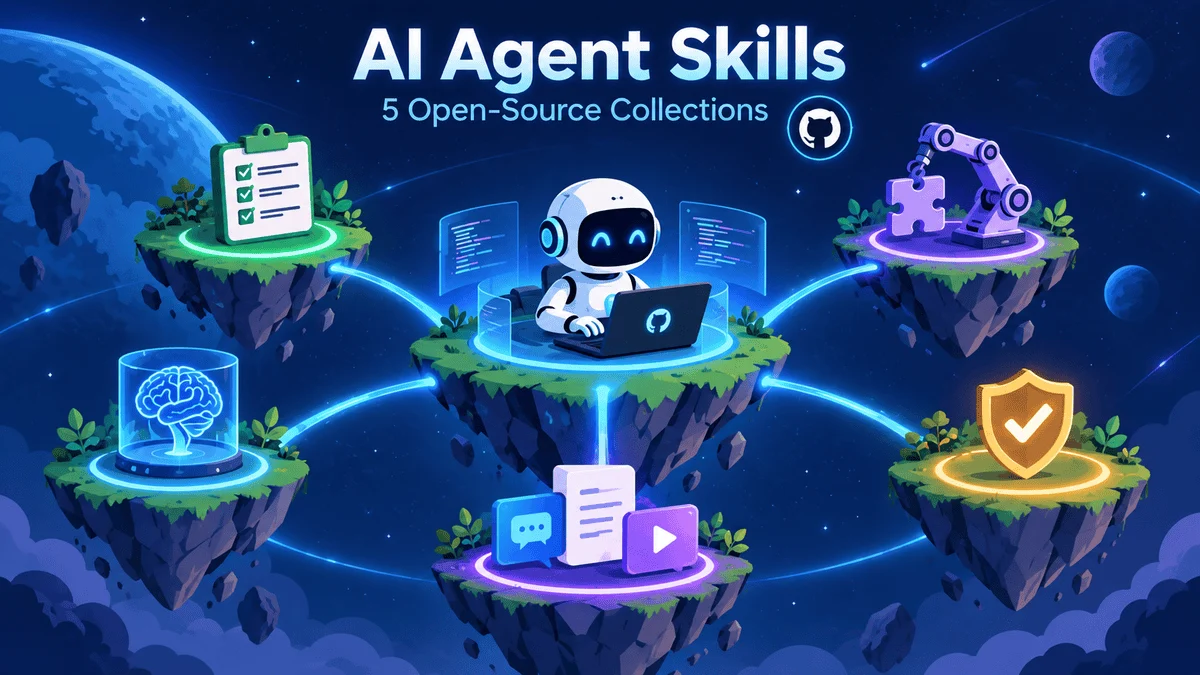
Modern AI coding agents—such as Claude Code, Cursor, and GitHub Copilot—have fundamentally shifted the paradigm of software development. We have moved from the era of basic autocomplete to a world where Large Language Models (LLMs) can generate entire functions, refactor legacy systems, and even navigate complex repository architectures. However, the industry is hitting a ceiling. Simply generating code is no longer the bottleneck; the challenge lies in the process of software engineering.
True software engineering is not merely about typing syntax; it is about requirement analysis, strategic planning, rigorous testing, systematic debugging, and professional code reviews. To bridge this gap, the developer community has turned toward "AI Agent Skills." These are reusable, instruction-based workflows that encode best practices into the agent’s logic, transforming them from unpredictable code-generators into disciplined, reliable software engineers.
The Evolution of AI Agentic Workflows
The trajectory of AI-assisted coding has followed a rapid timeline. In the early stages (2022–2023), agents operated on a "single-turn" basis: the user provided a prompt, and the agent returned a snippet. By 2024, the focus shifted to "agentic loops," where tools could execute shell commands and modify files.
Today, we are in the era of Methodology Integration. Developers have realized that if an agent does not have a formal process—such as Test-Driven Development (TDD) or Architectural Decision Records (ADRs)—it will inevitably hallucinate or introduce technical debt. The following five GitHub repositories represent the frontier of this movement, offering structured approaches to turn AI into a professional teammate.
1. Superpowers: Imposing Engineering Rigor
Superpowers, curated by Jesse Vincent and the team at Prime Radiant, stands out as a "methodology-first" project. It rejects the notion that an agent needs more raw power, arguing instead that it needs a better "mental model" for development.
The Methodology Approach
Superpowers forces the agent to adopt a structured lifecycle. When a developer requests a new feature, the agent does not immediately begin coding. Instead, it enters a brainstorming phase, followed by design approval, planning, TDD implementation, and final verification. By enforcing these steps, the agent avoids the common pitfall of "impatient coding," where it jumps to a solution before fully understanding the codebase.
Key Features and Impact
- Systematic Debugging: Rather than guessing at fixes, the agent uses a root-cause analysis workflow.
- Broad Compatibility: Compatible with Claude Code, Cursor, Gemini CLI, and even GitHub Copilot, making it a highly portable standard for engineering teams.
- The "Process" Shift: By treating coding as a series of gates, Superpowers ensures that no branch is merged without passing predefined verification criteria.
2. Skills for Real Engineers: Composability and Precision
Matt Pocock, a prominent figure in the TypeScript ecosystem, introduced Skills for Real Engineers with a clear goal: moving away from "vibe coding"—the practice of guessing and checking until something works—toward predictable, professional-grade development.
Supporting Data and Philosophy
Pocock’s repository is designed for modularity. Unlike monolithic frameworks, this collection allows engineers to pick and choose specific skills that fit their current workflow.
grill-with-docs: This is perhaps the collection’s crown jewel. It forces the agent to interview the developer, build a shared domain model, and update documentation (such asCONTEXT.mdor ADRs) before writing a single line of code.- The TDD Loop: It enforces a strict Red-Green-Refactor cycle.
- Customization: Because the installer copies files directly into the user’s project, developers can modify these skills to match their specific team standards or idiosyncratic project requirements.
For teams looking to move from chaotic AI interactions to a streamlined, multi-session development chain, Pocock provides a template for success: grill-with-docs → to-spec → to-tickets → implement → code-review.
3. ECC: The Full-Stack Engineering Platform
If Superpowers is a methodology and Pocock’s collection is a toolkit, ECC by Affaan Mustafa is an entire operating system. It is arguably the most ambitious project in this space, integrating memory, security, and continuous learning into the agentic workflow.
Technical Architecture
ECC does not just use prompts; it uses hooks and specialized workers to manage the agent’s behavior across sessions.
- AgentShield: A critical security layer that scans agent configurations for potential vulnerabilities, such as risky permissions, exposed secrets, or insecure MCP (Model Context Protocol) settings.
- Continuous Learning: ECC features a mechanism to preserve context across sessions, allowing the agent to "remember" previous architectural decisions and improve its performance over time.
- Universal Support: With deep integration for Claude Code and broad support for other CLI agents, ECC is designed for complex, enterprise-level projects where security and consistency are paramount.
4. Awesome LLM Apps: The Experimental Frontier
Shubham Saboo’s Awesome LLM Apps serves as the laboratory for the AI agent community. While it covers skills, it also provides a massive library of 100+ open-source AI agents and RAG (Retrieval-Augmented Generation) applications.
Implications for Innovation
This repository is essential for developers who want to understand the "how" behind agentic intelligence. By examining how different models (Llama, DeepSeek, GPT-4) are integrated into specific tasks, users can build their own custom agents.
- Project Graveyard: A unique utility that scans abandoned local Git repositories, analyzes the commit history, and suggests which projects might be viable to revive.
- Practical RAG: It demonstrates how to combine external knowledge bases with coding tasks, allowing agents to reference official documentation or private APIs with high accuracy.
5. Agent Skills by Addy Osmani: Production-Grade Engineering
Addy Osmani’s Agent Skills collection is arguably the most aligned with industry-standard DevOps practices. It organizes the chaotic nature of LLM generation into six distinct, measurable stages: DEFINE, PLAN, BUILD, VERIFY, REVIEW, and SHIP.
The Quality Gate Philosophy
Osmani places a heavy emphasis on "quality gates." The constraint-driven-development skill is particularly noteworthy; it allows developers to define performance, linting, and security requirements upfront.
- Efficiency: Instead of running an expensive test suite after every minor edit, the workflow intelligently schedules checks, ensuring that the developer receives fast feedback when they need it most.
- Standardization: With 24+ pre-built skills, it provides a comprehensive framework that covers everything from API design to CI/CD pipeline integration.
Synthesis: How to Build Your Own Agentic Workflow
The emergence of these repositories suggests a transition in the role of the software engineer. We are no longer just "writers of code"; we are now "designers of processes."
Choosing the Right Path
- For the Purist: If you want a rigid, proven engineering methodology, start with Superpowers.
- For the Modular Developer: If you want to build a custom, flexible toolkit that evolves with your projects, Skills for Real Engineers is the superior choice.
- For the Security-Conscious Enterprise: ECC offers the most comprehensive set of safety and memory tools.
- For the Experimenter: Awesome LLM Apps provides the building blocks for creating proprietary agentic solutions.
- For the Production-Focused Team: Addy Osmani’s Agent Skills offers the best balance of DevOps-style rigor and developer experience.
The Future of Development
The ultimate implication of these agent skills is the democratization of high-quality software engineering. By codifying the behaviors of senior engineers—such as writing tests first, documenting decisions, and reviewing code for security—we are effectively raising the "floor" of software quality.
However, a word of caution: the effectiveness of these agents is directly proportional to the clarity of the instructions provided in the SKILL.md files. These tools do not replace the need for architectural oversight; they merely handle the execution of that oversight. The human element remains the conductor, ensuring that the AI’s speed is matched by the developer’s strategic intent.
As we move forward, we expect to see a consolidation of these approaches. We may eventually see "Agent Skill Protocols" that allow different agents to communicate their progress across a unified workflow, making the dream of an autonomous, high-velocity engineering team a standard reality rather than an experimental aspiration.
About the Author: Abid Ali Awan is a certified data scientist and technical content creator. With a background in telecommunications engineering and technology management, Abid focuses on the intersection of machine learning and practical software engineering, with a long-term goal of leveraging graph neural networks to support mental health initiatives.


 Asro
 Siti Muinah





