Siti Muinah
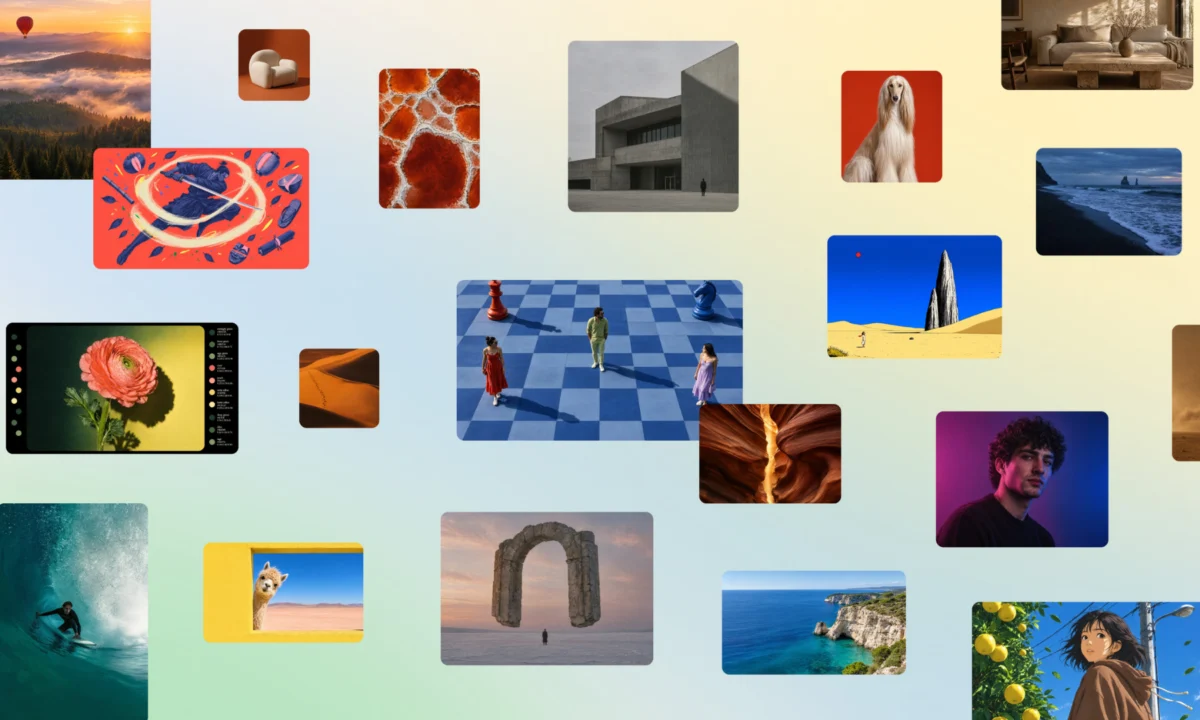
In the rapidly evolving landscape of generative artificial intelligence, the current paradigm is defined by a common frustration: the “almost-but-not-quite” result. Users generate a stunning image, only to find the text garbled, the layout nonsensical, or the aspect ratio incompatible with their intended platform. Today, Canva is stepping into the fray with a definitive solution: Canva Craft, the company’s first in-house, frontier-grade image generation model designed specifically for the realities of modern professional design.
Unlike general-purpose models that prioritize artistic flair at the expense of utility, Craft is built with a singular focus on the mechanics of visual communication. By prioritizing layout architecture and textual accuracy before the final rendering phase, Canva is positioning its new model as an essential tool for marketers, small business owners, and creative professionals who need output that is ready for publication, not just for inspiration.
The Core Philosophy: Why Design Needs a New Breed of AI
The primary critique of current generative models—such as those powering Midjourney or DALL-E—is their lack of structural awareness. They are trained to predict pixels based on vast datasets of photography and digital art, but they often struggle with the rigid requirements of typography, spacing, and visual hierarchy.

Canva Craft departs from this trend by utilizing a two-stage generative process. First, the model interprets the user’s prompt to construct a "blueprint" of the design. This stage calculates the optimal placement of objects, the necessary scale of elements, the visual weight of the composition, and, crucially, the integration of text. Only after this structural planning is complete does the model generate the final visual at up to 2K resolution.
By training the model specifically on millions of human-created Canva templates—ranging from intricate restaurant menus and high-impact event posters to data-dense infographics and slide decks—the company has optimized Craft to understand the "language" of design. The result is a model that treats a graphic not as a flat image, but as a collection of modular elements.
Chronology of Development: From Magic Media to Craft
The trajectory toward Canva Craft has been a calculated multi-year journey. For years, Canva has integrated various third-party AI technologies into its suite, allowing it to remain a top-tier destination for non-designers. However, the reliance on external models created limitations in control and workflow integration.

- 2023: Canva introduces "Magic Media," an early implementation of text-to-image generation that proved popular but highlighted the industry-wide struggle with consistency and text rendering.
- 2024: The company accelerates its investment in "Magic Layers" technology, which allows for the conversion of flat, AI-generated images into editable, layered files. This was the precursor to the structural understanding required for Craft.
- October 2026: Canva officially unveils Craft. The launch marks the company’s emergence as a significant player in the AI lab space, with the model already appearing on global design-centric AI leaderboards.
- Late 2026 and Beyond: Canva has confirmed the upcoming release of "Craftfast" and "Craft-ultrafast," lighter iterations of the model designed to reduce latency and cost for high-volume users.
Supporting Data: By the Numbers
To understand the scale of the challenge Canva is addressing, one must look at the technical constraints of the new model:
- 30 Aspect Ratios: Unlike standard models that often force users into a 1:1 or 16:9 box, Craft supports 30 distinct aspect ratios. This ensures that a design for an Instagram Story, a LinkedIn header, or a print flyer is generated with the correct dimensions from the start.
- 2K Resolution Output: While many generative tools default to lower resolutions to save compute, Craft targets 2K, providing a high-fidelity base that holds up under print or professional digital display.
- Layered Integration: The model works natively with "Magic Layers," meaning that once an image is generated, it is not "baked." Users can select specific text boxes, move individual graphic elements, or swap out background colors without having to regenerate the entire image—a significant time-saver for iterative workflows.
Official Responses and Strategic Positioning
In a statement accompanying the launch, Canva emphasized that the goal of Craft is to transition AI from a “novelty toy” to a “professional assistant.”
"With Craft, we aren’t just trying to make ‘pretty’ pictures," noted a spokesperson for the company. "We are trying to make useful ones. The biggest barrier to AI adoption in professional settings isn’t a lack of creativity; it’s the lack of control. By building a model that understands the constraints of a poster or a presentation, we are removing the friction that leads to ‘AI fatigue’."

The industry response has been largely positive, with early testers noting that the ability to edit text elements directly after generation is a game-changer. By aligning its model with the existing Canva ecosystem—which includes brand kits, fonts, and assets—Canva is leveraging its existing moat. While OpenAI and Google compete on the pure intelligence of their models, Canva is competing on the utility of the output.
Implications: The Shift Toward “Ready-to-Use” AI
The launch of Canva Craft signals a maturation phase in the AI industry. We are moving away from the "wow factor" of early AI art and toward a period of utilitarian integration. Several key implications arise from this shift:
1. The Death of the "Creative Cleanup"
Currently, designers often spend as much time "fixing" AI images (removing artifacts, fixing typos, re-aligning text) as they would have spent creating the design from scratch. If Craft can consistently deliver designs that require little to no post-production, it will fundamentally change the cost-benefit analysis of using AI in corporate environments.

2. A New Standard for Developer Access
By making Craft available through its API and integrating it with third-party assistants like ChatGPT and Gemini via its Model Context Protocol (MCP), Canva is positioning itself as a foundational layer for design AI. This means that a user interacting with a chatbot could potentially request a "social media graphic for a bakery opening," and the chatbot, powered by Craft, would return a perfectly formatted, editable file—not just a static JPEG.
3. The Commoditization of Layout
As AI becomes better at understanding visual hierarchy, the role of the graphic designer will continue to shift. The ability to layout a page or choose a balanced color palette is becoming a commodity provided by the AI. This will likely push professional designers toward more strategic, conceptual, and brand-driven work, while routine layout tasks are increasingly automated by models like Craft.
4. Competitive Pressure on Big Tech
Canva’s pivot to in-house models places it in direct competition with the largest technology companies on the planet. While OpenAI and Google possess more raw compute power, Canva possesses the "data advantage"—a proprietary dataset of human-made designs that is arguably more valuable for this specific use case than the open web data used by general models.

Conclusion: A Tool, Not a Replacement
Canva Craft represents a significant step forward for the average user who needs a professional-looking graphic in minutes, not hours. By focusing on the "planning" stage of generation, Canva has successfully bridged the gap between raw imagination and finished production.
As we look toward the future, the success of Craft will be measured by its reliability. If the model can prove that it can handle the nuances of corporate branding, complex typography, and specific client requirements, it will set a new benchmark for what we expect from generative tools. The age of the "messy AI image" may be drawing to a close, replaced by an era of precise, intentional, and truly useful machine-generated design. For creators, this means more time to focus on the "why" of their projects, while leaving the "how" to the machine.

 Pevita Pearce

 Dwi Wanna