Neng Nana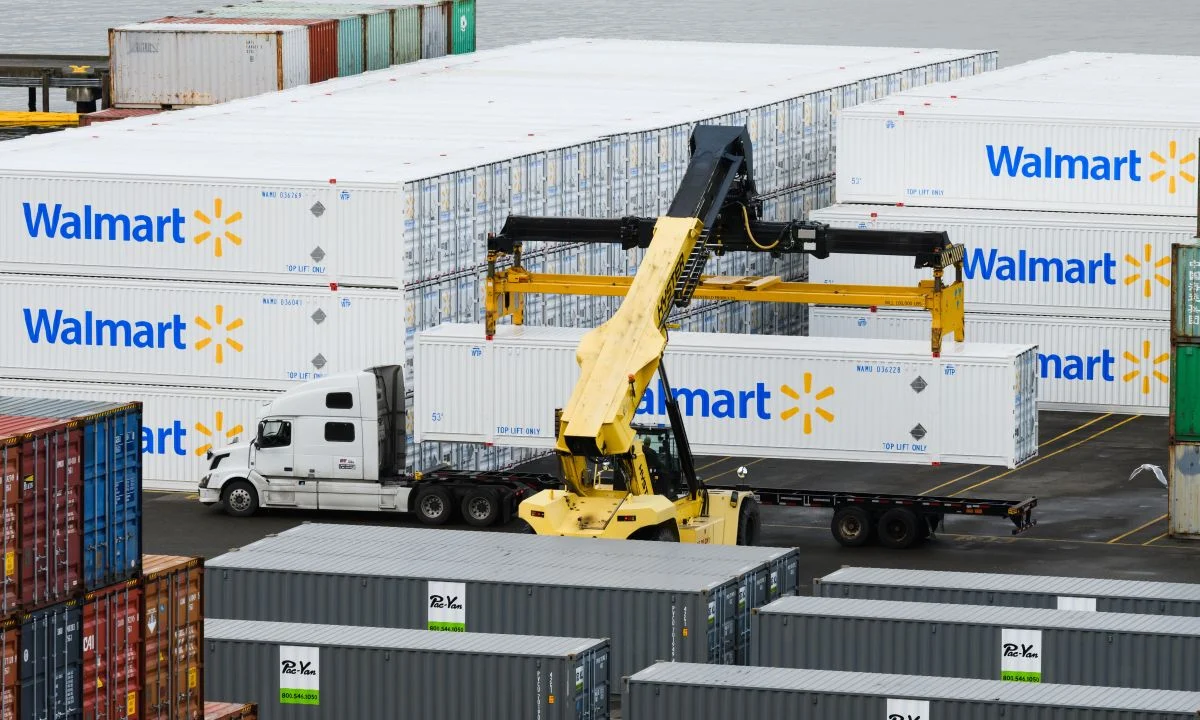
By PYMNTS | May 31, 2026
As the economic landscape shifts, the definition of "value" is undergoing a radical transformation for the American household. In a strategic maneuver to capture a larger share of the tightening consumer wallet, Walmart announced a significant expansion of its private brand portfolio this week. By introducing a new home-focused sub-brand and bolstering its professional-grade hardware lineup, the world’s largest retailer is attempting to position itself as the ultimate destination for quality and affordability in an era where "cutting back" is no longer a viable strategy for survival.
The Strategy: Innovation Meets Affordability
Walmart’s latest expansion is not merely a product refresh; it is a calculated response to the "value-first" mentality currently dominating consumer behavior. According to the company’s recent press release, the retailer is launching Mainstay Kids, a comprehensive collection comprising over 600 items spanning furniture, bedding, bath, and decor. This marks Walmart’s first major home-brand launch in five years, signaling a renewed focus on capturing the family-oriented market segment.
Simultaneously, the retail giant is turning its attention to the DIY and professional trade sectors. By debuting Greenworks Pro—a line marketed as "professional-grade" power tools available exclusively through Walmart—the company is aiming to bridge the gap between heavy-duty utility and budget-conscious pricing. This expansion is complemented by a broader inventory of Greenworks 24V POWERALL tools and an increased selection of its long-standing Hyper Tough line.
For Walmart, this is about more than just stocking shelves; it is about reinforcing its brand identity as a provider of "modern design" and "strong value." By controlling the supply chain of these exclusive labels, Walmart can maintain higher margins while offering price points that competitors—reliant on third-party manufacturers and wholesalers—struggle to match.
Official Responses: Merchandising for a Changing Landscape
Courtney Carlson, Senior Vice President of Merchandising at Walmart, emphasized that these changes are a direct response to the evolving needs of the modern consumer. "At Walmart, we’re always looking for ways to bring innovative products, modern design, and strong value to our customers," Carlson stated. "From professional-grade tools to stylish, affordable home décor for families, these launches reflect how we’re continuing to evolve our assortment to better serve the needs of today’s customers."
This sentiment is echoed by retail analysts who suggest that private labels have moved beyond being simple "budget alternatives." Today, they are sophisticated product lines that offer consumers a sense of status and utility without the "name-brand tax" that frequently inflates prices in the retail sector. As inflation remains sticky and essential costs remain high, Walmart’s move to expand these offerings serves as a critical hedge against consumer churn.
Supporting Data: The Anatomy of a Cash-Strapped Economy
The timing of Walmart’s expansion is dictated by a grim economic reality. While retail spending continues to occur, the underlying financial health of the average American household is flashing warning signs. Recent data from the Bureau of Economic Analysis (BEA) paints a precarious picture: personal spending climbed 0.5% in April, yet this spending is increasingly disconnected from income growth.
Crucially, disposable income has remained effectively flat, leading to a precipitous drop in the personal savings rate, which has hit a four-year low of 2.6%. This statistic is the "canary in the coal mine" for the retail industry. It suggests that consumers are no longer saving to buy; they are buying to keep up with the escalating costs of daily life.
The widening gap between household intent and financial reality is being fueled by elevated inflation. Essentials—specifically housing, energy, and food—continue to consume a disproportionate share of the monthly budget. Consequently, real spending on durable goods has slipped below year-ago levels. When consumers reach their financial buffers, they do not simply stop spending; they pivot. They move from premium name brands to private labels, and from high-end specialty retailers to "infrastructure-heavy" giants like Walmart.
The Evolution of the Retail Platform
Beyond the physical products, Walmart’s expansion reflects a deeper, structural shift in the company’s business model. As the retailer navigates a slowing economy, it is undergoing a metamorphosis, evolving from a traditional brick-and-mortar storefront into a comprehensive platform provider for a digitally mediated economy.
This evolution brings Walmart into direct, head-to-head competition with Amazon. However, while Amazon continues to lean heavily into its digital-first architecture, Walmart is leveraging its physical footprint as a distinct competitive advantage. Thousands of Walmart locations now function as hybrid hubs: they are retail spaces, fulfillment nodes, rapid-pickup centers, and advertising touchpoints all at once.
By integrating its private label expansion into this multi-modal network, Walmart is creating a closed-loop ecosystem. Whether a customer shops online for home décor or visits a store to pick up a Greenworks power tool, the data harvested and the efficiency of the supply chain allow Walmart to remain "sticky" in the consumer’s mind.
Implications: The End of the "Cutback" Era
The current economic cycle is proving that traditional austerity measures—simply spending less—are no longer effective for many households. Instead, consumers are entering a period where they must do "more with less." This means seeking out value, prioritizing durable items that serve multiple purposes, and choosing retailers that offer the most "bang for the buck."
Walmart’s strategy, therefore, is a direct challenge to the broader retail market. By expanding into home decor and pro-grade hardware, they are effectively poaching customers who might have previously shopped at home-improvement specialty stores or mid-tier furniture boutiques.
Long-term Economic Considerations:
- Consumer Loyalty: If private brands successfully bridge the quality gap, national brands may face a permanent erosion of market share.
- Inflationary Pressure: As retailers like Walmart scale their private label portfolios, they gain greater leverage over their manufacturing partners, potentially exerting downward pressure on prices across the board.
- The Infrastructure War: The rivalry between Walmart and Amazon will likely intensify. While Amazon dominates the digital experience, Walmart’s ability to combine physical proximity with a massive, evolving private-label catalog presents a formidable barrier to entry for smaller retailers.
Conclusion
The expansion of Walmart’s private label portfolio is a masterclass in reading the economic room. As households struggle with stagnant income and the erosion of their savings, the demand for high-quality, low-cost goods has never been higher. Whether the launch of Mainstay Kids and Greenworks Pro will be enough to buoy the retail giant through a period of cooling consumer confidence remains to be seen. However, one thing is clear: Walmart is no longer just selling groceries and household basics. It is attempting to capture every aspect of the consumer’s domestic and professional life through a platform that is increasingly difficult to ignore.
As we look toward the latter half of 2026, the success of these new lines will serve as a bellwether for the broader retail industry. If Walmart can successfully convince the average consumer that their private labels are not just a cheaper alternative, but a superior choice in terms of design and performance, they may well define the next decade of American consumerism.


 Layla Zulfa
 Ammar Sabilarrohman