Evan Lee Salim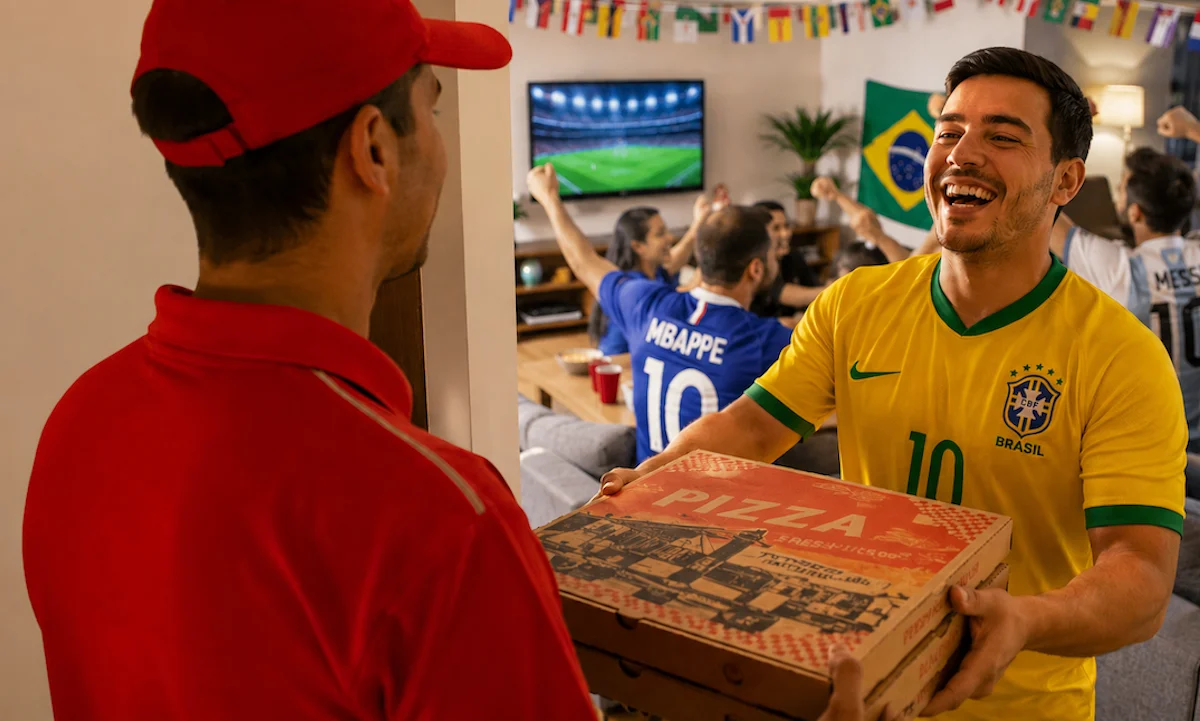
By PYMNTS | July 25, 2026
Spain has officially hoisted the 2026 FIFA World Cup trophy, clinching a hard-fought 1-0 victory over Argentina in extra time. Yet, while the drama unfolded on the grass, a far more expansive tournament was playing out in the digital ether. Over the course of 39 days and 104 matches, the 2026 World Cup functioned as a massive, high-stakes behavioral experiment, testing the limits of global connectivity, logistics, and consumer habits.
As the dust settles, one reality is clear: the modern World Cup is no longer just a sporting event. It is a synchronized global engine of e-commerce, digital streaming, and hyper-local delivery, permanently altering how we interact with, consume, and travel for major cultural spectacles.
The Global Pulse: A New Benchmark for Digital Engagement
The sheer scale of the 2026 tournament’s digital footprint is staggering. By the end of the round of 16, FIFA estimated that 5.2 billion people had engaged with the tournament in some capacity. By the time the final whistle blew in the championship match, the organization’s digital channels had generated an unprecedented 34 billion impressions and two billion direct engagements.
This was not a passive viewing experience. It was a multi-screen, hyper-connected phenomenon. During the group stage alone, FIFA recorded 11 billion video views and 39 million new followers across its ecosystem. Content was not just being consumed; it was being dissected, memed, and shared in real-time. For instance, a single highlight clip of Lionel Messi scoring against Algeria generated 53 million views on TikTok, while the opening ceremony featuring Shakira and Burna Boy pulled in a combined 175 million views across Instagram and YouTube.
The industry has moved beyond the "second screen" era; we are now in the age of the "third screen"—where the primary broadcast is watched on television, discussed on social media, and verified or joked about on a third device.
Chronology of a Planetary Experiment
The tournament’s influence followed a predictable, yet intensified, trajectory:
- The Buildup (Pre-Tournament): Merchandise sales surged months in advance, with Nike reporting that national-team kit sales were 2.5 times higher than at the same stage in 2022. Adidas, as the official outfitter for the finalists, capitalized on this, booking roughly 250 million euros ($285 million) in product sales in the first quarter alone.
- The Group Stage (The Engagement Boom): This phase set the tempo, with record-breaking viewership. Brazil’s match against Haiti alone reached 51.3 million people across Globo’s ecosystem, while CazéTV shattered YouTube records for live football streaming.
- The Knockout Rounds (The Logistics Test): As the tournament progressed, the focus shifted from viewership to movement. Travel booking platforms like Despegar saw a 6,000% surge in flight searches for New York within hours of Argentina confirming its spot in the final. Two chartered flights to New York, costing up to $10,000 for business-class seats, sold out in a single evening.
- The Final (The Climax): The BBC reported an average of 9.7 million viewers for the final, peaking at 13.6 million. Simultaneously, the social media ecosystem generated over 2.5 billion views on tournament clips, proving that television remains the anchor, but digital platforms have become the primary distribution channels for narrative and culture.
Supporting Data: The Anatomy of a Consumption Spike
The "snack economy" serves as perhaps the most visceral indicator of how the tournament altered daily life. With matches hosted across varied time zones, global eating habits were forced to adapt to the "graveyard shift."
In India, the late-night kickoff times led to a massive spike in food delivery. One customer in Chandigarh set a record with a single finger-food order totaling 16,444 rupees ($140). In Israel, delivery service Wolt reported a 20% increase in match-hour orders, with pizza and ice cream sales jumping 35% and 44%, respectively.
Uber’s data provides perhaps the most fascinating insight into the "power user" behavior of the modern fan. The company tracked millions of deliveries, including 10 million orders for ranch dressing alone—a staple of the American match-day experience that became a global phenomenon. Beyond food, convenience stores saw an influx of orders for water, electrolytes, and Tylenol, signaling that the "morning after" is now as much a part of the event as the match itself.
Mobility and the New "Power User"
Mobility was a defining challenge of the 2026 tournament, which spanned three host countries. Uber’s data revealed the lengths to which fans were willing to go to be part of the action. One fan recorded trips at 10 different venues across the continent, effectively becoming a roaming ambassador for the sport. Another fan treated a 266-mile trek from Arlington to Houston as a routine commute.
The scale of movement was massive: fans from 122 countries utilized ridesharing services, while 35,000 shuttle riders moved through host cities. Even non-stadium-adjacent businesses felt the impact, with Bass Pro Shops reporting a 20% tourism bump in areas surrounding the venues. Los Angeles famously took the "lost-and-found" crown, managing thousands of items left behind by fans in a state of post-match euphoria or exhaustion.
Official Responses and Strategic Implications
FIFA President Gianni Infantino hailed the tournament as a success in terms of both attendance and digital reach. The organization’s strategy, which leaned heavily into the "digital-first" model, has provided a roadmap for future international events. By integrating social media, e-commerce, and real-time streaming into the core FIFA experience, the organization has effectively future-proofed its business model.
Retailers and service providers, meanwhile, are treating the 2026 World Cup as a gold-standard case study. Product managers are now looking at "power users"—those who travel across continents or order tens of thousands of rupees in food—not as anomalies, but as the new demographic to cater to. The "emergency travel agent" dynamic, where digital platforms saw massive search spikes immediately following game results, indicates that consumers now expect instant, frictionless access to travel and logistics services, even at a moment’s notice.
Implications for the Future of Retail and Logistics
The 2026 World Cup has proven that in the digital age, a "goal" is no longer just a sporting event; it is a catalyst for an entire ecosystem of transactions. It is a ride request, a jersey search, a high-volume delivery, a stream, and a social media trend.
1. The Death of Distance
As evidenced by the 266-mile commute and the 6,000% surge in flight searches, "distance" has become a secondary concern to "devotion." Dynamic pricing and on-demand services have enabled a level of fan mobility previously reserved for the ultra-wealthy, now democratized through global apps.
2. The Multi-Channel Living Room
The fact that British viewers tuned in to the BBC while simultaneously generating 100 million views on the BBC’s dedicated YouTube channel proves that traditional broadcasters must continue to pivot to social platforms. The audience is not just watching; they are curating their own highlights, memes, and commentary.
3. Supply Chain Resilience
The "high press" on e-commerce inventory experienced by Nike and Adidas underscores the need for more agile supply chains. When a tournament causes a 2.5x spike in demand, the traditional retail cycle is insufficient. Expect future sporting events to be accompanied by "just-in-time" manufacturing and localized inventory surges.
Conclusion: A New Baseline
As the celebrations fade and the digital dust settles, the 2026 World Cup leaves behind a world where the boundary between the physical event and the digital consumption of that event has all but evaporated. Spain may have taken the trophy, but the true winner of the 2026 World Cup was the digital economy itself.
Platforms have been provided with a massive data set on consumer behavior under high-intensity, time-sensitive pressure. Retailers have seen the potential for massive spikes in demand for both luxury goods (jerseys) and essential services (food delivery). Most importantly, the tournament has proven that for the modern global consumer, "too far" is no longer a geographical limit—it is simply a category in a surge-pricing algorithm. The era of the "connected fan" is here, and the economy of the next major global event will be built entirely around them.


 Layla Zulfa
 Ammar Sabilarrohman