 Pevita Pearce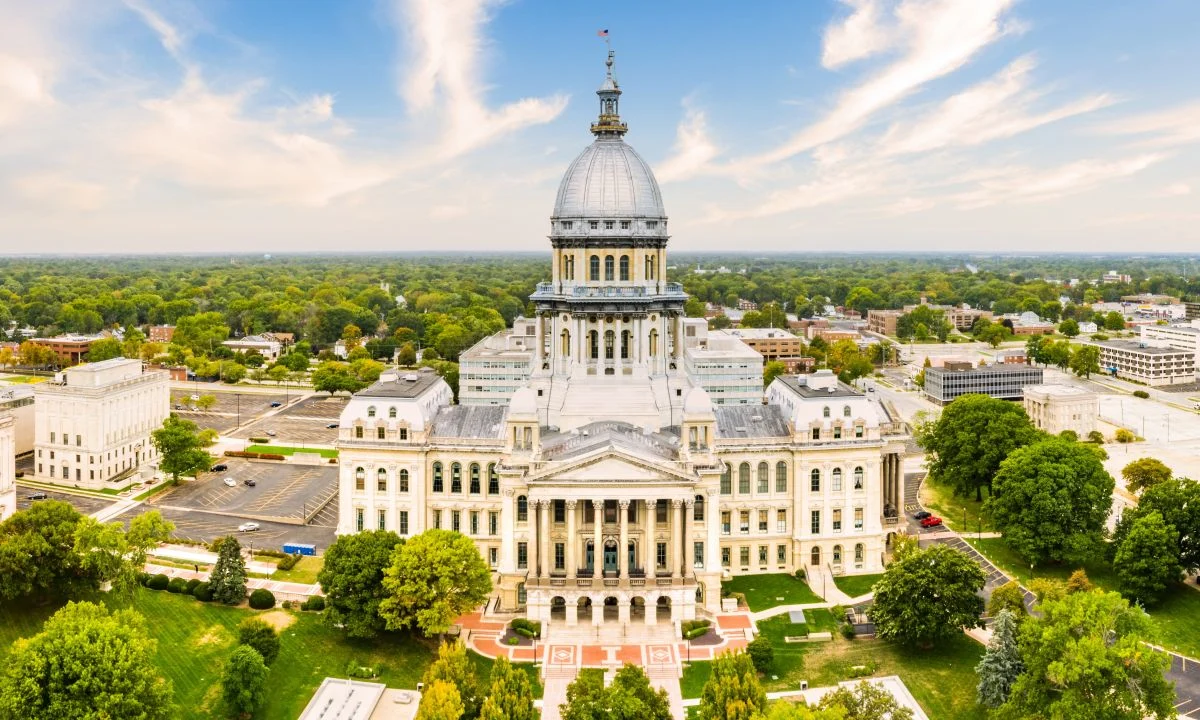
By PYMNTS | May 28, 2026
In a landmark development for the burgeoning field of artificial intelligence regulation, the State of Illinois is poised to enact one of the most comprehensive oversight frameworks in the United States. Following the swift passage of Senate Bill 315 (SB 315)—the Artificial Intelligence Safety Measures Act—through both the Illinois Senate and House of Representatives, the state has signaled a firm intention to transition from an era of unchecked AI development to one defined by strict accountability, transparency, and public safety.
With Governor JB Pritzker confirming his intent to sign the legislation, Illinois is cementing its role alongside California and New York as a legislative vanguard, effectively drafting a de facto national framework for frontier AI safety.
The Core Mandates of SB 315: What the Law Requires
The Artificial Intelligence Safety Measures Act is not a blanket ban on innovation; rather, it is a highly targeted regulatory instrument aimed at the "frontier" developers—the organizations building the most powerful, high-compute AI models. Under the new law, these developers are subject to a rigorous set of compliance requirements designed to mitigate systemic risks.
1. The Frontier AI Framework
Developers categorized under the legislation are required to develop and maintain a comprehensive "Frontier AI Framework." This document must explicitly detail how the organization identifies, assesses, and manages the potential catastrophic risks associated with their large-scale models. This includes governance structures that ensure executive oversight of safety protocols.
2. Mandatory Transparency Reporting
Before any new frontier model is deployed for public or commercial use, developers must submit detailed transparency reports. These reports are intended to bridge the information asymmetry between technical developers and the general public, providing clarity on the model’s capabilities, limitations, and the specific safeguards in place to prevent misuse.
3. Annual Third-Party Audits
To move beyond self-certification, SB 315 mandates annual independent audits conducted by third-party experts. These audits serve as an objective assessment of the developer’s adherence to their own safety frameworks and the statutory requirements set forth by the State of Illinois.
4. Incident Reporting and Whistleblower Protections
The act establishes a formalized channel for reporting "critical safety incidents." Recognizing that internal culture is often the first line of defense against technological failure, the law includes robust whistleblower protections. Employees within these AI firms are shielded from retaliation should they report safety concerns or internal malpractice, ensuring that the people closest to the technology have the agency to raise alarms without fear of professional repercussion.
Chronology: A Swift Path to Legislative Success
The journey of SB 315 from proposal to passage reflects the growing bipartisan urgency surrounding AI safety.
- Initial Drafting and Introduction: Sponsored by Senator Mary Edly-Allen, the bill was crafted to address the "catastrophic risks" posed by advanced systems, focusing specifically on high-compute models that could theoretically threaten public infrastructure or national security if left unmonitored.
- May 21, 2026: The Illinois Senate officially passed the bill, setting the stage for House consideration. The momentum behind the bill was notable, signaling broad legislative support for preemptive regulation.
- May 27, 2026: The Illinois House of Representatives passed the legislation, clearing the final procedural hurdle before it reached the Governor’s desk.
- May 28, 2026: Governor JB Pritzker issued an official statement on the social media platform X, confirming his commitment to sign the bill into law and positioning Illinois as a leader in "holding Big Tech accountable."
Official Perspectives and the Industry Reaction
The reception to SB 315 has been largely characterized by a convergence of interests between legislators and industry leaders who acknowledge that some form of "rules of the road" are necessary for the long-term sustainability of the AI ecosystem.
The Legislative Intent
Senator Mary Edly-Allen, the bill’s chief architect, has been vocal about the necessity of the act. In a press release issued shortly after the House vote, she emphasized that the measure is not intended to stifle the "extraordinary promise" of AI—such as advancements in medical research and scientific discovery—but rather to proactively manage the associated dangers. "This measure is about putting responsible safeguards in place before a preventable catastrophe occurs," Edly-Allen stated.
Governor Pritzker’s Stance
Governor Pritzker’s rhetoric has been framed within the broader context of the digital economy. By stating that "as AI systems impact people’s lives, we need safeguards in place," he has signaled that his administration views AI oversight as a fundamental aspect of consumer protection, akin to food safety or environmental regulations.
The Corporate Response: OpenAI’s Endorsement
Perhaps most significant is the reaction from industry heavyweights like OpenAI. In a notable display of cooperation, the organization endorsed the bill, framing it as a positive step toward creating a uniform standard. OpenAI’s statement on X highlighted that the emergence of state-level laws in Illinois, New York, and California is successfully coalescing into a "de facto national framework." For developers, a patchwork of conflicting state laws is a logistical nightmare; therefore, they appear to be welcoming the move toward a standardized, predictable regulatory environment.
Implications: The Shift Toward a National Standard
The passage of SB 315 has profound implications for the future of the technology industry in the United States.
1. The Death of "Move Fast and Break Things"
The era characterized by the Silicon Valley mantra of "move fast and break things" is clearly drawing to a close. For AI, the risks—ranging from biased automated decision-making to the potential for large-scale cyber-attacks—are deemed too high for an unregulated approach. SB 315 represents a regulatory maturation process where developers must now "move fast and be transparent."
2. The Fragmentation vs. Harmonization Dilemma
While OpenAI and other industry players view these state laws as a path to a national framework, critics argue that the absence of federal legislation is forcing states to innovate in a vacuum. If every state were to enact unique, conflicting regulations, the AI industry would face a massive compliance burden. However, for now, the "California-New York-Illinois" nexus appears to be creating a "California Effect," where the largest and most influential states set the bar that the rest of the country—and eventually federal regulators—will be compelled to follow.
3. Impact on Innovation and Research
There is an ongoing debate regarding whether such stringent regulations will drive innovation to other jurisdictions. However, supporters of the bill argue that safety and innovation are not mutually exclusive. They contend that public trust is the essential ingredient for the widespread adoption of AI; therefore, by ensuring the technology is safe, the government is actually protecting the market for future AI products.
4. Setting the Precedent for Transparency
The focus on "transparency reports" and "third-party audits" mirrors the evolution of financial regulations. Just as public companies are required to submit to audits to ensure the integrity of the financial markets, AI developers are now being treated as entities that manage critical infrastructure. This shifts the perception of AI companies from "software developers" to "public service providers," with all the attendant responsibilities.
Conclusion: The Path Forward
As Governor Pritzker prepares to sign SB 315 into law, the eyes of the tech world remain fixed on Springfield, Illinois. The state has proven that it is willing to act where federal gridlock has previously stalled progress.
The successful passage of this legislation serves as a warning and a template. It signals that the "wild west" phase of artificial intelligence is over. Going forward, the entities that will thrive in the AI landscape will not necessarily be those that iterate the fastest, but those that can demonstrate the highest levels of safety, accountability, and transparency.
By demanding annual audits, establishing whistleblower protections, and forcing the disclosure of risk-mitigation strategies, Illinois is not just regulating a technology; it is defining the social contract for the next generation of computing. As the industry looks toward a future dominated by increasingly autonomous systems, the framework established by SB 315 will likely serve as a cornerstone for the global debate on how humanity maintains control over the tools it creates.


 Suro Senen