Lina Hope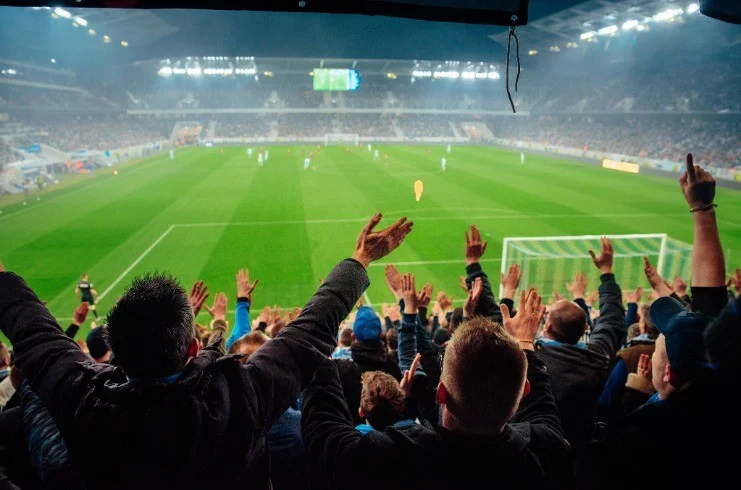
As the 2026 FIFA World Cup descends upon the United States, hotel operators from coast to coast are bracing for an unprecedented influx of international and domestic travelers. While the surge in occupancy is a welcome boon for revenue managers, the tournament presents a far more complex strategic challenge: how to convert thousands of "one-and-done" visitors into a sustainable, loyal customer base.
For the modern hospitality executive, the World Cup is not merely a logistical test of room inventory; it is the ultimate customer acquisition laboratory. As the final whistle blows on the tournament, the industry will face a reckoning. Those who viewed the event as a simple transactional spike will see their guest databases return to baseline, while those who leveraged the moment to forge genuine relationships will walk away with a significant competitive advantage.
Main Facts: The Tournament Effect
The 2026 FIFA World Cup is expected to draw millions of unique visitors to host cities. Unlike typical corporate travel or recurring leisure demand, these guests are often first-time visitors to a specific hotel brand. They are high-intent, time-sensitive travelers who prioritize convenience, location, and the excitement of the event above brand loyalty.
Recent research from industry analysts, including Sojern, indicates that the World Cup is fundamentally altering travel patterns. Booking windows are shifting, lead times are compressing, and the demographic profile of the average guest is skewing younger and more internationally diverse. The challenge is that these guests have no existing equity in traditional hotel loyalty programs. They are, in effect, "loyalty free agents," and they represent a massive, untapped market for operators who can pivot their engagement strategies in real-time.
Chronology: From Booking to Retention
The lifecycle of the World Cup guest is truncated and intense. To capture this segment, operators must map the guest journey with surgical precision:
- The Acquisition Phase (Pre-Arrival): The guest interacts with the hotel primarily through digital channels. This is the first opportunity to capture data beyond a simple credit card authorization.
- The High-Stakes First Impression (Arrival): The moment of check-in during a tournament is chaotic. A seamless experience here is the difference between a neutral review and a lifelong brand advocate.
- The Engagement Phase (On-Property): During the stay, the guest provides behavioral signals—dining choices, spa usage, or room service frequency—that are far more valuable than their original booking record.
- The Post-Tournament Pivot (Retention): Once the fan returns home, the traditional "points-based" model often fails. The goal here is to bridge the gap between the event-driven stay and future travel.
Supporting Data: The Loyalty Gap
The industry’s current reliance on frequency-based loyalty programs is increasingly viewed as an outdated relic of a different era. Traditional programs are built on the assumption that a guest will return frequently enough to accumulate points. However, the average hotel guest visits a brand only a handful of times per year.
Compared to the restaurant industry—where customers may visit dozens of times annually—the hotel sector lacks the "frequency velocity" required for points to feel rewarding. By the time a guest reaches a "Gold" or "Platinum" tier in a hotel program, they may have already moved on to a different brand or city. This creates a "Loyalty Gap": guests are asked to invest their data and time into a program before they have received enough value to justify that investment.
Data shows that for "single-market" travelers—those who visit a city only once for a specific event—the incentive to join a traditional program is near zero. To convert these guests, the industry must pivot from frequency-based loyalty to value-based engagement.
The Restaurant Playbook: A Model for Hospitality
If hotels want to capture the World Cup traveler, they should look toward the restaurant industry’s playbook. Successful restaurants do not wait for a guest to visit ten times before offering a reward. Instead, they provide instant gratification: a complimentary appetizer, a priority reservation, or a personalized recommendation based on a previous order.
Applying this to hospitality, the strategy is clear:

- Instant Perks: Instead of "earn points for a future stay," offer "instant savings on your current stay." A dining credit, a complimentary gameday shuttle, or early check-in for World Cup ticket holders builds immediate emotional equity.
- High-Leverage Moments: The first stay is the most critical window. If a guest feels "known" within the first 24 hours of their World Cup trip, they are significantly more likely to consider that brand for future travel, even if it is to a different city.
Personalization: From Transactional to Relational
Personalization is no longer a buzzword; it is a structural necessity for modern hospitality. Hotels hold an treasure trove of behavioral data—booking channels, amenity preferences, and on-property spending—that is frequently siloed.
When a guest uses the pool every morning and orders a wellness smoothie, they are telling the hotel exactly what they value. If the hotel’s marketing system then sends that guest a generic "50% off a breakfast buffet" offer, the relationship remains transactional. However, if the hotel uses that behavioral signal to offer a "Wellness Weekend" package for their next trip, the relationship becomes relational.
Relational guests are the "holy grail" of hospitality. They book directly, bypassing third-party OTAs, which saves the hotel on acquisition costs. They are also more likely to advocate for the brand, effectively acting as an unpaid marketing department.
The Role of Agentic AI
The shift from generic segmentation to true personalization requires a technological leap. Consolidating data is merely the first step. Data without context is simply "noise at scale."
Agentic AI—artificial intelligence capable of autonomous decision-making—is the missing link. When a hotel’s operational data (what the guest actually does on-site) is connected to its loyalty data (what the guest says they like), the system gains context.
- Predictive Offers: AI can analyze a guest’s World Cup travel patterns and immediately trigger a tailored offer for a future destination that matches their preference for, say, city-center luxury or family-friendly resorts.
- The Feedback Loop: Unlike static databases, agentic AI learns from outcomes. It tracks which offers led to a re-booking and which fell flat. This creates a self-optimizing loop where every interaction improves the next.
Implications: The Long-Term Strategic Outlook
The 2026 World Cup will create millions of new guest profiles. The implications for the hospitality industry are twofold.
First, there is the Immediate Revenue Opportunity. Brands that successfully deploy instant, relevant incentives will see a higher "share of wallet" during the tournament itself, as guests spend more on-property rather than looking for outside alternatives.
Second, there is the Strategic Legacy. For the hotelier, the tournament is an acquisition engine. If a brand can turn a one-time soccer fan into a repeat customer, they have successfully lowered their long-term Customer Acquisition Cost (CAC) and increased their Lifetime Value (LTV).
However, the cost of failure is high. If a brand ignores the opportunity—treating the World Cup guest as just another body in a bed—they will lose those thousands of potential customers to competitors who are more agile and more personalized.
In conclusion, the 2026 World Cup serves as a litmus test for the industry’s digital maturity. It is a moment where the "old guard" of point-accrual loyalty will be challenged by the "new guard" of context-aware, AI-driven engagement. As the world turns its eyes to the pitch, the hospitality industry must decide if it will remain a collection of transactional stops or evolve into a provider of relational, personalized experiences. The hotels that win will be those that understand one fundamental truth: every guest is an individual, and every stay is an opportunity to start a relationship that lasts far longer than a tournament.


 Nila Kartika Wati
 Layla Zulfa