Lina Hope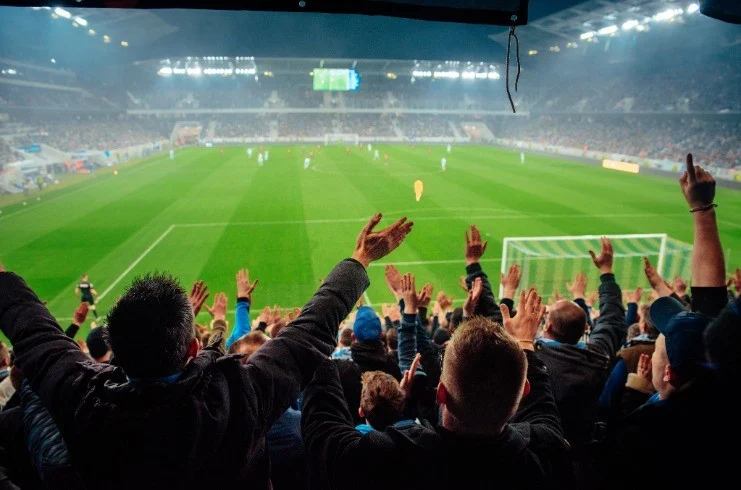
As the 2026 FIFA World Cup descends upon the United States, North American hoteliers are facing a unique phenomenon: a massive, temporary influx of transient, high-value, and—crucially—first-time guests. While revenue management teams are currently focused on occupancy rates and dynamic pricing to maximize yield during the tournament, a more strategic imperative looms in the background. The challenge is no longer just filling rooms; it is the conversion of these one-time, event-driven visitors into brand loyalists.
For many properties, this tournament represents the largest customer acquisition event in decades. However, the hospitality industry’s traditional reliance on frequency-based loyalty models risks alienating these new arrivals before they even check out.
The Loyalty Gap: Why Traditional Models Fail the Transient Guest
For decades, the hospitality industry has operated under a "frequency-first" philosophy. Loyalty programs are meticulously engineered to reward the business traveler who spends 50 nights a year on the road. Tiers, status milestones, and point-multipliers function as a long-term savings account—valuable to the frequent flyer, but entirely hollow for the World Cup spectator visiting a U.S. host city for a single four-day weekend.
The Structural Mismatch
The fundamental disconnect lies in the velocity of the guest relationship. In the restaurant industry, a local patron might visit a venue weekly, allowing the brand to build a relationship through consistent, low-stakes interactions. In contrast, the average hotel guest—even a "loyal" one—interacts with a brand only a handful of times annually.
When a World Cup traveler arrives, they are presented with a program that demands an upfront investment of attention and data for a payoff that may not manifest for years. This "loyalty gap" is hiding in plain sight. If a guest does not feel recognized or rewarded during their inaugural, high-excitement stay, the likelihood of them returning—or even considering the brand for their next international trip—drops significantly. The stakes are immense: in a world of limited touchpoints, every interaction must be a conversion event.
Chronology of a Guest Relationship: From Booking to Advocacy
To understand how to capture the World Cup traveler, operators must view the guest journey not as a series of disparate transactions, but as a linear progression toward advocacy.
- Pre-Arrival (The Hook): The moment a guest books for a World Cup match, they have signaled a specific intent. This is the first opportunity to break the "generic" mold. A confirmation email that offers a bespoke, event-specific perk—such as a discounted game-day shuttle or a pre-loaded dining credit—is infinitely more valuable than a generic "Thank you for booking" notification.
- On-Property (The Experience): The check-in process and the initial 24 hours are the "highest-leverage" moments in the relationship. If the hotel leverages the guest’s profile to offer a room preference or an amenity that aligns with their travel style, the guest shifts from a "room number" to a "known entity."
- Post-Departure (The Bridge): The period immediately following the guest’s exit is where most loyalty programs fail. By sending an offer that is hyper-relevant to the guest’s observed behavior—rather than a generic, one-size-fits-all email—the hotelier can bridge the gap between the tournament and the guest’s next personal or professional trip.
Supporting Data: The Power of Behavioral Signals
The data required to bridge this gap already exists within the walls of most modern hotels. The problem is not a lack of information, but a lack of synthesis. Research suggests that guests are increasingly willing to trade personal data for immediate, tangible utility.
- Behavioral Segmentation: A guest who utilizes the hotel’s spa and health club is signaling a preference for wellness. If that guest receives a targeted offer for a spa retreat in a different city, the conversion rate is statistically higher than a generic "10% off" coupon.
- The "Context" Multiplier: Data without context is merely noise. A reservation record tells you what was booked; it does not tell you why. By combining booking channel data, amenity usage, on-property spend, and lead-time analysis, operators can construct a "Contextual Profile."
- The ROI of Personalization: Industry benchmarks indicate that personalized outreach can increase customer lifetime value (CLV) by up to 25%. For a transient guest, that personalization is the only thing that distinguishes one hotel brand from another in a crowded market.
The Restaurant Playbook: Lessons for Hospitality
The restaurant industry has long excelled at the "instant gratification" model. By providing immediate value—such as a complimentary appetizer, a priority reservation, or a personalized birthday acknowledgment—they foster loyalty through consistency and immediate reward.

Hoteliers are beginning to adopt this "Restaurant Playbook." Instead of waiting for a guest to reach a "Gold" or "Platinum" tier to see a benefit, properties are shifting toward:
- Instant Perks: Providing tangible value (dining credits, room upgrades, or local experiential access) upon the very first check-in.
- Low-Barrier Entry: Eliminating the friction of sign-up forms in favor of frictionless enrollment that triggers rewards immediately.
- Value-Driven Engagement: Ensuring the first interaction feels like a "win" for the guest, thereby anchoring the brand in their mind as a premium service provider.
AI and the Future of Guest Context
The rapid maturation of agentic AI is transforming the way hotels handle this data. Previously, human intervention was required to parse guest data and deliver tailored offers—a process that is neither scalable nor efficient.
The Role of Contextual AI
Agentic AI systems can now autonomously map behavioral signals to specific, pre-approved marketing offers. If the system detects a family traveling with children during the World Cup, the AI can automatically trigger a "Kids Eat Free" voucher or a late-checkout offer to accommodate a hectic tournament schedule. This is not just automation; it is the application of "contextual intelligence."
The Feedback Loop
The true power of these systems lies in their ability to learn from outcomes. If a specific segment of World Cup travelers responds favorably to a "wellness package" but ignores a "business-class discount," the AI adjusts future outreach accordingly. This creates a perpetual feedback loop that refines the brand’s value proposition in real-time. By the time the final match whistle blows in 2026, the brands using these systems will have an enriched database of new, segmented customers who are primed for re-engagement.
Implications: The Long-Term Strategic Shift
The 2026 World Cup is a fleeting moment in time, but the operational changes required to capitalize on it will have permanent implications for the hospitality industry.
- Operational Integration: Hotels must break down the silos between their Property Management Systems (PMS), Point of Sale (POS) systems, and CRM. Data must flow freely to enable the context-aware personalization described above.
- Redefining Loyalty: The industry must move away from the "points-for-stays" model as the sole pillar of loyalty. Future loyalty will be defined by "utility-for-identity"—where guests share data in exchange for a frictionless, highly tailored experience.
- The Human Element: Technology does not replace the human touch; it enables it. By offloading the "noise" of data analysis to AI, hotel staff are freed to focus on high-touch service—ensuring that when a guest does interact with a human team member, that member already knows exactly who the guest is and what they value.
Conclusion: From Transaction to Relationship
For operators, the 2026 World Cup is a high-stakes litmus test. Those who treat the tournament as a simple revenue event—focusing solely on room rates and occupancy—will lose the opportunity to convert millions of new guests into recurring revenue streams.
Conversely, the brands that leverage contextual data and AI-driven personalization to make every guest feel like a valued, long-term partner will emerge from the tournament with a significantly expanded market share. The goal is to ensure that when these travelers plan their next excursion, they are not searching for a room, but looking for a brand that already knows, values, and understands them. In the new landscape of global hospitality, the winner is not necessarily the hotel with the most rooms, but the hotel with the most context.


 Nila Kartika Wati
 Layla Zulfa