
 Azzam Bilal Chamdy
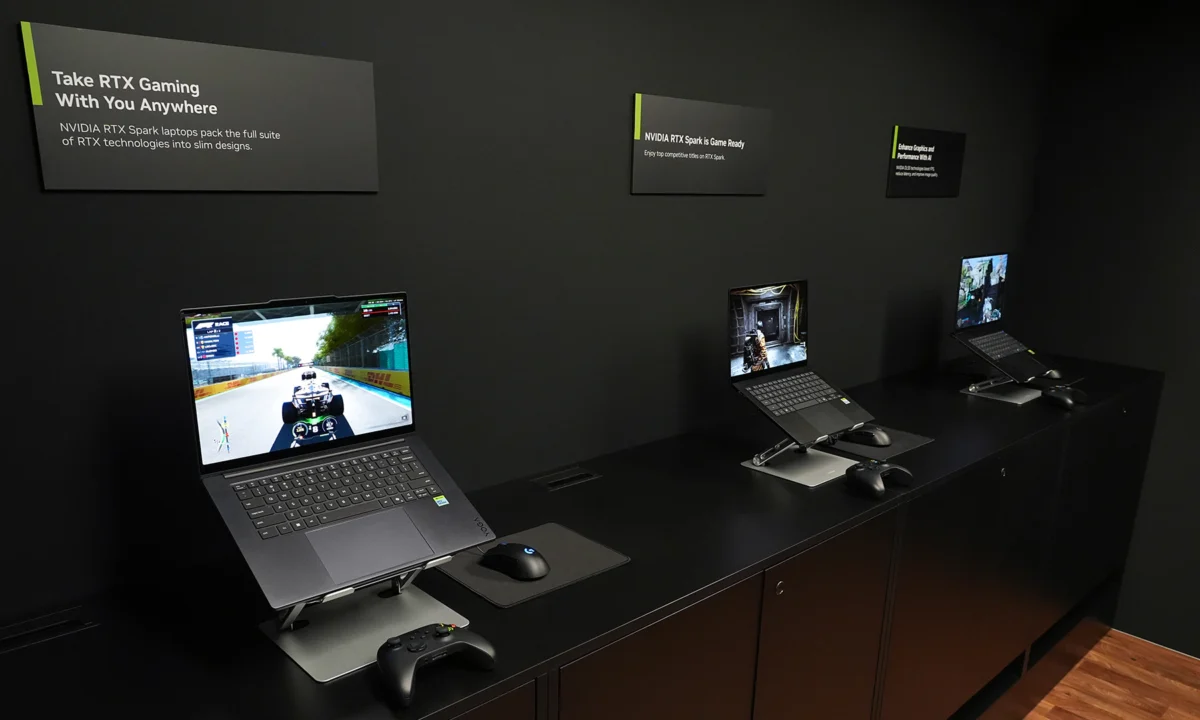
For years, the promise of "Windows on Arm" felt like a perpetual "coming soon" sign. While Qualcomm worked tirelessly to build the foundational hardware for Arm-based PCs—culminating in the impressive Snapdragon X-series processors—the platform faced a persistent chicken-and-egg problem: developers were hesitant to optimize for an architecture with limited market share, and users were wary of a platform that lacked the software and gaming compatibility they took for granted on traditional x86 machines.
However, the landscape shifted dramatically with the arrival of NVIDIA’s RTX Spark. By bringing its Blackwell graphics architecture, the CUDA ecosystem, and a wealth of AI expertise to the Windows on Arm platform, NVIDIA hasn’t just introduced a new chip; it has validated the entire ecosystem. While many industry observers initially framed this as a clash of the titans between Qualcomm and NVIDIA, the reality is far more nuanced. NVIDIA’s entry may be the most significant catalyst for the mainstream adoption of Windows on Arm, potentially turning a niche experiment into a robust, industry-standard alternative to traditional Windows laptops.

Main Facts: The Intersection of Blackwell and Windows
The NVIDIA RTX Spark platform represents a paradigm shift in how we conceive of high-performance laptops. At its core, it leverages the Blackwell architecture, which is widely recognized as the industry benchmark for AI and high-end graphics compute. Unlike traditional laptop SoCs that rely on partitioned memory, the RTX Spark platform utilizes a unified memory architecture shared between a Grace-based CPU and the Blackwell GPU, supporting up to 128GB of memory.
This design is specifically engineered for "heavy lifting." While Qualcomm’s Snapdragon processors are masterclasses in efficiency, catering to the thin-and-light professional market, the RTX Spark is designed for researchers, developers, and power users. By collaborating closely with Microsoft, NVIDIA has ensured that the underlying Windows 11 architecture—including the Prism emulator and the Power and Thermal Framework—is tuned to extract maximum performance from this unified memory pool.

Chronology of a Transformation
The journey toward a viable Windows on Arm ecosystem has been long and arduous:
- The Early Years: Microsoft and Qualcomm faced significant hurdles with software compatibility, relying heavily on emulation that often resulted in performance penalties.
- The Snapdragon Breakthrough: The introduction of the Snapdragon X-series brought "good enough" performance for general productivity, proving that Arm could handle day-to-day Windows tasks without compromising battery life.
- The NVIDIA Catalyst: At recent industry summits, the introduction of RTX Spark signaled that the platform was finally "enterprise-ready." NVIDIA brought not just hardware, but a decade-old software stack—CUDA—that developers are already intimately familiar with.
- The Current Phase: We are currently in the integration phase, where developers are beginning to move beyond x86 emulation and toward native Arm64 support, encouraged by the high-performance hardware now appearing on the market.
Supporting Data: Why Hardware Isn’t the Only Variable
The true differentiator for RTX Spark lies in its ecosystem. NVIDIA’s influence on software development cannot be overstated. A developer deciding whether to port an application to Arm64 is motivated by potential audience size and the availability of development tools. By bringing CUDA and TensorRT to the Windows on Arm environment, NVIDIA is effectively lowering the barrier to entry for developers who already build on the NVIDIA stack.

Furthermore, the integration of "Workload Profile Scheduling" allows Windows to intelligently distribute tasks across the 20 cores of the Grace CPU and the Blackwell GPU. This is not just a marginal gain; it is a fundamental shift in how the operating system handles data-intensive workloads. In benchmarks, this results in significantly reduced latency when moving data between the CPU and GPU, which is critical for local AI agents and high-fidelity gaming.
Official Perspectives: The Strategic Partnership
Microsoft has been the silent architect of this transition, acting as the bridge between Qualcomm’s efficiency-focused hardware and NVIDIA’s performance-focused architecture.

In recent discussions, stakeholders from both companies have emphasized that the goal is not to force users to choose between chipmakers, but to expand the "Arm-native" software library. By establishing "Execution Containers" (MXC), Microsoft has provided a secure sandbox for AI agents to operate, addressing the industry’s primary concern: security. These containers allow AI to handle complex, multi-app workflows without having unrestricted access to the user’s system files—a vital requirement for enterprise adoption.
Implications: The "Rising Tide" Effect
The most fascinating implication of the RTX Spark launch is that it may actually benefit Qualcomm more than it hurts them. Here is why:

1. The Gaming Bottleneck
For years, gaming has been the Achilles’ heel of Windows on Arm. While x86 emulation exists, performance is inconsistent. NVIDIA’s arrival has spurred support for major anti-cheat systems like Epic Easy Anti-Cheat and BattlEye. Once a game developer builds a native Arm64 version of a title to run on an RTX Spark machine, that code becomes an asset that can be deployed across other Arm-based laptops. Qualcomm’s Snapdragon users are the likely beneficiaries of this expanded library of native Arm games.
2. Local AI as a Commodity
Not every user needs a workstation-class GPU to summarize a PDF or organize a spreadsheet. While RTX Spark will dominate the high-end, research-heavy market, the "AI-ready" standard set by NVIDIA will inevitably trickle down. As local AI becomes a standard requirement for Windows 11, the market will demand affordable, battery-efficient laptops that can run these models locally. This is the Snapdragon sweet spot. If NVIDIA paves the way for AI-native software, Qualcomm will be ready to serve the mass market with the Snapdragon’s superior power efficiency.

3. The Developer Pivot
Developers are conservative by nature; they invest time where the tools are stable. By making it easier to write for Windows on Arm, NVIDIA is de-risking the platform. As the software library grows, the "Arm Tax"—the penalty users pay for using a non-traditional architecture—diminishes. This makes the entire category, from budget-friendly tablets to high-performance workstations, more attractive to the average consumer.
Looking Ahead: A New Standard
The "Endgame" for Windows on Arm was never about replacing x86 overnight. It was about reaching a critical mass where the architecture becomes transparent to the user. We are now approaching that tipping point.

NVIDIA is playing the long game. By building a high-end "AI playground" with RTX Spark, they are forcing the rest of the industry to take Arm seriously. Qualcomm, in turn, is continuing to refine the efficiency that makes Arm so attractive for the mobile professional.
The rivalry between the two is productive, not destructive. NVIDIA provides the muscle that makes the platform impressive to critics and power users, while Qualcomm provides the foundation that makes it viable for the mainstream. If the result of this competition is a future where Windows laptops are faster, more secure, and genuinely AI-capable, then the real winner is the end user.

Ultimately, NVIDIA may have walked into the room as a competitor, but they are leaving as the party-starter. Qualcomm might just owe them a thank-you note—not because they are losing, but because, for the first time, the party is finally worth attending.


 Pevita Pearce

 Dwi Wanna





