Pevita Pearce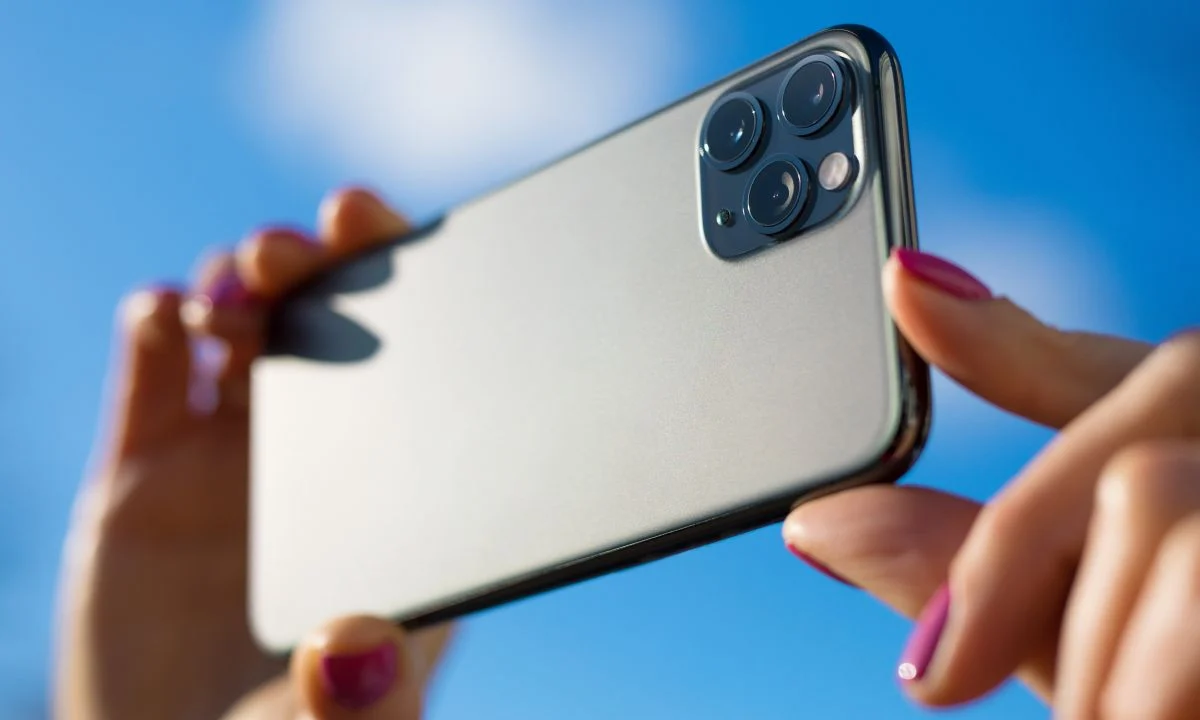
By PYMNTS
September 14, 2026
In a move that underscores its deepening ambitions in the hardware space, OpenAI has officially acquired Glass Imaging, a cutting-edge startup founded by former Apple engineers. The acquisition, valued at $300 million, marks a significant escalation in OpenAI’s efforts to integrate advanced artificial intelligence directly into physical consumer devices. As the boundary between software-based intelligence and hardware capability blurs, this deal positions the creator of ChatGPT at the center of the next great evolution in computational photography.
The Core Acquisition: Bridging the Gap Between Lens and Logic
Glass Imaging, established in 2019 by industry veterans Ziv Attar and Tom Bishop, has spent the better part of five years perfecting a proprietary suite of AI-driven image processing tools known as "GlassAI." The startup’s core value proposition lies in its ability to transcend the physical limitations of small-form-factor sensors—such as those found in smartphones—to produce output that rivals the crispness, color depth, and texture of high-end DSLR cameras.
While the financial terms of the deal were not formally disclosed by the parties involved, reports indicate a valuation of $300 million. This represents a significant appreciation for Glass Imaging, which had secured a $100 million valuation during its 2025 funding cycle. The acquisition brings a team of elite imaging specialists into the OpenAI fold, providing the Sam Altman-led organization with the intellectual property necessary to redefine how AI-powered devices perceive the physical world.
Chronology: From Seed Stage to Silicon Valley Exit
To understand the trajectory of Glass Imaging, one must look at its rapid ascent within the competitive landscape of computer vision and image signal processing (ISP).
- 2019: Glass Imaging is founded by Ziv Attar and Tom Bishop, both former Apple employees with deep expertise in optics and image processing. Their goal: to replace traditional, hardware-heavy ISP pipelines with neural-network-based software solutions.
- 2021: The company secures its initial seed funding, establishing a foothold in the competitive AI imaging market.
- 2024: Following a period of aggressive R&D, Glass Imaging raises an additional $9.3 million in an extended seed round, signaling growing investor confidence in its “real image content recovery” technology.
- May 2026: The startup announces a successful $20 million Series A funding round. At the time, Attar and Bishop emphasized that their goal was to implement GlassAI across a broad range of camera platforms, effectively "unlocking the full potential" of every sensor it touches.
- September 14, 2026: OpenAI completes the acquisition of Glass Imaging, signaling an integration strategy that moves beyond simple software applications.
Supporting Data: Why GlassAI Matters
The technological advantage provided by Glass Imaging is not merely incremental; it is fundamental to the future of AI hardware. Traditional smartphone photography relies on complex, labor-intensive image signal processing pipelines that are constrained by sensor size. Glass Imaging’s approach shifts this burden to advanced image restoration networks.
In a press release issued during their Series A round, Tom Bishop noted that their technology "swiftly corrects optical aberrations and sensor imperfections while efficiently reducing noise." This level of "real image content recovery" is the missing link for AI devices that require high-fidelity visual input to function effectively.
If an AI device—such as a smart speaker or a wearable—is to act as a meaningful assistant in a user’s home, it needs to see clearly. It must be able to discern textures, read documents in low light, and interpret complex visual environments without the latency associated with cloud-based processing. By bringing Glass Imaging in-house, OpenAI is essentially equipping its future hardware with a sophisticated "visual cortex" that can operate with minimal energy consumption and maximum precision.
The Jony Ive Connection: A Design-First Approach
Perhaps the most compelling narrative thread in this acquisition is the ongoing collaboration between OpenAI and legendary industrial designer Jony Ive. Reports have consistently pointed to a joint project between OpenAI and Ive—the mastermind behind the original iPhone—to develop a new consumer device.
The integration of Glass Imaging into this partnership is telling. Jony Ive’s design philosophy has always centered on the "disappearing device"—technology that is so intuitive and seamlessly integrated that it ceases to be a gadget and becomes an extension of the user. To achieve this, the device must be small, unobtrusive, and powerful. Glass Imaging’s technology allows for a reduction in physical lens size without a corresponding loss in image quality, perfectly aligning with Ive’s minimalist aesthetic.
While OpenAI remains characteristically opaque regarding its specific product roadmap, the convergence of Ive’s design language and Glass Imaging’s vision technology suggests a device that will be less a "phone" and more a "companion."
Implications: The Shift Toward Ambient Computing
The acquisition serves as a clear indicator that OpenAI is moving beyond the chat-based interface. In August 2026, reports surfaced that OpenAI’s inaugural hardware product would be a portable smart speaker designed to interact with the user’s environment. Unlike the static, passive speakers currently sold by Apple or Google, OpenAI’s device is expected to have a "personality" and the ability to interpret its surroundings via integrated sensors and cameras.
1. The Death of the "Screen-First" Era
For years, the industry has focused on bigger screens and higher-resolution displays. OpenAI’s shift toward advanced imaging suggests a pivot to "ambient computing"—a state where the AI is always aware of the context. If the AI can "see" as well as a professional camera, it can provide context-aware assistance that text-based models cannot offer.
2. Competitive Pressure on Big Tech
This acquisition places significant pressure on Apple and Google. Both companies have built their camera reputations on proprietary ISP pipelines. By acquiring a startup that has essentially "solved" many of the limitations of those traditional pipelines, OpenAI is threatening to leapfrog incumbents in the race to provide the best AI-integrated hardware experience.
3. The Future of Privacy and Ethics
With advanced, high-fidelity imaging comes the inevitable question of privacy. If OpenAI’s upcoming devices are equipped with GlassAI-enhanced cameras, the company will face increased scrutiny regarding how it handles the vast amount of visual data it will undoubtedly collect. The successful deployment of this technology will require not just engineering excellence, but a robust framework for user consent and data security.
Official Responses and Market Reaction
As of publication, representatives for both OpenAI and Glass Imaging have declined to provide specific details regarding the integration process. However, industry analysts remain bullish on the acquisition.
"This isn’t just about taking better photos," said one industry analyst familiar with the transaction. "This is about OpenAI acquiring the ability to translate the physical world into a format that their large language models can understand in real-time. It’s a foundational move."
The acquisition marks a maturation point for the AI hardware sector. We are moving away from the era of "AI as a chatbot" toward the era of "AI as an observer." Whether or not this acquisition leads to the "iPhone moment" for artificial intelligence remains to be seen, but with the combined expertise of Jony Ive and the team from Glass Imaging, the landscape of personal technology is set for a radical transformation.
As we look toward the remainder of 2026 and into 2027, the industry will be watching OpenAI’s next hardware announcement with bated breath. The company has moved from mastering language to mastering perception—and in the world of artificial intelligence, seeing is believing.
For all PYMNTS AI coverage, subscribe to the daily AI Newsletter.

 Layla Zulfa
 Ammar Sabilarrohman