Siti Muinah
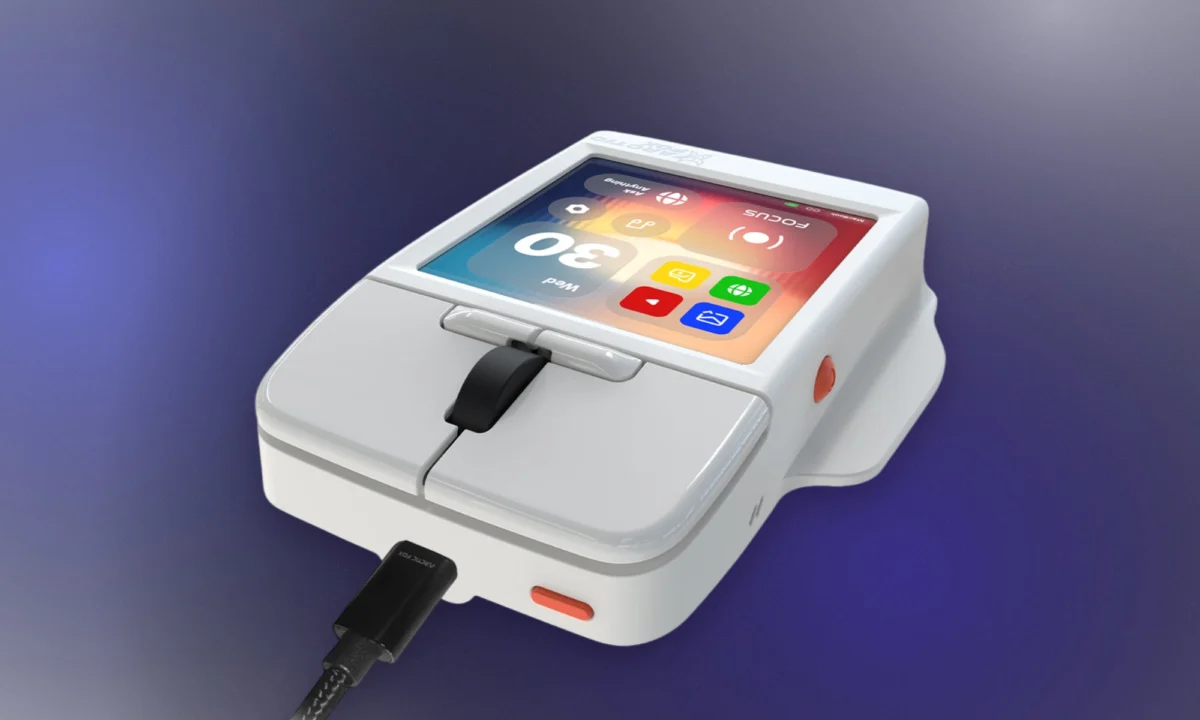
In the ever-evolving landscape of PC peripherals, the line between "innovative utility" and "absurd gimmick" has always been thin. Historically, computer mice have remained remarkably consistent in their fundamental design—a palm-fitted chassis with two buttons and a scroll wheel. However, Arctic Fox Technologies is looking to shatter that decade-long plateau with its newly launched "Super Mouse."
Currently seeking funding on Kickstarter, the Super Mouse is a device that defies conventional ergonomic wisdom, opting instead to pack an entire command center into the palm of your hand. Featuring a high-resolution touchscreen, motion sensors, and even a full on-screen keyboard, the device is billed as the ultimate productivity tool. But as we dissect its feature set, the question arises: is this the future of human-computer interaction, or has technology finally gone a step too far?
The Anatomy of the Super Mouse: Core Specifications and Features
At first glance, the Super Mouse is an intimidating piece of hardware. With a chassis that critics have compared to the chunky aesthetic of an Atari ST mouse, it occupies a significant footprint on the desk. The centerpiece of this device is a 3.1-inch, 720 x 720 resolution touchscreen that dominates the top surface.
A Programmable Command Center
The screen is not merely a passive display; it is an active, context-aware interface. Through the proprietary "Flow" app, available for both Windows and macOS, users can map custom shortcuts, macros, and app-launching icons to the screen. Because the interface is dynamic, it adapts in real-time to the software currently in focus. A designer using Adobe Photoshop might see a color-picker or brush-size slider on the mouse, while a coder might see a repository of snippets and terminal commands.

Beyond the Touchscreen: Multi-Modal Input
Arctic Fox has not stopped at a display. The device incorporates:
- On-Screen Keyboard: Users can type directly on the mouse surface, complete with swipe-typing capabilities.
- Voice Dictation: With support for over 90 languages, the mouse features local, privacy-focused voice processing.
- Motion Sensors: The device utilizes internal gyroscopes and accelerometers, allowing users to trigger commands by tilting or twisting the mouse.
- Hyper Keys: In addition to the screen, the device includes physical macro keys for tactile feedback-heavy operations.
A Chronology of the "Screen-on-Mouse" Trend
The concept of a peripheral with an integrated display is not entirely new, though it has historically been confined to high-end gaming hardware. The industry has been dancing around this idea for years.
- The Early Experiments: Early attempts at "smart" mice often focused on small OLED panels for DPI settings or basic profile switching.
- The Turtle Beach Precedent: Earlier this year, Turtle Beach gained attention with its Command Series MC7 gaming mouse, which featured a 2.25-inch control screen. While that device was aimed squarely at gamers, it proved that consumers were willing to experiment with display-equipped peripherals.
- The Arctic Fox Pivot: Arctic Fox Technologies appears to be taking the Turtle Beach blueprint and expanding it into the professional productivity sector. By moving away from the "gaming" label and toward the "creative workstation" demographic, the company is attempting to pivot the technology from a luxury toy to a professional necessity.
Supporting Data: Can Productivity Be Measured in Inches?
The core premise of the Super Mouse is that "context switching"—the time lost moving your hand from the mouse to the keyboard and back—is a significant productivity drain. Arctic Fox suggests that by bringing essential tools directly to the mouse, users can shave seconds off their workflow.
However, productivity experts often point to the "cognitive load" associated with complex peripherals. While a 3.1-inch screen is large for a mouse, it is small for an interface. The challenge lies in the muscle memory of the user. Can a human truly learn to look away from their primary monitor to tap a button on their mouse without breaking their concentration?

Furthermore, the decision to force a wired connection via USB-C is a point of contention. In an era where high-performance wireless connectivity is standard, the requirement for a cable—which naturally adds resistance and creates desk clutter—seems contradictory to the device’s "advanced" marketing. Arctic Fox claims this is to ensure zero latency and power stability for the high-resolution screen, but for many, it may be a dealbreaker.
Official Responses and Developer Insights
In response to early feedback, Arctic Fox representatives have emphasized that the Super Mouse is intended for "power users" who already live in complex software environments.
"We designed the Super Mouse with the professional workflow in mind," a spokesperson noted in a recent briefing. "The goal wasn’t just to add a screen for the sake of it, but to create a ‘third hand’ for the user. Whether it’s scrubbing through a video timeline or triggering complex multi-step macros, the Super Mouse handles the heavy lifting so your keyboard can focus on inputting data."
The company has also addressed ergonomic concerns. The "boxy" design, which looks uncomfortable to some, is described as intentional. The geometry is meant to keep the user’s palm elevated and separated from the touchscreen to prevent accidental "palm-touches" or ghost inputs.

The Implications: Is This the Future or a Folly?
The launch of the Super Mouse on Kickstarter, with a $199 early-bird price point (jumping to a $249 retail target), serves as a litmus test for the industry.
The Ergonomic Paradox
The most significant implication is the potential for physical strain. A mouse is an extension of the arm, and by increasing the weight and complexity of the device, Arctic Fox risks creating a tool that causes more fatigue than it alleviates. If the user has to hover their hand in an unnatural position to operate the screen, the risk of Repetitive Strain Injury (RSI) increases.
The Ecosystem Lock-in
The reliance on the "Flow" app for customization means that users are effectively tethered to Arctic Fox’s software ecosystem. If the company fails to maintain driver updates for future operating systems, the "Super" aspect of the mouse could quickly become a "brick."
A Shift in Peripheral Design
Regardless of whether the Super Mouse succeeds commercially, it signals a shift in the peripheral market. We are moving toward a period where the "static" mouse is being challenged. We have seen this with the rise of vertical mice for health, macro-heavy MMO mice for gaming, and now, the "smart" screen-equipped mouse for productivity.

Conclusion: Should You Back It?
The Arctic Fox Super Mouse is undoubtedly a daring piece of engineering. With 85 backers already on board and a clear vision for a multi-modal desktop, it occupies a unique niche. For the creative professional who spends their day in Figma, Premiere, or VS Code, the promise of having a programmable touch-interface under their fingertips is seductive.
However, for the average user, the Super Mouse likely represents a solution to a problem that doesn’t exist. The cost—both in dollars and in the potential for a steeper learning curve—is high. As we await the delivery of the first units in February 2027, the tech community will be watching closely. Will the Super Mouse become an essential tool for the digital age, or will it join the long list of over-engineered gadgets that promised to revolutionize our desks but ultimately ended up in a junk drawer?
For now, the Super Mouse stands as a testament to the fact that in the tech industry, the only thing more important than function is the audacity to try something entirely new. Whether that audacity translates to utility is a question that only time—and the first 85 early adopters—will be able to answer.


 Iffa Jayyana
 Pevita Pearce