Nana Wu
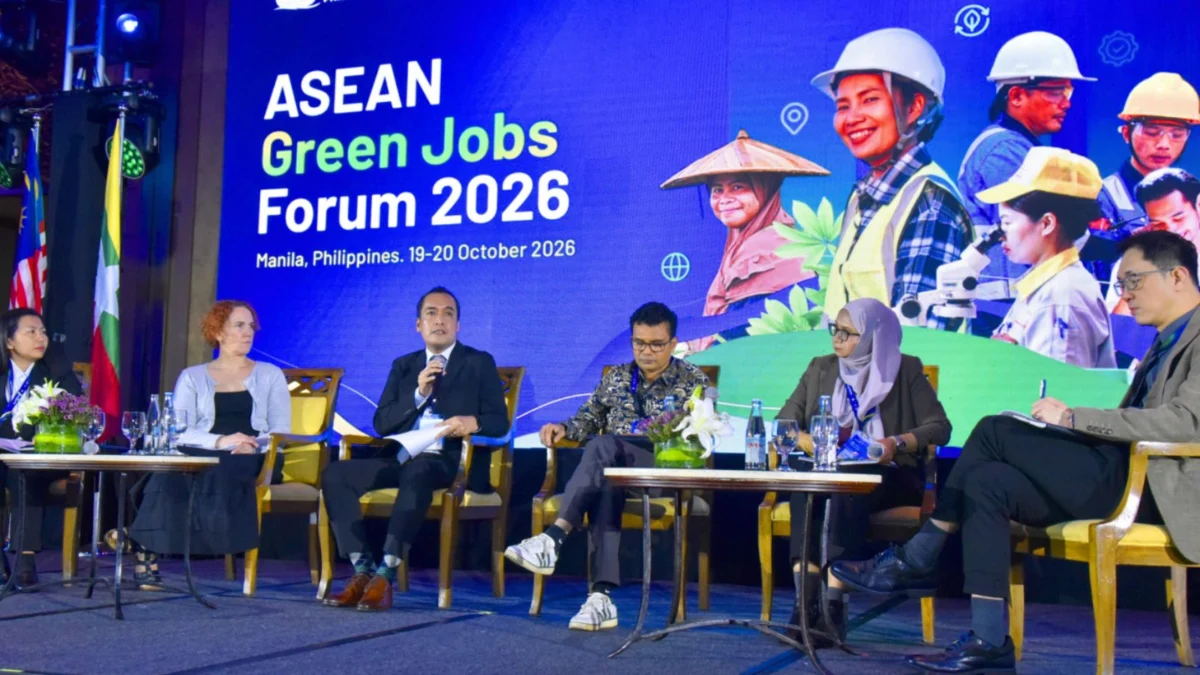
The global climate crisis has fundamentally altered the discourse on economic development, shifting the focus from mere growth to the sustainability of the workforce. As the Association of Southeast Asian Nations (ASEAN) navigates this transition, the recently concluded 2026 ASEAN Green Jobs Forum in Makati City, Philippines, has emerged as a landmark event. Held on October 19–20, 2026, the forum served as the primary platform for regional leaders to synchronize policies, mobilize investments, and ensure that the inevitable shift toward a "green economy" does not leave the region’s massive labor force behind.
The Mandate: Moving from Commitment to Implementation
The core objective of the forum was to accelerate the implementation of the ASEAN Framework and Action Plan for a Just and Inclusive Transition to Green Jobs (2025–2030). While environmental sustainability is a shared global goal, the ASEAN bloc—comprised of diverse economies ranging from manufacturing hubs to agriculture-dependent nations—faces the unique challenge of balancing carbon neutrality with the protection of millions of workers.
The forum’s theme, "Creating Green Jobs, Building Future Skills: Transforming ASEAN’s Economies and Workforce for a Just and Inclusive Future," underscored a critical realization: the green transition is not solely an environmental endeavor; it is a profound socio-economic transformation. Delegates agreed that the success of this transition hinges on three pillars: increased funding for sustainable industries, the alignment of education systems with emerging labor market needs, and the fortification of social protection floors.
Chronology of the 2026 ASEAN Green Jobs Forum
The two-day summit was a structured gathering of government officials, private sector leaders, labor unions, and academic institutions.
- Day 1 (October 19, 2026): The opening plenary focused on the current state of the regional labor market. Discussions centered on identifying "green jobs"—defined by the ASEAN framework as positions that contribute substantially to environmental preservation while adhering to "decent work" standards. Participants examined the current mismatch between the skills taught in vocational institutions and the technical requirements of emerging renewable energy and circular economy sectors.
- Day 2 (October 20, 2026): The focus shifted to actionable policy frameworks. Delegates debated the mechanics of the proposed ASEAN Green Jobs Centre of Excellence, a facility intended to serve as a regional hub for policy research and skill certification. The day concluded with the adoption of a consensus-based agenda to prioritize regional cooperation in skills recognition, ensuring that a worker trained in one ASEAN nation can have their green-sector credentials verified and accepted in another.
Supporting Data and Strategic Priorities
The urgency of the forum was underpinned by the reality of the 2030 sustainability targets. Undersecretary Carmela I. Torres of the Philippine Department of Labor and Employment (DOLE) emphasized that by 2030, ASEAN must be able to quantify its progress.
The Definition of "Green"
A significant achievement of the forum was the solidification of what constitutes a "green job" within the Southeast Asian context. It is not enough for a role to be environmentally beneficial; it must also provide:
- Decent Wages: Salaries that exceed living wage benchmarks.
- Safety: Rigorous occupational health standards.
- Inclusivity: Equal access for both formal and informal workers.
- Social Dialogue: Protection of collective bargaining rights.
The Skills Gap Challenge
Research presented at the forum highlighted a growing "green skills gap." As industries pivot away from fossil fuels and resource-intensive manufacturing, traditional jobs are at risk of obsolescence. The forum prioritized the development of standardized training modules across member states. This is intended to prevent "brain drain" and ensure that the regional labor force remains competitive as global supply chains integrate stricter environmental, social, and governance (ESG) criteria.
Official Responses and Strategic Vision
The leadership of the Philippines, acting as the ASEAN Chair, played a pivotal role in steering the discourse toward social equity. Undersecretary Carmela I. Torres provided the most authoritative voice on the matter during the closing session.
"Our core responsibility is to ensure that this transition creates decent work opportunities for our people, while providing a social protection floor to those whose jobs and livelihoods may be affected," Torres stated. Her comments addressed a critical anxiety among ASEAN member states: the fear that "greening" the economy might lead to the casualization of labor or the loss of industrial capacity in developing regions.
Torres further articulated that the transition must be viewed through a labor-centric lens. By treating the green transition as an economic issue rather than a purely climate-related one, governments can better justify the necessary fiscal investments. The proposed ASEAN Green Jobs Centre of Excellence is the primary manifestation of this vision, serving as a clearinghouse for best practices in policy design and worker retraining.
Global Collaboration: The Australia-ASEAN Link
The forum was bolstered by international support, specifically through the Australia for ASEAN Futures Initiative. This collaboration underscores the recognition that Southeast Asia’s transition has global implications. By assisting the Philippines and its neighbors, Australia and other development partners aim to create a stable, skilled, and sustainable labor market that can serve as a model for other emerging economies.
The initiative is closely aligned with the administration of President Ferdinand R. Marcos Jr., which has made the expansion of employment opportunities and the modernization of the Filipino workforce a cornerstone of its national development plan. This alignment ensures that the regional goals of the forum are mirrored in domestic policy, creating a cohesive strategy from the local level to the regional bloc.
Implications for the Workforce and Industry
The shift toward a green economy carries profound implications for all stakeholders.
For Businesses and MSMEs
Micro, Small, and Medium-sized Enterprises (MSMEs), which constitute the backbone of the ASEAN economy, face the greatest challenge in adapting to new environmental standards. The forum highlighted the need for financial subsidies and technical assistance for these businesses. Without such support, the "green transition" could inadvertently favor large multinational corporations, leaving smaller players unable to comply with new regulations.
For the Workforce
The promise of "green jobs" offers a potential boost in wages and job security for those in the renewable energy, sustainable agriculture, and eco-friendly manufacturing sectors. However, the transition also requires a massive effort in lifelong learning. Governments are now under pressure to update their national curricula to include "green literacy," ensuring that the next generation of workers is prepared for a low-carbon economy.
For Policy Makers
The primary implication is the need for "Policy Coherence." Environmental ministries and labor departments, which have historically operated in silos, must now integrate their mandates. The ASEAN Framework and Action Plan 2025–2030 provides the legal and administrative architecture to facilitate this inter-agency and inter-regional cooperation.
Conclusion: A Path Toward 2030
As the 2026 ASEAN Green Jobs Forum concluded, the prevailing sentiment was one of cautious optimism. The transition to a green economy is no longer a matter of "if," but "how." The forum successfully shifted the conversation from abstract climate goals to the tangible realities of human capital development.
By prioritizing the mutual recognition of skills, the creation of regional centres of excellence, and the protection of workers in both the formal and informal sectors, ASEAN is positioning itself to be a global leader in the "Just Transition" movement. The success of these initiatives will be measured by the ability of member states to transform their economies without sacrificing the dignity and livelihoods of their citizens. As the region moves toward 2030, the blueprint established in Makati serves as a vital compass for a sustainable and prosperous future.


 Lina Irawan

 Azzam Bilal Chamdy