Nana
Nana
As the hospitality industry navigates the midpoint of the decade, the operational landscape has undergone a seismic shift. In 2026, hoteliers are no longer merely managing rooms; they are managing complex, hyper-connected digital ecosystems. Amidst persistent labor shortages, escalating guest demands for frictionless, contactless service, and the relentless pressure to synchronize inventory across hundreds of digital channels in real-time, the Property Management System (PMS) has evolved from a simple booking tool into the critical "central nervous system" of the modern hotel.
For property leaders, re-evaluating their core software is no longer a routine IT upgrade. It is a high-stakes strategic pivot. Choosing the right PMS today effectively locks a hotel’s technological trajectory for the next five to ten years, determining not just day-to-day efficiency, but long-term profitability and competitive survival.
The Evolution of the Hotel PMS: A Brief Chronology
To understand the current imperative for change, one must look at the historical trajectory of hospitality technology.
- The 1970s–1980s (The On-Premise Era): The birth of the modern PMS was defined by massive, rigid, on-site hardware installations. These systems were primarily glorified ledger books, designed to track reservations and basic guest profiles.
- The 1990s–2010s (The Connected Legacy Era): As the internet took hold, legacy systems were "bolted on" with external modules to handle housekeeping, financial reporting, and early OTA connections. This created the "spaghetti code" of data silos that still haunts many legacy properties today.
- 2015–2022 (The Cloud Migration): The shift toward Software-as-a-Service (SaaS) models revolutionized accessibility. Cloud-native systems allowed for remote access and real-time updates, beginning the decline of the on-premise server room.
- 2023–Present (The Autonomous/AI Era): We are currently in the age of the "proactive" PMS. In 2026, the leading systems are no longer just recording data; they are utilizing Artificial Intelligence to predict guest needs, automate labor-intensive audits, and manage IoT-driven sustainability efforts.
Defining the Modern PMS: The Digital Operating System
A robust PMS serves as the "single source of truth" for a property. It acts as the digital connective tissue that binds together disparate departments—front desk, housekeeping, sales, and food & beverage—into a unified workflow.
The core functions of a modern PMS include:
- Centralized Reservation Management: Providing real-time inventory parity across all booking channels.
- Automated Guest Profiles: Aggregating data from POS, spa, and room preferences to create a holistic view of the guest.
- Financial Reporting & Night Audits: Automating the reconciliation of accounts to eliminate human error and staff fatigue.
- Operational Task Automation: Managing housekeeping status and maintenance workflows in real-time.
By breaking down data silos, a modern PMS empowers staff to move away from administrative terminal-gazing and toward high-value guest interaction.
The Five Pillars of PMS Deployment
When decision-makers evaluate potential platforms, they often focus on surface-level features. However, the true measure of a system’s efficacy lies in its deployment architecture.
1. Cloud-Based (SaaS) PMS
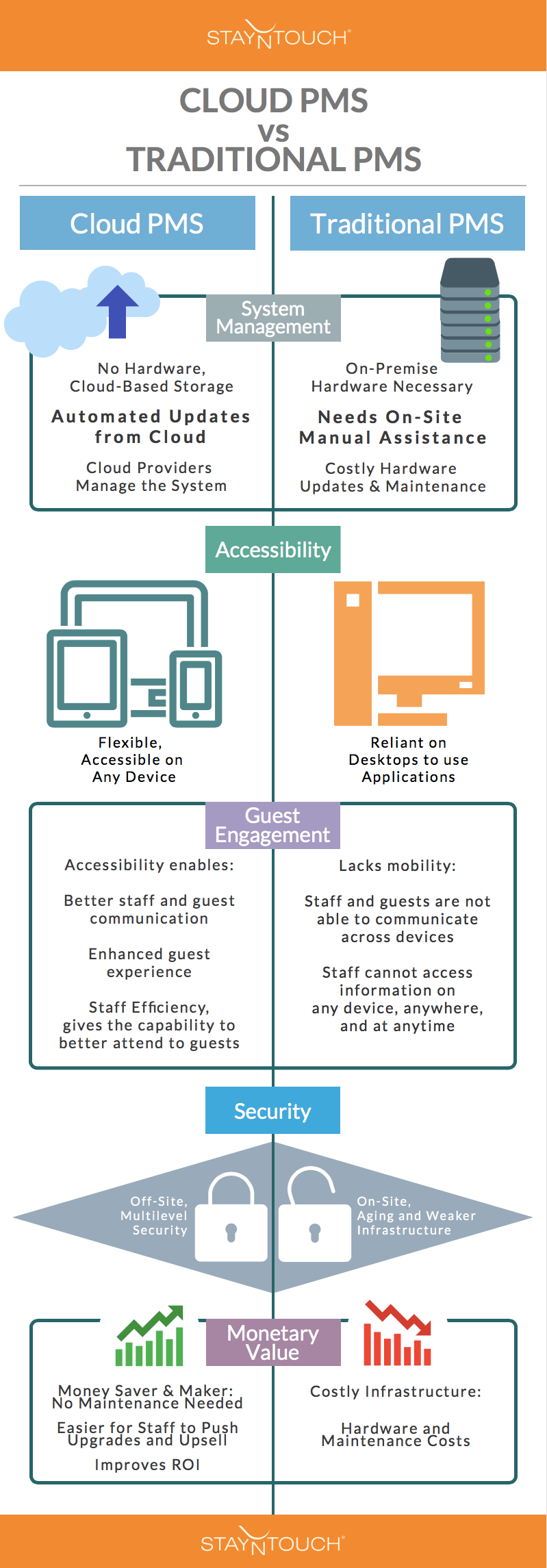
The undisputed gold standard for modern independent hotels and agile groups, cloud-based systems host data on secure, remote servers. This model eliminates the need for on-site server maintenance, pushes automatic updates, and provides unparalleled scalability. In an era where room availability must be accurate across 200+ channels simultaneously, the speed of cloud-native connectivity is indispensable.
2. On-Premise (Legacy) PMS
While perceived as archaic, on-premise systems—where software lives on local, physical servers—remain in use by large legacy chains that value extreme data isolation. However, these systems require massive upfront capital, expensive internal IT teams, and manual, labor-intensive processes like the traditional "night audit."

3. Mobile-First PMS
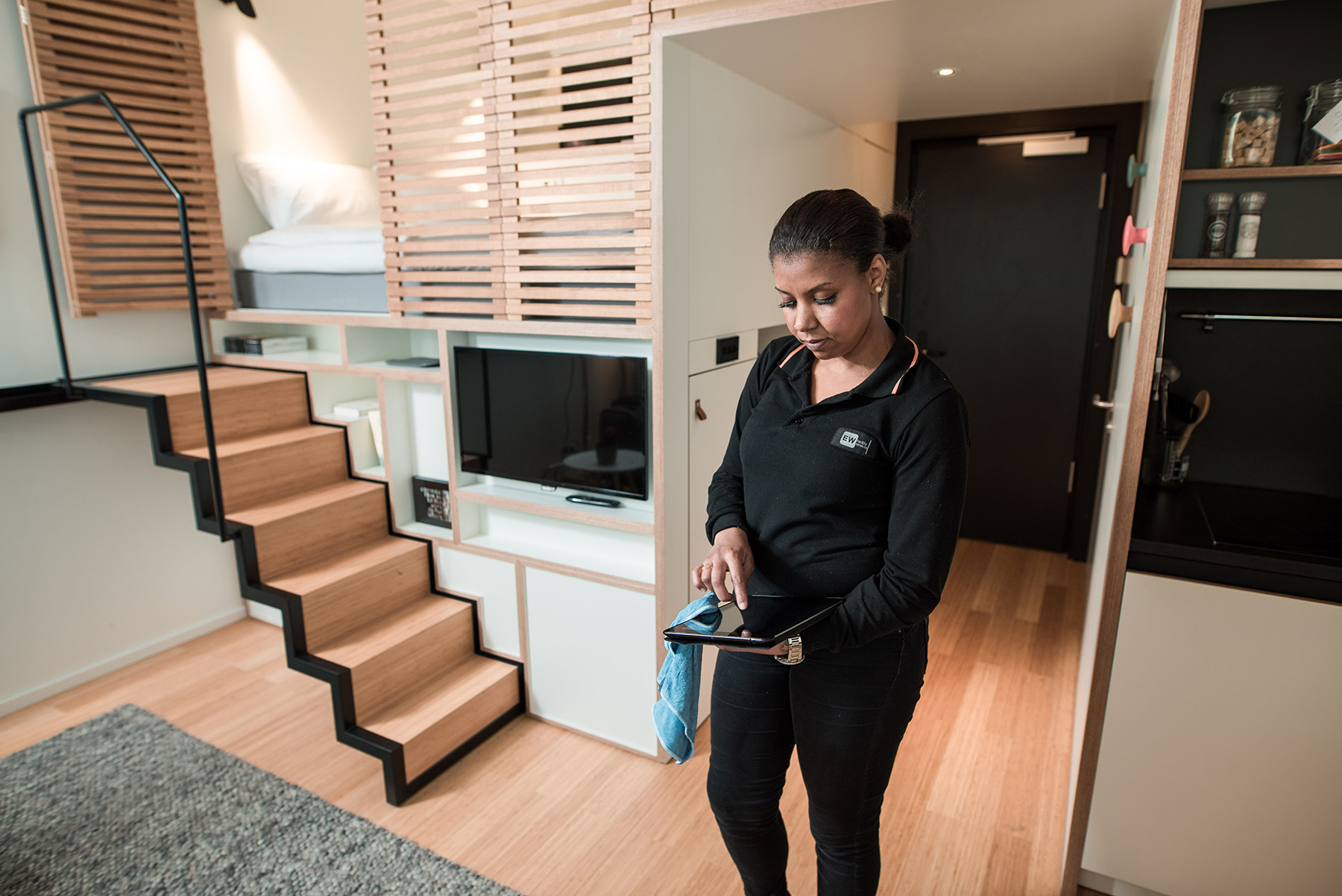
Systems designed specifically for tablets and smartphones—such as Stayntouch—have redefined the front desk. By decoupling staff from the fixed terminal, mobile-first systems allow employees to handle check-ins, room inspections, and guest queries from anywhere on the property, significantly enhancing the guest experience.
4. API-First (Best-of-Breed) PMS
Modern hotels require a "best-of-breed" tech stack. An API-first architecture allows a PMS to integrate seamlessly with external tools like revenue management systems (RMS), CRM platforms, and automated key-card locks. This flexibility is essential for hotels looking to pivot their tech stack as new, innovative tools emerge.
5. Hybrid PMS
These systems offer a bridge for larger properties transitioning away from legacy infrastructure. By storing core data locally to ensure uptime during internet outages while leveraging cloud-based reporting and mobile capabilities, they offer a "best of both worlds" scenario for risk-averse operators.

The Financial and Operational Implications
The choice of a PMS has a direct, quantifiable impact on the bottom line. According to industry analysis, transitioning from a legacy, on-premise system to a mobile-first, cloud-based platform can reduce the time spent on administrative "night audit" tasks by up to 90%. Furthermore, the move to a SaaS model shifts the financial burden from high-CAPEX (Capital Expenditure) hardware investments to predictable, manageable OPEX (Operating Expenditure) subscriptions.
Industry leaders emphasize that the "Total Cost of Ownership" (TCO) is the most critical metric. When calculating TCO, hotels must include:
- Hardware Maintenance: Costs for servers, cooling, and power.
- IT Labor: The cost of specialized staff to maintain legacy systems.
- Opportunity Costs: The loss of revenue caused by slow updates, poor integration, and the inability to respond to market shifts in real-time.
Official Industry Trends: The Shift Toward AI and Autonomy
In 2026, the conversation has shifted from "digitization" to "automation." A recent industry report revealed that over 82% of hoteliers are actively expanding their use of AI tools to address labor shortages.
AI-Driven Efficiency
AI is moving from marketing hype to operational reality. Modern PMS platforms are now using machine learning to predict occupancy trends, optimize dynamic pricing models, and even draft personalized guest communications before a traveler has even stepped into the lobby.
Hyper-Personalization
The "Unified Guest Profile" is the holy grail of modern hospitality. By integrating data from every touchpoint—from restaurant POS to in-room IoT thermostats—the PMS creates a profile that allows for "hyper-personalization." Whether it’s automatically stocking a room with a guest’s preferred snacks or adjusting the room temperature based on their history, the PMS is the engine that enables these "wow" moments.
IoT and Sustainability
Sustainability is no longer a "nice to have"; it is a operational requirement. By integrating with IoT-enabled smart rooms, the PMS can automatically transition rooms into "energy-saving mode" as soon as a guest checks out or a housekeeper marks a room as clean. This not only reduces the carbon footprint but significantly lowers utility costs—a direct boost to the bottom line.
Conclusion: Preparing for the Next Decade
For any property owner or GM, the selection of a PMS is an act of long-term planning. A one-size-fits-all approach is a recipe for stagnation. Small, independent hotels should prioritize agility and mobile-first features; large hotel groups should focus on open-API architectures that support centralized reporting and global scaling.
As we look toward 2027 and beyond, the gap between hotels that use their PMS as a passive database and those that use it as a proactive, AI-driven assistant will only widen. To remain competitive, hoteliers must stop viewing their PMS as a necessary evil and start viewing it as their most valuable strategic asset.
Recommendations for your evaluation:

- Assess your current "tech debt": Are you spending more on maintenance than on innovation?
- Prioritize open APIs: If a system cannot "talk" to the rest of your tech stack, it is a dead end.
- Test the mobility: Can your staff perform their jobs while walking the floor? If not, you are missing a critical opportunity for guest engagement.
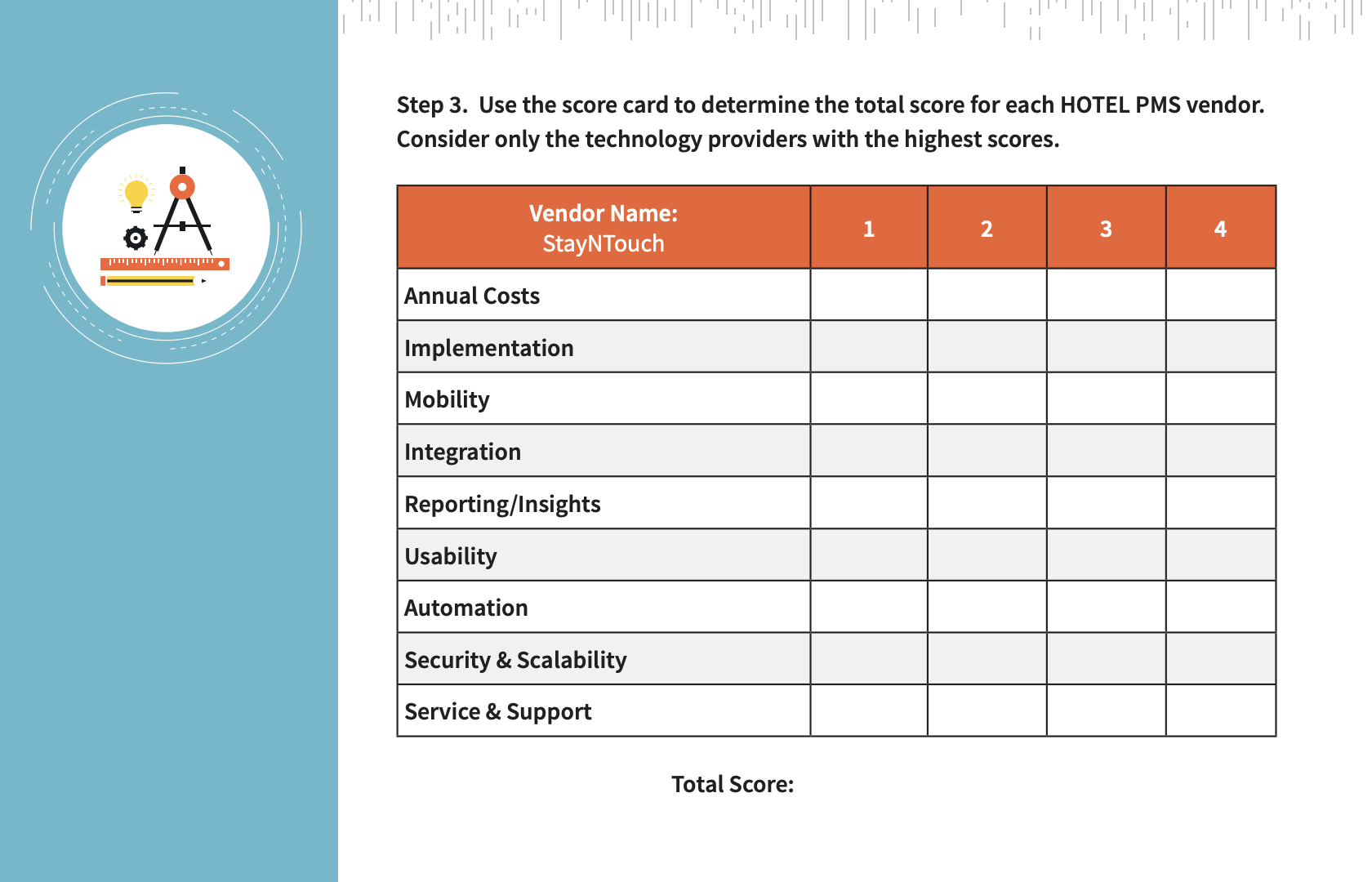
For those looking to benchmark their current infrastructure, utilizing a standardized evaluation scorecard—covering mobility, integration, and security—is the first step toward a more profitable, efficient future.


 Nila Kartika Wati
 Layla Zulfa