
 Laily UPN
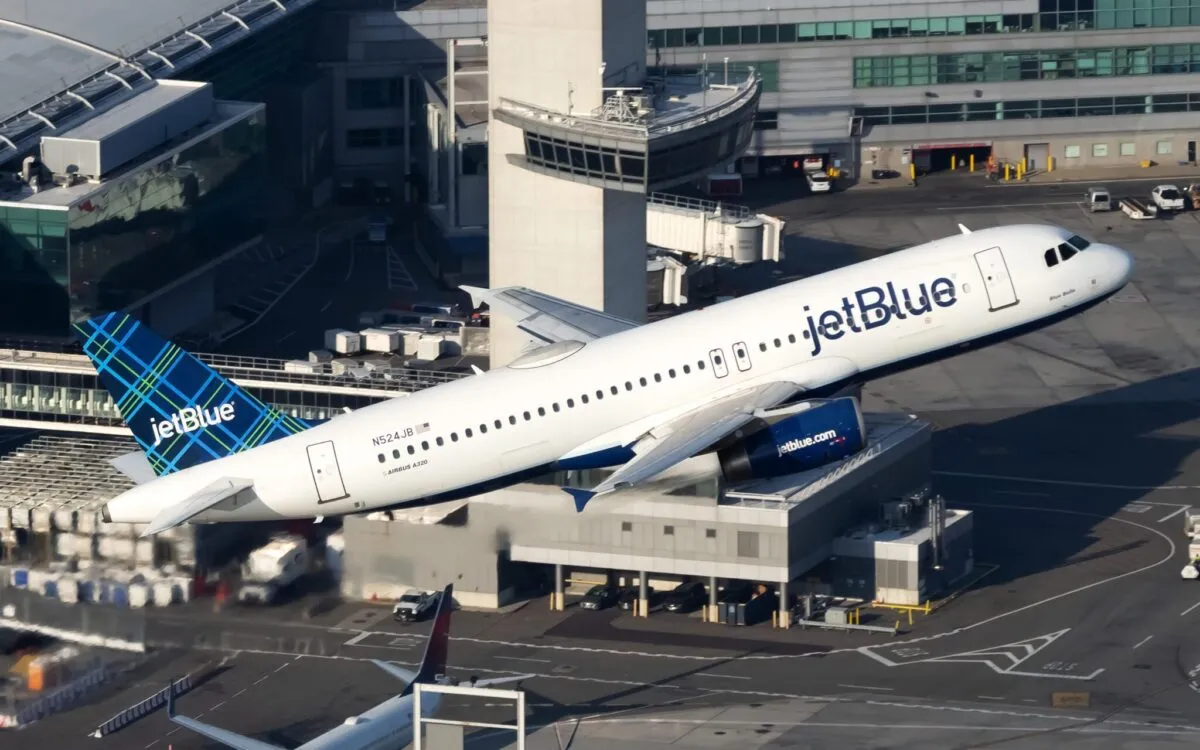
New York, NY – [Date, e.g., October 30, 2024] – JetBlue Airways found itself navigating through a severe patch of turbulence this week, as the low-cost carrier announced a wider third-quarter loss and a revised, less optimistic outlook for 2026. The financial disclosures, released unexpectedly early, came on the heels of intense market speculation surrounding the airline’s financial health, including whispers of a potential Chapter 11 bankruptcy filing that sent its shares plummeting. Despite the grim short-term figures, the airline reiterated its commitment to a long-term recovery, projecting a return to sustained profitability by 2027 and reaffirming its target of $1 in earnings per share (EPS) and positive free cash flow by 2028.
The market’s immediate reaction was a volatile mix of panic and cautious optimism. JetBlue’s beaten-down shares, which had shed over 20% in the preceding week, saw a significant rebound of more than 10% in after-hours trading following the announcement. This surge, while recouping only a fraction of recent losses, signaled a fragile confidence among investors that the airline’s management was taking decisive steps to address its challenges and provide clarity amidst the swirling rumors. The early release of its Q3 results, initially slated for Tuesday morning, appears to have been a calculated move to quell the growing anxiety and provide a transparent, albeit challenging, picture of its current standing.
A Tumultuous Quarter: JetBlue’s Financial Turbulence
JetBlue’s third-quarter performance underscores the significant headwinds currently buffeting the airline industry, exacerbated by the carrier’s unique operational and strategic challenges. The reported wider loss for Q3 2024 reflects a period of heightened operational costs, competitive pressures, and lingering impacts from its ambitious, yet ultimately unsuccessful, bid to acquire Spirit Airlines.
Unpacking the Third-Quarter Loss
While specific figures were not immediately detailed in the preliminary announcement, the description of a "wider" third-quarter loss suggests a performance that fell below internal expectations and market consensus. Analysts had largely anticipated a challenging quarter for JetBlue, given the persistent inflationary pressures on fuel and labor, coupled with a fiercely competitive domestic landscape. The company’s unique hybrid model, attempting to blend low-cost fares with a premium customer experience, has often resulted in higher unit costs compared to ultra-low-cost competitors, making it particularly vulnerable during periods of economic strain.
The increased loss likely stems from a combination of factors: elevated operating expenses, particularly non-fuel unit costs (CASM ex-fuel), which have been a persistent concern; capacity adjustments that may not have fully optimized revenue generation; and potentially a softer demand environment in certain leisure markets compared to earlier in the year. The previous quarters had already indicated a struggle to contain costs while simultaneously investing in product enhancements and network expansion, a delicate balance that has proven difficult to maintain.
Strategic Recalibration: 2026 Outlook Adjusted
Perhaps one of the more sobering aspects of Monday’s announcement was the decision to cut its outlook for 2026. This adjustment signals a recognition by JetBlue’s leadership that the path to sustained profitability might be longer and more arduous than previously anticipated. While the airline did not immediately elaborate on the specific metrics impacted by this revision, it typically involves projections for revenue growth, profit margins, and potentially capacity expansion.
Such a recalibration is often a direct response to a reassessment of macroeconomic conditions, competitive dynamics, and the expected pace of internal cost-saving initiatives. For JetBlue, this likely means a more conservative approach to growth, renewed focus on network optimization, and an even more aggressive pursuit of efficiency gains. The revised outlook implies that the full benefits of the "JetForward" transformation plan (discussed later) may take longer to materialize, or that the external environment presents greater headwinds than initially modeled. This strategic shift suggests a commitment to realism and a prioritization of long-term financial health over short-term growth targets.
The Shadow of Speculation: A Week of Market Jitters
The financial update arrived at a critical juncture for JetBlue, following a tumultuous week characterized by alarming market movements and widespread speculation that threatened to undermine investor confidence entirely.
Bankruptcy Whispers and Share Price Plunge
The past week saw JetBlue’s shares experience an alarming decline, shedding more than 20% of their value leading up to Monday’s market close. This sharp sell-off was fueled by an intense wave of speculation, particularly on social media and financial forums, suggesting that the airline might be on the brink of filing for Chapter 11 bankruptcy protection. While no credible reports from official sources or major financial news outlets substantiated these rumors, the sheer volume and velocity of the speculation created a self-fulfilling prophecy of fear, driving investors to liquidate their holdings.
The roots of this anxiety are multifaceted. JetBlue has faced significant challenges over the past year, including the arduous and ultimately unsuccessful attempt to merge with Spirit Airlines. The prolonged legal battle, culminating in a federal judge blocking the merger on antitrust grounds, left JetBlue with substantial legal fees, a $69 million termination fee, and a significant strategic void. Furthermore, the airline has grappled with elevated debt levels, consistent underperformance relative to its peers in terms of profitability, and a perceived lack of clear strategic direction following the Spirit debacle. These factors created fertile ground for the bankruptcy rumors to take hold, exploiting underlying investor unease about the company’s long-term viability.
The After-Hours Rebound: A Glimmer of Hope
Against this backdrop of plummeting shares and bankruptcy whispers, Monday’s after-hours announcement of Q3 results and reaffirmed long-term guidance acted as a powerful circuit breaker. JetBlue’s stock surged more than 10% in extended trading, recovering a portion of the week’s steep losses. This immediate positive reaction underscores the market’s desperation for clarity and reassurance.
The rebound suggests that while the Q3 loss was indeed wider, and the 2026 outlook trimmed, investors found solace in the explicit reiteration of the 2027 profitability target and the 2028 goal of $1 EPS and positive free cash flow. The details regarding a "meaningful step-down" in unit costs excluding fuel in the fourth quarter also provided a tangible, near-term positive indicator. The market interpreted these statements as a sign that management has a clear, albeit challenging, path forward and is actively working to address its cost structure, rather than succumbing to insurmountable financial distress. The early release of the earnings report, a highly unusual move, also played a crucial role, signaling urgency and transparency in addressing the market’s anxieties head-on.
JetBlue’s Flight Plan: Navigating Towards Profitability
Despite the immediate challenges, JetBlue’s leadership remains steadfast in its belief that the airline is on a clear trajectory towards sustainable financial health. This confidence is primarily anchored in its comprehensive "JetForward" transformation plan and a renewed focus on cost discipline.
The JetForward Initiative: A Pillar of Recovery
The "JetForward" initiative, launched earlier this year, is JetBlue’s multi-faceted strategy designed to improve the airline’s financial performance by optimizing its network, enhancing operational reliability, and driving significant cost efficiencies. This plan became even more critical following the collapse of the Spirit merger, which had been envisioned as a transformative move to achieve scale and cost synergies.
Key components of the JetForward plan likely include:
- Network Rationalization: Pruning underperforming routes, reallocating capacity to higher-demand, higher-yield markets, and optimizing flight schedules to improve asset utilization. This could involve reducing flights from certain saturated airports or discontinuing routes that do not meet profitability targets.
- Fleet Simplification and Optimization: While JetBlue operates a relatively modern fleet, the plan might involve accelerating the retirement of older, less fuel-efficient aircraft, or optimizing maintenance schedules to reduce downtime and associated costs.
- Revenue Enhancement Initiatives: Exploring new ancillary revenue streams, refining pricing strategies, and enhancing premium offerings to capture higher-value customers.
- Operational Reliability Improvements: Investing in technology and processes to reduce flight delays and cancellations, which not only impact customer satisfaction but also incur significant operational costs. This includes improving crew scheduling and maintenance turnaround times.
The success of JetForward is paramount to JetBlue’s stated goal of achieving sustained operating profitability in 2027. The plan aims to extract efficiencies across every facet of the business, moving JetBlue closer to the cost structures of its more profitable peers while retaining its distinct customer service proposition.
Cost Control and Operational Efficiency
A central theme in JetBlue’s path to recovery is the aggressive pursuit of cost control, particularly regarding its non-fuel unit costs (CASM ex-fuel). The airline explicitly stated that it anticipates a "meaningful step-down" in these costs in the fourth quarter. This projection is a critical element in reassuring investors that management has a handle on its expense base.
Factors contributing to this expected improvement could include:
- Labor Productivity: Enhanced scheduling and operational adjustments aimed at improving employee productivity.
- Supply Chain Management: Renegotiating contracts with suppliers, optimizing procurement processes, and seeking more favorable terms for everything from in-flight catering to aircraft parts.
- Technology Investments: Leveraging new technologies to automate processes, reduce manual errors, and improve overall operational efficiency.
- Network Adjustments: The previously mentioned network rationalization directly impacts costs by ensuring aircraft and crew are deployed in the most economically advantageous way, reducing expenses associated with underutilized assets or inefficient routes.
A sustained reduction in CASM ex-fuel is vital for JetBlue to compete effectively, especially against ultra-low-cost carriers (ULCCs) that maintain significantly lower operating expenses. Achieving this "meaningful step-down" would be a tangible demonstration of the JetForward plan’s efficacy and a critical step toward narrowing the profitability gap.
Long-Term Vision: EPS and Free Cash Flow Targets
Beyond the immediate horizon, JetBlue reaffirmed its long-term guidance, committing to achieving $1 in earnings per share (EPS) and positive free cash flow by 2028. These targets represent a comprehensive return to financial health and a significant milestone for the airline.
- $1 EPS by 2028: This target indicates a robust recovery in profitability, signaling that the company expects to generate sufficient net income to provide a respectable return to shareholders. Achieving this will require not only cost control but also a strong revenue performance driven by optimized pricing, network efficiency, and a compelling customer value proposition.
- Positive Free Cash Flow by 2028: This is perhaps an even more critical metric, particularly given the recent bankruptcy fears. Positive free cash flow means that the airline is generating more cash from its operations than it is spending on capital expenditures (e.g., new aircraft, facility upgrades). It signifies self-sufficiency, the ability to repay debt, invest in future growth without relying heavily on external financing, and potentially return capital to shareholders. For an airline, which is highly capital-intensive, generating consistent positive free cash flow is a hallmark of financial stability and operational excellence.
These long-term targets serve as a roadmap for investors, outlining the strategic objectives that the company is striving to achieve and providing a benchmark against which its future performance can be measured.
Official Statements and Investor Reassurance
In the face of intense market pressure and widespread speculation, JetBlue’s leadership moved swiftly to address concerns and reaffirm its strategic direction.
Leadership’s Message: Confidence Amidst Challenges
While specific quotes from the CEO or other executives were not detailed in the preliminary release, the tone of the announcement strongly suggested a confident and determined leadership team. The reiteration of the 2027 profitability target and the 2028 EPS and free cash flow goals served as a powerful message that the company believes its current strategy is sound and executable.
Such communications typically involve direct statements from the CEO, often emphasizing the company’s commitment to its transformation plan, the strength of its underlying business model, and its dedication to creating long-term shareholder value. The message is designed to cut through the noise of market speculation and provide a clear, authoritative voice from the top. It also implicitly acknowledges the challenges but frames them as surmountable through diligent execution of the JetForward strategy. The phrase "Together with continued JetForward execution, this reinforces our confidence…" explicitly links the projected financial improvements to the successful implementation of the transformation plan.
Addressing Market Anxiety: The Early Earnings Release
The decision to release third-quarter results a day earlier than scheduled was a highly unusual, yet strategically astute, move. Normally, companies adhere strictly to their pre-announced earnings calendar. JetBlue’s deviation from this norm speaks volumes about the severity of the market’s anxiety and the urgency with which the airline felt compelled to respond.
The early release was a direct attempt to provide facts and data to counter the rampant, unsubstantiated rumors of bankruptcy. By pulling forward the earnings call, JetBlue aimed to:
- Stem the Bleeding: Immediately halt the precipitous decline in its stock price driven by fear.
- Restore Transparency: Provide investors with official financial performance metrics, even if challenging, to replace speculation with facts.
- Reaffirm Guidance: Use the platform of the earnings announcement to formally reiterate its long-term financial targets and strategic direction, directly addressing the core concerns about its future viability.
This proactive approach, while indicative of the crisis management situation, was largely viewed positively by the market as a sign of management’s willingness to be transparent and responsive in challenging times.
Broader Implications: The Path Ahead for JetBlue and the Industry
JetBlue’s current struggles and strategic adjustments have wide-ranging implications, not just for the airline itself, but for its investors, employees, customers, and the broader competitive landscape of the U.S. airline industry.
Investor Sentiment and Market Outlook
For investors, JetBlue remains a high-risk, high-reward proposition. The dramatic swings in its stock price reflect deep divisions in market sentiment. While the after-hours rebound offered a momentary reprieve, sustained recovery will depend entirely on the airline’s ability to consistently execute its JetForward plan and demonstrate tangible progress towards its profitability and free cash flow targets. Investors will be scrutinizing future earnings reports for evidence of declining unit costs, improving revenue performance, and strengthening liquidity. Analyst ratings are likely to remain mixed, with some adopting a "wait and see" approach, while others might view the current low valuation as a potential entry point for a long-term turnaround play.
Competitive Landscape and Strategic Shifts
JetBlue’s struggles highlight the intense competitive pressures within the U.S. domestic market. Airlines are grappling with high operating costs, particularly labor and fuel, while attempting to balance capacity with demand. The failure of the Spirit merger also leaves JetBlue without the scale it had sought, forcing it to compete as a mid-sized player against much larger network carriers (Delta, United, American) and highly efficient ultra-low-cost carriers (Spirit, Frontier, Allegiant).
This situation may prompt JetBlue to further refine its "hybrid" model. It may need to make difficult choices about its premium offerings versus its low-fare strategy to find a sustainable niche. The focus on network rationalization could lead to a more concentrated presence in key strategic airports, rather than broad national coverage. Other airlines will be closely watching JetBlue’s moves, potentially adjusting their own pricing and capacity strategies in response to any changes in JetBlue’s competitive posture.
What This Means for Passengers and Employees
For passengers, JetBlue’s strategic shifts could lead to a more focused route network, potentially meaning fewer options in some markets but potentially improved service or more competitive pricing in others where JetBlue concentrates its efforts. The emphasis on operational efficiency should, ideally, translate into more reliable service and fewer disruptions. However, if cost-cutting measures are too aggressive, there’s always a risk of impacting the customer experience that JetBlue has historically prided itself on.
Employees, particularly those in unionized roles, will be closely watching the impact of cost-cutting measures on their jobs, benefits, and future negotiations. A clear path to profitability, however, ultimately offers greater job security than a prolonged period of financial instability. Management will need to maintain open lines of communication to ensure employee morale remains high during this challenging transformation period.
The Enduring Legacy of the Spirit Merger Attempt
The ghost of the failed Spirit Airlines acquisition continues to loom large over JetBlue. The pursuit of that merger consumed significant management attention, financial resources, and created strategic uncertainty. While the airline is now fully focused on its independent path, the lessons learned from that endeavor – particularly regarding antitrust scrutiny and the challenges of integrating disparate business models – will undoubtedly shape its future strategic decisions. The immediate task is to demonstrate that JetBlue can thrive on its own terms, building on its brand strength and operational improvements, without the scale it had hoped to achieve through acquisition.
As JetBlue embarks on this critical phase of its transformation, the coming quarters will be crucial in determining whether it can indeed navigate these turbulent skies and emerge as a stronger, more profitable airline by 2027 and beyond. The market has been given a glimpse of the challenges and the proposed solutions; now, it awaits the tangible results.


 Sagoh

 Lina Hope





