Reynand Wu

In the rapidly shifting landscape of enterprise technology, the conversation often defaults to hardware specifications, cloud latency, or the raw computational power of the latest large language models. However, for Fady E. Isshak, Chief Technology Officer at TekPro.Ai, the most critical element of modern infrastructure is not silicon or software—it is human alignment.
“The biggest bottleneck in infrastructure isn’t the technology,” Isshak stated in a recent discourse with CB Insights. This assertion strikes at the heart of a pervasive industry challenge: we have reached an era where technical capabilities have outpaced our ability to implement them effectively. As CTO of TekPro.Ai, Isshak is spearheading a shift that prioritizes architectural strategy and organizational readiness over the mere acquisition of new tools.
Main Facts: The TekPro.Ai Philosophy
TekPro.Ai operates at the intersection of high-scale infrastructure and adaptive intelligence. The company’s core mission revolves around solving the “implementation gap”—the space between a CTO’s technical vision and the tangible, scalable reality on the ground.
At its core, TekPro.Ai focuses on:
- Infrastructure Optimization: Moving away from monolithic systems toward agile, modular frameworks.
- Strategic Alignment: Ensuring that technical roadmaps directly correlate with business outcomes, rather than chasing vanity metrics.
- Intelligent Automation: Deploying AI not just to replace manual tasks, but to augment the decision-making process of infrastructure architects.
Isshak’s leadership style is characterized by a "first-principles" approach. He argues that most infrastructure failures today are not caused by system crashes, but by a lack of clarity regarding the problem being solved. By focusing on the "Why" before the "How," TekPro.Ai positions itself as a partner for enterprises navigating the treacherous waters of digital transformation.
Chronology: Navigating the Infrastructure Evolution
The trajectory of infrastructure management has undergone three distinct phases in the last decade, all of which inform the current operational model at TekPro.Ai:
1. The Era of Physical Constraints (2010–2015)
Early in the decade, the primary concern was physical capacity and the nascent shift to public clouds. Organizations were focused on migration—moving from on-premise servers to cloud-based environments. The bottleneck here was hardware performance and migration bandwidth.
2. The Era of Software Complexity (2016–2020)
As microservices and containerization took hold, infrastructure became increasingly complex. Managing Kubernetes clusters and distributed systems became the primary pain point. The bottleneck shifted from hardware to architectural complexity and the scarcity of specialized engineering talent.
3. The Era of Cognitive Infrastructure (2021–Present)
We are currently in the age of AI-augmented infrastructure. The challenge is no longer just building systems, but managing the massive, unpredictable throughput required by AI models. As Fady Isshak suggests, the bottleneck has moved from the technical stack to the strategic decision-making process. The systems can do almost anything; the question is, what should they be doing?
Supporting Data: The Cost of the "Bottleneck"
To understand the significance of Isshak’s perspective, one must look at the data surrounding modern IT investments. According to industry reports, nearly 70% of digital transformation initiatives fail to meet their stated objectives.
- Underutilization: Studies indicate that while enterprises spend billions on cloud infrastructure, approximately 30% of that spend is wasted on over-provisioned or misconfigured resources.
- Human Capital Gap: The average enterprise currently faces a 20% gap in specialized cloud infrastructure talent, leading to "architectural debt" that accumulates over time.
- The AI Paradox: While AI adoption is at an all-time high, only 15% of organizations have successfully moved AI projects from the "experimentation" phase to production-scale infrastructure.
These metrics validate Isshak’s claim. The technology exists, but the "human" bottleneck—the ability to govern, scale, and align this technology—remains the primary barrier to ROI.
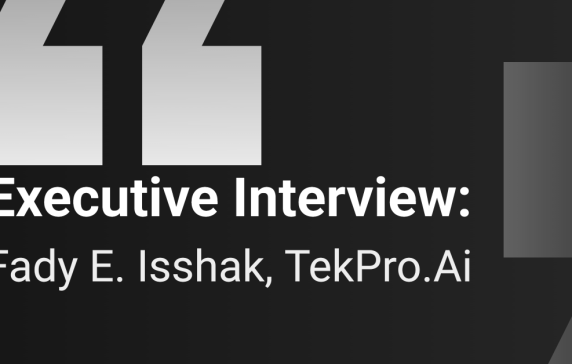
Official Responses: Fady Isshak on the Market Landscape
In his recent assessment of the market, Fady Isshak emphasizes that the industry is currently undergoing a "maturity correction."
"For years, we were in a race to see who could stack the most features," Isshak notes. "Today, the market is pivoting toward efficiency and sustainability. Clients are asking for systems that don’t just work, but work in a way that is understandable and manageable for their teams. If you build an infrastructure that requires a team of ten geniuses to maintain, you have failed. The goal is to build systems that scale with human intelligence, not in spite of it."
When asked about TekPro.Ai’s competitive advantage, Isshak points to their focus on "Human-in-the-loop" infrastructure. By building interfaces that translate complex backend data into actionable business insights, TekPro.Ai allows non-technical stakeholders to have a seat at the table, effectively widening the bottleneck and allowing more ideas to flow through the pipeline.
Implications: The Future of Enterprise Architecture
The implications of Isshak’s philosophy are profound for the broader tech sector. As organizations move deeper into 2025 and beyond, several key trends are likely to emerge based on this "bottleneck" theory:
1. The Rise of "Simplified" Infrastructure
We will likely see a decline in the appetite for overly complex, "do-it-all" platforms. Instead, companies will gravitate toward modular, interoperable tools that emphasize ease of use and observability.
2. Governance as a Competitive Advantage
As infrastructure becomes more automated via AI, the primary risk is no longer technical failure, but "policy failure." Companies that invest in robust governance frameworks—ensuring that AI-driven infrastructure remains aligned with regulatory and ethical standards—will lead the market.
3. Upskilling the "Infrastructure Architect"
The role of the infrastructure engineer is evolving into that of a "systems orchestrator." They will spend less time manually configuring servers and more time designing workflows that optimize for business efficiency. This necessitates a workforce that is as adept at business strategy as it is at coding.
4. A Focus on Sustainable Scaling
The "biggest bottleneck" realization also forces companies to confront the energy and financial costs of their infrastructure. Sustainability is no longer a corporate social responsibility talking point; it is an economic necessity. Efficiency at the architectural level is the only way to manage the skyrocketing costs of AI compute.
Conclusion: Bridging the Gap
Fady E. Isshak’s stance is a call to action for the technology sector. By identifying the bottleneck not as a lack of silicon, but as a lack of alignment, TekPro.Ai is positioning itself at the forefront of a necessary shift.
As enterprises continue to navigate the complexities of digital transformation, the winners will not necessarily be those with the most powerful GPUs or the most advanced neural networks. The winners will be those who can most effectively bridge the gap between their technical infrastructure and their human goals.
In a world where technology is becoming a commodity, the true differentiator remains the ability to orchestrate that technology toward meaningful, sustainable, and profitable ends. For Fady Isshak and the team at TekPro.Ai, the future of infrastructure is not found in the machine—it is found in the strategy that guides it. As they continue to refine their market position, they serve as a reminder that even in an age of artificial intelligence, the most important element of any system remains the human one.


 Nana Muazin

 Neng Nana