 Pevita Pearce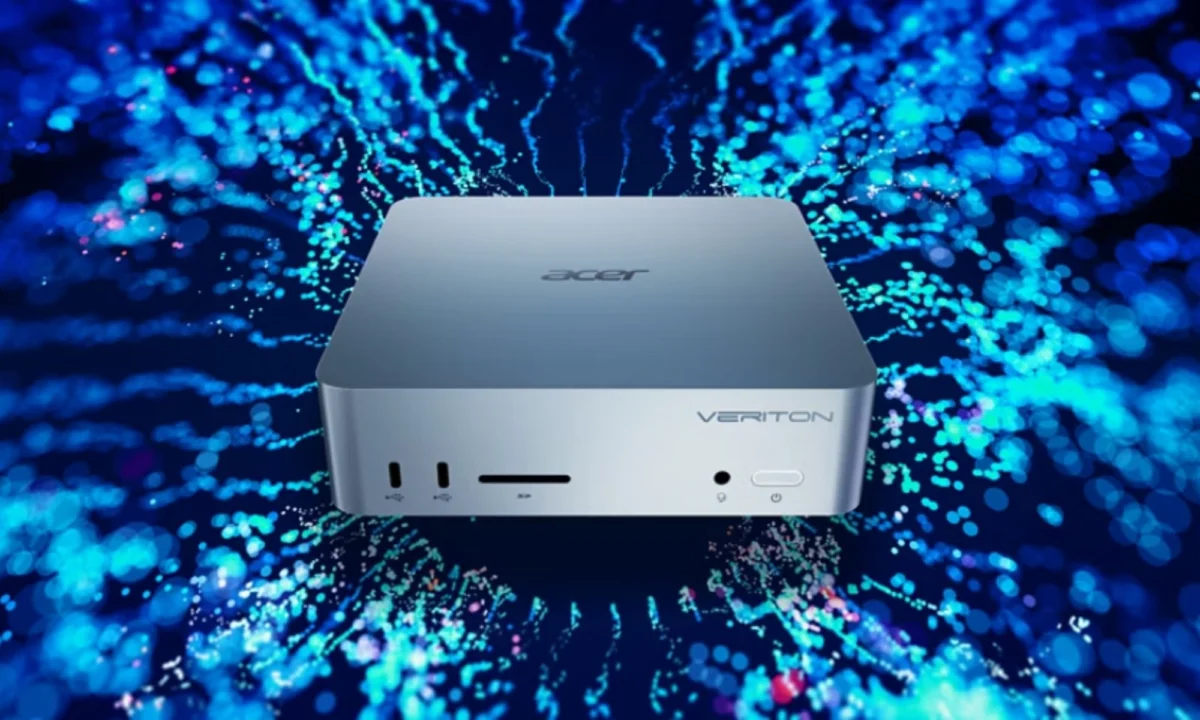
For years, the Apple Mac mini has reigned supreme as the industry’s gold standard for the "compact desktop" category. It has been the go-to solution for developers, creatives, and enterprise professionals who prioritize desk space without sacrificing the ability to perform heavy-duty computing tasks. However, the paradigm of the mini-PC is shifting. As local AI processing becomes the next great frontier in personal computing, Acer has officially entered the fray with the Veriton RA110 AI Mini Workstation, a machine designed not just to compete with the Mac mini, but to outperform it in the specific, high-stakes arena of local AI inference.
The Dawn of Local AI Inference
The landscape of computing in 2026 is defined by "AI-readiness." While many manufacturers are content with cloud-based AI solutions, Acer has pivoted toward local execution—the ability to run sophisticated Large Language Models (LLMs) and complex neural tasks directly on your desk, without the latency or privacy concerns associated with sending data to remote servers.
The Veriton RA110 is built around the cutting-edge AMD Ryzen AI Max+ 395 processor. This chip is not merely a central processing unit; it is an AI powerhouse. Featuring a Neural Processing Engine (NPE) capable of over 50 TOPS (trillions of operations per second), the RA110 is specifically engineered to handle on-device AI models with up to 200 billion parameters. For professionals working in data science, advanced 3D rendering, or autonomous software development, this represents a significant shift in workflow capability.

Chronology: From Concept to Compact Powerhouse
The development of the Veriton RA110 follows a multi-year trend of miniaturization in the workstation space. While the desktop tower was once the symbol of professional performance, the mid-2020s saw a rapid advancement in System-on-a-Chip (SoC) architectures that allowed high-wattage performance to be squeezed into chassis smaller than a lunchbox.
- Q1 2025: Industry whispers regarding "AI-first" silicon began to surface. AMD announced its roadmap for the Ryzen AI Max series, signaling a departure from traditional CPU/GPU-only designs.
- Late 2025: Acer began internal prototyping for a "next-generation" Veriton, specifically targeting the professional workstation market that was beginning to feel underserved by the incremental updates in existing compact PC lines.
- Q2 2026: Acer finalized the specifications for the RA110, ensuring that the integration of the Ryzen AI Max+ 395 was complemented by cutting-edge memory and I/O standards, including Wi-Fi 7 and LPDDR5X support.
- May 2026: Official unveiling. The Veriton RA110 is introduced as a direct challenger to the Mac mini, positioned specifically as an "AI-first" workstation for the modern, space-conscious office.
Technical Specifications: A Deep Dive into the Hardware
To compete with the optimized hardware ecosystem of Apple, Acer had to pull out all the stops. The Veriton RA110 is not just a standard mini-PC; it is a high-performance workstation disguised as a compact desktop.
Processing and Memory
The heart of the system is the AMD Ryzen AI Max+ 395. By integrating the CPU, the GPU, and the NPU on a single fabric, the machine minimizes data travel time, which is critical for real-time AI inference. To support these operations, the system supports up to 128GB of LPDDR5X four-channel memory. This is a massive amount of RAM for a system of this size, providing the "headroom" required to load massive datasets and run complex LLMs locally.

Storage and I/O
The RA110 comes standard with support for up to 2TB of high-speed M.2 NVMe SSD storage. While many users may prefer more, the speed of the bus is designed to keep up with the processing unit, ensuring that large model loading times are kept to an absolute minimum.
Connectivity is equally robust. Recognizing that a professional workstation must be integrated into a larger ecosystem, Acer has included:
- Wi-Fi 7 and Bluetooth 5.4: Ensuring the fastest possible wireless throughput.
- RJ45 Ethernet: For stable, high-speed wired networking.
- Advanced Biometrics: A built-in fingerprint reader compatible with Windows Hello, providing an essential security layer for enterprise environments.
- Physical Security: A Kensington lock slot, which is a staple in corporate environments where hardware security is as important as digital security.
The Software Layer: Acer Sense Pro
Hardware is only as good as the software that manages it. With the Veriton RA110, Acer is introducing the Sense Pro software suite. This is a dedicated utility that allows users to monitor their hardware in real-time.

Unlike generic monitoring software, Sense Pro is tuned for the AI-heavy workloads the RA110 is designed for. Users can toggle between three distinct modes:
- Silent Mode: Optimizes fan curves and clock speeds for focus-intensive, low-noise work environments.
- Balanced Mode: The "out-of-the-box" experience, providing a mix of efficiency and performance.
- Performance Mode: Unlocks the full potential of the Ryzen AI Max+ 395, allowing the system to run at its thermal limit for long-form video rendering or large-scale AI model training.
Implications for the Professional Market
The release of the Veriton RA110 has profound implications for how firms purchase workstations. Traditionally, a company might buy a "workstation" in the form of a massive tower to ensure it can be upgraded. However, the RA110 challenges the "tower mentality."
By offering 128GB of RAM and local 200-billion-parameter AI support, Acer is suggesting that the "compact desktop" is no longer a compromise—it is the new standard. This is particularly relevant for:

- Software Developers: Who need to run local code assistants and test LLMs without cloud API costs or privacy risks.
- Creative Professionals: Who are increasingly using AI-assisted tools for image generation, upscaling, and video editing.
- Data Analysts: Who need to crunch local datasets while maintaining strict data governance.
Furthermore, by positioning the device as a "Copilot+ PC," Acer is aligning itself with the Microsoft-led initiative to bring deep AI integration into the OS layer. This means that the RA110 isn’t just powerful hardware; it is a platform for the next generation of Windows-based AI services.
Official Responses and Market Positioning
While Acer has yet to confirm the official pricing for the United States or a specific release date for North American retailers, the company’s regional listing indicates that the product is ready for mass production. Market analysts suggest that Acer is likely waiting to coordinate the US launch with a broader "AI-Workstation" marketing campaign, potentially coinciding with upcoming Windows updates that further utilize the NPU capabilities of the Ryzen AI Max+ chips.
"We aren’t just building a smaller PC," an Acer spokesperson noted during the initial technical reveal. "We are building a computer that understands the modern workflow. Whether it is local AI inference or high-end creative work, the Veriton RA110 is designed to disappear into your desk while remaining the most powerful tool in your office."

Conclusion: A New Era for Mini-PCs
The Veriton RA110 is a bold statement. By directly targeting the Mac mini, Acer is acknowledging that the market for compact, high-performance computing is no longer a niche. It is the center of the modern professional’s world.
While the Mac mini has the advantage of a long-standing ecosystem and Apple Silicon’s efficiency, the Veriton RA110 offers something the Mac currently cannot: the flexibility of the x86-based Ryzen AI Max+ architecture, combined with a level of local AI power that is simply unmatched in this form factor. As the line between "desktop" and "AI appliance" continues to blur, the Veriton RA110 may well be the first of many machines that redefine what we expect from the boxes on our desks.
For the professional who is tired of being tethered to a tower, or who is ready to bring the power of AI in-house, the wait for a high-performance, compact, and truly capable Windows workstation may finally be over.


 Dwi Wanna