Basiran
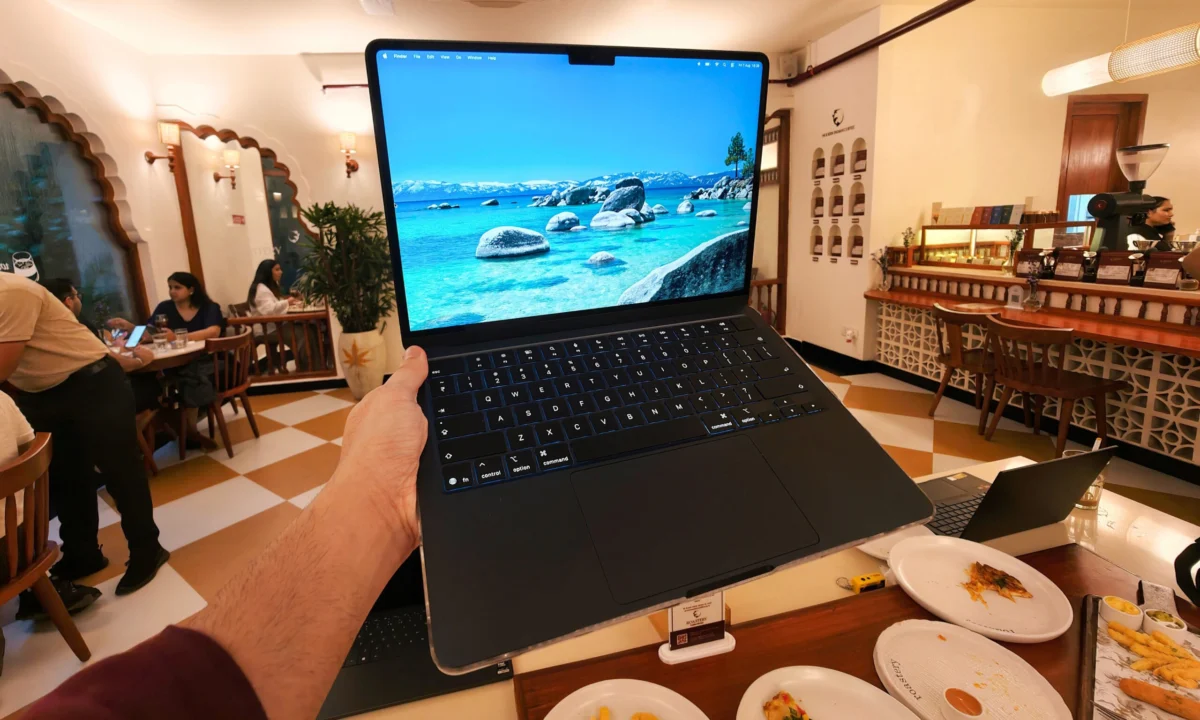
As Apple prepares for a significant technological inflection point, the MacBook Pro lineup is widely expected to undergo its most radical transformation in years, introducing touch-screen capabilities and advanced OLED display technology. However, the company’s most popular laptop, the MacBook Air, appears destined for a more conservative path. According to recent reports from Bloomberg’s Mark Gurman, the next iteration of the MacBook Air is slated for an early 2027 arrival, prioritizing internal architectural efficiency over the aesthetic and display-based overhauls coming to its higher-end siblings.
For the millions of students, professionals, and casual users who rely on the Air’s hallmark balance of portability and performance, this strategy suggests that Apple is choosing to preserve the current form factor for at least one more cycle. While the MacBook Pro pushes the boundaries of what a professional laptop can be, the Air is poised to remain a testament to the "if it isn’t broken, don’t fix it" philosophy of product design.
Main Facts: What to Expect in 2027
The core update for the upcoming MacBook Air centers on the silicon. Apple is expected to transition the thin-and-light laptop to the M6 chip—the successor to the current M5 architecture. This transition is not merely a numbers game; the M6 is anticipated to be built on a cutting-edge 2-nanometer (2nm) fabrication process.

The move to a 2nm process is significant in the semiconductor industry. Smaller transistors generally allow for higher density, which translates to either increased performance or reduced power consumption. Given the MacBook Air’s fanless, passively cooled design, the efficiency gains of the M6 will be critical in maintaining the machine’s legendary battery life while providing the headroom necessary to handle the increasingly demanding AI-integrated tasks of the macOS ecosystem.
Despite the internal horsepower, those hoping for a radical visual departure will likely be disappointed. The chassis is expected to retain its current design language—a slim, wedge-shaped aluminum aesthetic that has defined the series since its most recent redesign. Furthermore, while the MacBook Pro lineup is rumored to be pivoting toward OLED panels, the 2027 MacBook Air will likely stick with its existing Liquid Retina LED display technology. This segmentation ensures a clear price-to-feature distinction between the mass-market Air and the professional-grade Pro models.
A Chronology of the Air’s Evolution
To understand the significance of the 2027 refresh, one must look at the rapid cadence of Apple’s recent updates. The current M5 MacBook Air, which debuted in March 2026, represented a substantial leap forward. That update did more than just swap the processor; it doubled the entry-level storage to 512GB and integrated the N1 wireless chip, bringing Wi-Fi 7 and Bluetooth 6 support to the table.

This March 2026 release established a clear pattern: Apple is dedicated to keeping the Air on a roughly 12-month upgrade cycle to ensure the entry-level experience remains competitive with the rapid pace of technological change.
- 2024: Apple solidified the modern design language, focusing on refined aesthetics and improved chassis durability.
- 2026: The M5 chip arrival marked a shift toward high-speed wireless connectivity and increased baseline storage, addressing common user complaints regarding base configurations.
- Early 2027 (Projected): The move to the M6 chip signifies the next step in Apple’s silicon roadmap, likely timed to coincide with the broader rollout of its 2nm architecture across the Mac mini and entry-level iMac product lines.
By adhering to this timeline, Apple avoids the stagnation that often plagues thin-and-light laptops in the PC market, where hardware refreshes can sometimes be sparse or poorly timed.
Supporting Data: The 2nm Advantage
The transition to the M6 chip is the "anchor" feature of the 2027 refresh. As the industry moves toward 2nm, the performance-per-watt metric becomes the most important statistic for a device like the MacBook Air.

Current benchmarks of the M5 indicate that the chip is already capable of handling moderate professional workflows—video editing, complex multitasking, and heavy web browsing—without the need for active cooling. However, as software becomes more reliant on Apple’s Neural Engine for local AI processing, the demand on the processor increases.
The 12-core CPU and 12-core GPU configuration expected for the M6 is designed to handle this load. By increasing the core count and utilizing the smaller 2nm architecture, Apple can maintain the fanless thermal profile while providing a noticeable speed boost over the M5. For the consumer, this means the laptop will feel "snappier" for longer, extending the functional lifespan of the device before it feels obsolete.
Furthermore, the integration of the N1 wireless chip in the previous cycle suggests that Apple is future-proofing its laptops for a world of high-bandwidth, low-latency connectivity. The M6 will likely build upon this, ensuring that the 2027 MacBook Air remains the gold standard for portable productivity.

Official Stance and Market Strategy
While Apple remains characteristically quiet regarding unreleased products, the company’s recent trajectory suggests a strategic divergence in its product lines. The "Pro" line is increasingly being positioned as a testbed for experimental, high-end technologies. The rumored shift to touchscreens on the MacBook Pro is a prime example of Apple testing how professional users interact with their machines.
Conversely, the MacBook Air is positioned as the "utility player." Apple’s goal here is to provide a consistent, reliable, and high-performance experience that doesn’t overwhelm the consumer with niche features. By keeping the Air’s display technology non-OLED, Apple can keep the price point aggressive, maintaining the "Air" branding’s reputation as the most accessible entry point into the high-quality macOS ecosystem.
This segmentation is a defensive play. As the laptop market becomes increasingly crowded with high-end Windows devices, Apple is betting that a familiar, reliable form factor, paired with the best-in-class performance of the M6 chip, will continue to drive volume sales.

Implications: A Complicated Future for the Mac
The decision to keep the MacBook Air’s design and display consistent while the MacBook Pro evolves carries significant implications for the future of Apple’s laptop lineup.
1. The "Menu" Problem
As Apple expands its range across more price points and display technologies, the potential for consumer confusion grows. If the MacBook Pro moves toward touchscreens and OLED, while the Air stays on the traditional track, the gap between "entry-level" and "professional" becomes more pronounced. For a casual buyer, the choice is no longer just about power—it is about a fundamental shift in how the device is used.
2. The AI Integration
The 2027 refresh will likely be defined by how well the M6 chip handles localized AI. With Apple Intelligence becoming a central pillar of the company’s software strategy, the hardware must be able to perform these tasks without draining the battery or causing thermal throttling. The M6 is the key to this, and its performance in the MacBook Air will dictate how much of the "AI future" the average user gets to experience.

3. Sustainability and Lifecycle
By keeping the chassis design consistent, Apple is also supporting a robust secondary market. A consistent form factor means that accessories, cases, and repair parts remain compatible across multiple generations. This contributes to a higher resale value for the MacBook Air compared to competing laptops, a major selling point for students and budget-conscious professionals.
Conclusion
The upcoming 2027 MacBook Air, while perhaps not the revolutionary redesign some might hope for, is set to be a significant iteration in Apple’s silicon journey. By focusing on the M6 chip’s 2nm efficiency and maintaining a proven design, Apple is reinforcing the Air’s role as the definitive laptop for the general user.
As the tech world watches the MacBook Pro experiment with touchscreens and OLED, the MacBook Air will continue to do what it has always done: provide a sleek, powerful, and reliable machine that serves as the workhorse for millions. For the average user, that consistency is not a weakness—it is exactly what makes the MacBook Air one of the most successful products in the history of personal computing. Whether this conservative approach will remain viable as the line between tablet and laptop continues to blur remains to be seen, but for now, the path forward for the Air is one of refinement, not revolution.


 Pevita Pearce

 Dwi Wanna