
 Iffa Jayyana
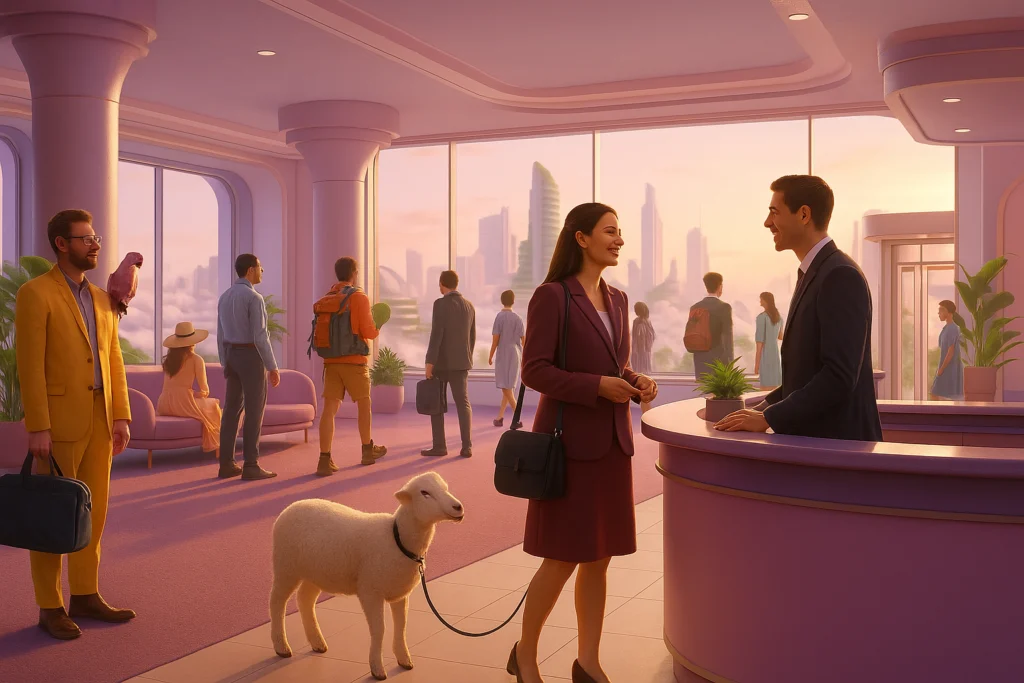
By 2026, the traditional hotel management model—characterized by end-of-quarter reviews and static monthly forecasting—has been relegated to the archives of business history. In its place, a new paradigm has emerged: the "living hotel." In this ecosystem, data is not merely a reporting tool; it is the heartbeat of the operation, flowing continuously across every department to fuel real-time decision-making.
The shift is profound. Hotels are no longer static assets but dynamic, responsive entities that treat every guest interaction as a vital signal. For modern hoteliers, the competitive advantage no longer belongs to the largest chains or the properties with the most prime real estate. Instead, the victors are those who have mastered the velocity of data—the ability to connect, interpret, and act upon information faster than the market shifts.
The Evolution of Hotel Operations: From Silos to Synapses
For years, the hospitality industry struggled with a paradox: an abundance of data and a scarcity of insight. With the rise of digital bookings, guest reviews, channel performance metrics, and fluctuating pricing signals, hotels were drowning in information. The transformation occurring in 2026 is not about collecting more data, but about creating the connective tissue that allows that data to work in harmony.
The Death of the "Reporting" Mindset
In the past, hotel teams relied on historical averages and quarterly reports. This reactive approach meant that by the time a strategy was adjusted, the market opportunity had often vanished. Today, data is the primary reference point. When revenue managers, marketing teams, and operational staff operate from a "single version of truth," the friction of internal silos evaporates.
When a marketing team sees real-time demand spikes, they no longer guess what campaigns to run; they execute targeted messaging based on current guest behavior. Simultaneously, operations teams receive direct feeds into demand patterns, allowing for surgical precision in staffing. This synchronization reduces decision cycles from days to mere hours, providing a massive competitive edge in volatile environments.
Chronology of the Data Shift: A Multi-Year Transformation
The journey to the data-centric hotel of 2026 did not happen overnight. It has been a systematic evolution:
- 2022–2023: The Awareness Phase. Hoteliers began to recognize that disconnected systems (Property Management Systems, Revenue Management Systems, and CRM tools) were creating "data graveyards."
- 2024: The Integration Era. Industry leaders started prioritizing API-first architectures and the initial adoption of Customer Data Platforms (CDPs) to break down the walls between departments.
- 2025: The Automation Tipping Point. AI and machine learning models began handling routine tasks—such as standard rate adjustments and basic guest communication—freeing human staff to focus on high-level strategy.
- 2026: The Living System. Data now moves fluidly across the enterprise. Proactive, predictive, and personalized strategies are the industry standard, and real-time responsiveness is a prerequisite for market entry.
Supporting Data and Industry Implications
The efficacy of this transition is reflected in bottom-line performance. Research indicates that properties leveraging centralized guest data via a CDP have realized up to a 25 percent increase in marketing efficiency. By moving away from generic, "spray-and-pray" marketing, these hotels have significantly reduced their reliance on third-party channels, reclaiming control over their guest relationships and reducing acquisition costs.
Furthermore, the transition to real-time segmentation and dynamic pricing has allowed hotels to protect their Average Daily Rate (ADR) even during market downturns. By analyzing price sensitivity and booking intent in real-time, hotels can avoid the "race to the bottom" through unnecessary discounting, instead focusing on high-value guest acquisition.
Real-Time Segmentation: Beyond Demographics
Traditional segmentation (e.g., "leisure" vs. "corporate") is a relic of the past. It failed to account for the modern traveler’s complex motivations. A guest who books a business trip today might be the same person planning a luxury family vacation next month.
In 2026, segmentation is behavior-based. It is a living, breathing classification that evolves with every touchpoint. By tracking browsing patterns, device usage, cancellation habits, and engagement history, hotels can build a "dynamic profile." This profile doesn’t just tell the hotel who the guest is, but what they are likely to do next. This allows for hyper-personalized offers that increase conversion rates and foster long-term loyalty, fundamentally increasing the Customer Lifetime Value (CLV).
Predictive Forecasting: Eliminating the "Surprise" Factor
Modern forecasting is no longer a static spreadsheet exercise. The forecasting models of 2026 are predictive, continuously absorbing new signals—booking pace, market trends, search demand, and even external economic indicators.
This shift allows hotels to anticipate market shifts before they manifest as occupancy changes. For instance, if a specific travel corridor shows a decline in search interest three weeks out, the hotel can adjust its marketing spend or pricing strategy long before the occupancy gap occurs. This foresight transforms revenue management from a damage-control function into a proactive growth driver.
The Role of Dynamic Pricing in a Hyper-Connected Market
Dynamic pricing has matured into a sophisticated orchestration of variables. It is no longer a simple calculation based on occupancy percentages. Today’s systems synthesize demand elasticity, channel costs, guest lifetime value, and competitive positioning in real-time.
Crucially, the human element remains vital. While automation manages the speed and complexity of rate changes, human revenue leaders provide the strategic guardrails. This balance ensures that pricing remains intentional—aligned with brand identity—rather than becoming a chaotic algorithm that confuses the customer.
The Foundation: CDPs as the Connective Tissue
The most significant barrier to this transformation has always been system fragmentation. To solve this, the Customer Data Platform (CDP) has become the essential foundation of the modern hotel tech stack.
Why CDPs are Mandatory for 2026:
- Unified Guest Profiles: Aggregating data from across the guest journey to ensure that the front desk, the marketing team, and the revenue manager see the same customer profile.
- Cross-Departmental Accessibility: Removing technical barriers so that non-technical teams can extract actionable insights.
- Data Governance: Ensuring that the "single version of truth" is clean, reliable, and compliant with privacy regulations.
TrustYou’s CDP, for example, serves as a cornerstone of this strategy by integrating raw data from multiple channels into a structured, usable format. By turning raw data into clarity, it allows hotels to bridge the gap between "having data" and "using data."
Official Perspectives: The Path to Sustainable Growth
Industry analysts and hotel executives agree: the primary challenge for the remainder of the decade is not the acquisition of technology, but the cultivation of a data-driven culture.
"The future of hotel revenue is not driven by intuition alone, nor by technology on its own," notes a leading hospitality consultant. "It is shaped by how effectively hotels turn information into action."
This requires a cultural shift where team members are empowered to act on data without waiting for long approval chains. When leadership trusts the numbers, the organization gains the agility to thrive in a world that is increasingly unpredictable.
Implications: A New Era of Hospitality
The implications of this shift are far-reaching:
- Operational Resilience: Hotels are better equipped to handle market volatility because they have early warning systems.
- Enhanced Guest Experience: Personalization at scale becomes possible, making every guest feel recognized and valued, regardless of their segment.
- Increased Profitability: By optimizing channel mix and reducing marketing waste, hotels see a direct, positive impact on their bottom line.
Conclusion
As we look toward the latter half of the decade, it is clear that the divide between the market leaders and the laggards is widening. The "data-driven" label is no longer a buzzword; it is a survival strategy. Hotels that embrace this mindset—prioritizing connectivity, trusting their data, and empowering their teams—are building businesses that are inherently more resilient and more profitable.
Building a data culture is the ultimate catalyst for sustainable growth in 2026. For those still operating in the silos of the past, the message is clear: the transition is not optional. It is the new foundation of the hospitality industry.
Ready to transform your hotel’s performance? Discover how an AI-powered, CDP-driven approach can help you meet your revenue goals. Book a demo with TrustYou today to see the future of hospitality in action.


 Rifan Muazin
 Evan Lee Salim





