
 Ali Ikhwan
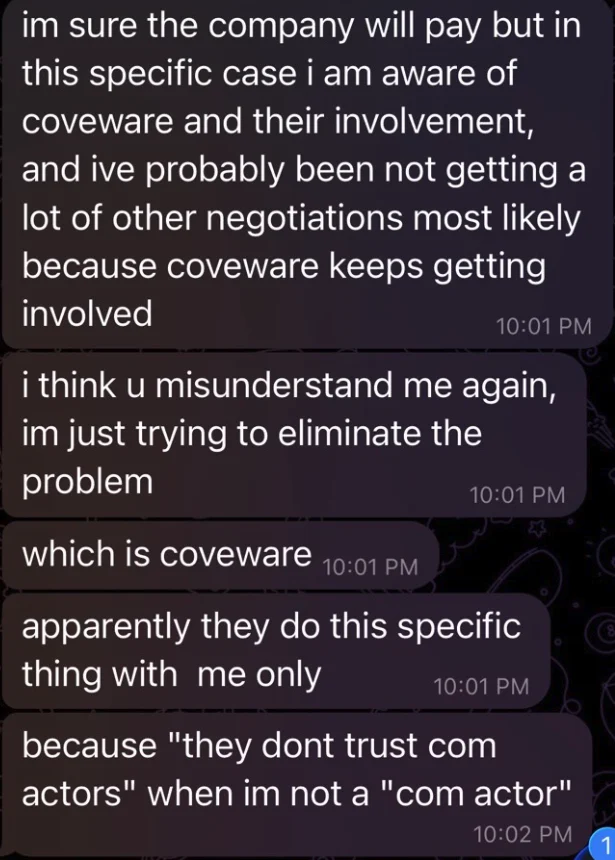
In a revelation that has sent shockwaves through the cybersecurity industry, federal investigators have uncovered a disturbing nexus between legitimate incident response firms and one of the world’s most prolific cybercriminal syndicates. According to findings from KrebsOnSecurity, the ShinyHunters hacking group—responsible for an estimated $70 million in extortions this year—has been operating with the clandestine assistance of high-level executives at major ransomware negotiation firms.
The investigation, which has moved with unprecedented velocity following a breach of the FBI’s own recruitment portal, suggests that the "ransomware economy" is suffering from a systemic corruption where the very people hired to protect victims are allegedly profiting from their distress.
The Anatomy of the ShinyHunters Syndicate
Since its emergence in 2019, ShinyHunters has evolved from a group of France-based cybercriminals into a sophisticated, multi-national operation. Following the attrition of its original members through arrests and incarceration, the brand was revitalized under the leadership of a figure known as "Rey." Last year, investigative efforts identified Rey as a teenage hacker based in Amman, Jordan.

Under Rey’s stewardship, the group moved beyond simple data theft, adopting an aggressive extortion model that utilized a dedicated victim-shaming portal known as "shinywire[.]com." This site served as the group’s public storefront, listing nearly 100 victim organizations, displaying samples of stolen data, and providing countdown clocks that threatened to leak sensitive files—including medical records, Social Security numbers, and home addresses—if demands were not met.
Chronology of a Collapse
The downfall of the ShinyHunters leadership began in late 2026, triggering a cascade of arrests that exposed the inner workings of the group’s digital infrastructure.
- September 15, 2026: Dutch authorities executed a high-stakes raid on the residence of Pepijn van der Stap, a convicted hacker and suspected senior member of ShinyHunters. Utilizing flash-bang grenades to ensure his apprehension while he remained logged into his accounts, police secured access to his Signal messaging history.
- Late September 2026: In a brazen act of defiance, ShinyHunters breached fbijobs.gov. The stolen data—comprising highly sensitive employee personnel files—triggered a massive escalation in the federal investigation.
- October 3, 2026: Reuters reported that "Rey" had been detained by Jordanian authorities and was actively cooperating with the FBI.
- October 9, 2026: Federal agents arrested Edward Dubrovsky, a 54-year-old Canadian cybersecurity executive. Court records indicate Dubrovsky has been charged with interfering with interstate commerce through extortion and threatening to disclose stolen data.
- October 16, 2026: Following the wave of arrests, the shinywire[.]com domain went offline, marking the end of one of the most prolific extortion platforms of the year.
The "Double Agent" Executives: A Conflict of Interest
The most explosive finding in the federal investigation involves the role of executives at ransomware negotiation firms. Sources close to the investigation reveal that the Signal chats recovered from Van der Stap’s devices contained frequent, deep-level communications with both Dubrovsky and at least one executive at a prestigious U.S.-based consulting firm.

These executives were not merely passive observers; investigators believe they possessed intimate knowledge of new victims before the victims themselves were aware of the breach. In the case of the FBI’s own personnel files, sources allege that Dubrovsky was aware of the data theft but failed to inform the bureau, keeping the information to himself even as ShinyHunters taunted the agency on social media.
This relationship appears to be a broader industry trend. In December 2024, the education technology giant PowerSchool suffered a massive breach involving the records of 62 million students and 9.5 million teachers. While PowerSchool engaged the firm CyberSteward—a company with links to the now-arrested Dubrovsky—to assist in the crisis, the payment of a $2.85 million ransom did not end the ordeal. The stolen data resurfaced months later, proving that payments to hackers provide no guarantee of data deletion or privacy protection.
Supporting Data: The "Ghostbyte" Connection
The investigation into the firm Cypfer and its associates has unearthed historical links to the "Ghostbyte" moniker. As far back as 2018, victims of the Dharma ransomware were directed by the hackers themselves to reach out to an IT professional using the email address [email protected].

While the current status of that specific alias remains under investigation, the use of such pseudonyms by industry "fixers" highlights a pattern: some negotiators are accused of using their positions to facilitate payments rather than resolving security flaws. Furthermore, crypto-wallet analysis by firms like Constella Intelligence has tracked millions of dollars in Bitcoin transactions linked to accounts associated with these intermediaries, raising questions about the legitimacy of the "consulting fees" charged to victim companies.
Official Responses and Industry Fallout
The cybersecurity industry is currently grappling with the implications of these revelations. Companies like Coveware and Unit 221B have taken a firm stance against paying ransoms, arguing that it only fuels the criminal cycle. Their defiance, however, made them targets of the ShinyHunters leadership. Telegram logs obtained by investigators show the hackers explicitly plotting to "eliminate the problem" posed by these firms, which they blamed for plummeting ransom payment rates.
Mark Camillo, CEO of CyberAcuView, an industry group representing major insurance carriers, has called for a radical shift in how negotiations are handled. "It has come to the industry’s attention that many of the ransomware payers charge a percentage of the final payment," Camillo noted. "This makes no sense if they are also the negotiator. There needs to be more transparency in the process as no one in the ecosystem should be profiting purely on the size of the ransomware transaction."

The U.S. Department of Justice has signaled its intent to dismantle this ecosystem. Recent prosecutions, including the case of MonsterCloud CEO Zohar Pinhasi—who allegedly pocketed millions while secretly paying hackers—and the 70-month sentence handed to Florida negotiator Angelo Martino, suggest that the federal government is no longer willing to tolerate "remediation" firms that act as proxies for cybercriminals.
Implications for the Future
The exposure of the ShinyHunters-negotiator pipeline serves as a grim warning to the corporate world: the "fixers" hired in the wake of a breach may be the very people facilitating the next one.
Key Takeaways:
- Systemic Risk: The financial incentive structure of some negotiation firms creates a perverse outcome where the negotiator benefits from higher ransom demands.
- The Myth of "Deletion": Paying a ransom provides no technical guarantee that stolen data will not be resold or used for secondary extortion.
- Regulatory Scrutiny: With the DOJ, FBI, and industry groups now aligned against the "pay-to-remediate" model, firms operating in this space face a high probability of intense legal investigation.
- Institutional Integrity: The breach of the FBI’s own systems by an entity that was supposedly being "negotiated with" by industry insiders demonstrates that no organization is immune, and internal corruption remains the greatest threat to data security.
As the legal proceedings against Edward Dubrovsky and his associates move forward, the cybersecurity industry is forced to reckon with a new reality. The era of the "unregulated negotiator" is ending, and the path forward requires greater transparency, mandatory disclosure of negotiation fees, and a unified refusal to treat cybercriminals as legitimate business partners. The ShinyHunters saga is likely only the beginning of a larger reckoning in the global fight against digital extortion.


 Sagoh

 Neng Nana






