
 Basiran
Riyadh, Saudi Arabia – A significant and escalating geopolitical conflict in the Arabian Peninsula has brought corporate travel to Saudi Arabia to an unprecedented halt, forcing businesses to reassess their operations and individuals to undertake arduous overland journeys. Ongoing missile and drone attacks by the Iran-aligned Houthi militia, targeting various strategic locations within the Kingdom, have triggered a severe downturn in commercial air traffic, leaving many visitors stranded and prompting a complete pause on new business trips. The disruption underscores the fragility of travel and economic stability in a region frequently buffeted by geopolitical currents.
The current situation is one of profound uncertainty, as outlined by industry executives. "Almost all corporate travel to Saudi Arabia has been paused as attacks by Iran-aligned Houthi militia continue," reported a recent industry brief, echoing concerns across the global business community. With a drastically reduced number of international airlines maintaining routes into and out of the Kingdom, the immediate consequence has been a logistical nightmare for those already present. Many are now resorting to extensive road travel, often crossing international borders, to access onward flights from neighboring Gulf countries.
Subair Thekepurathvalappil, a senior manager at UAE-based travel agency Wise Fox Tourism, painted a stark picture of the current state of affairs. "There is no new travel being initiated to the kingdom and everything is on hold," he told Skift, highlighting the comprehensive nature of the travel freeze. The challenges extend beyond mere cancellations, impacting those already on the ground. "Those who have gone to the kingdom are trying to return to the UAE by traveling to neighboring Bahrain by road and flying back from there. Others are traveling from Riyadh to Dammam by road for four hours and then to the UAE by road again for a further seven hours." These circuitous and time-consuming routes illustrate the extraordinary lengths travelers are now undertaking to navigate the region. Even the religiously significant pilgrimage of Umrah, typically a major driver of air traffic, has seen a shift, with the majority of pilgrims opting for road travel to reach the holy cities of Makkah and Madinah.
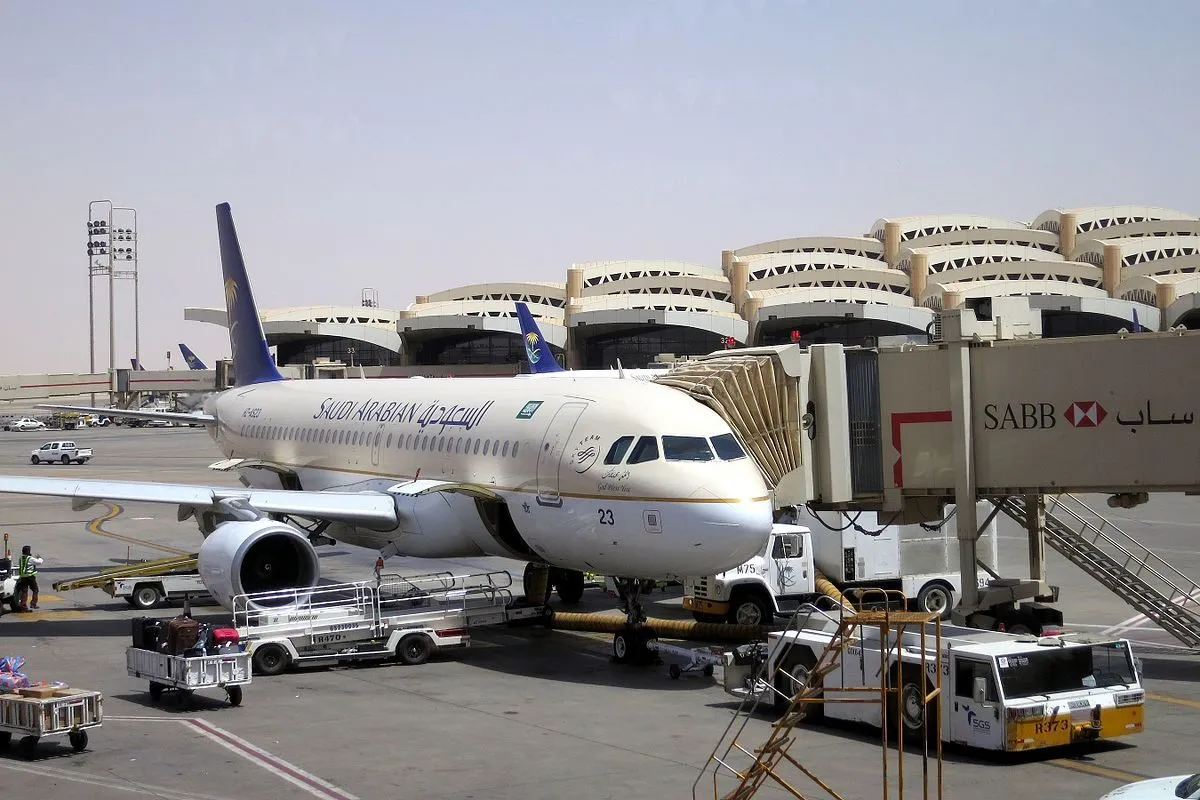
The image accompanying this report, depicting a Saudi Arabian Airlines aircraft at Riyadh Airport, serves as a poignant reminder of the aviation infrastructure now operating under immense pressure and heightened security protocols. (Photo Credit: Saudi Arabian Airlines at Riyadh Airport, Wikimedia Commons / Stefan Krasowski)
Escalating Tensions and Travel Paralysis
The decision by corporations to halt travel is not taken lightly; it reflects a serious assessment of risk, a commitment to duty of care for employees, and the practical difficulties imposed by disrupted air services. This paralysis extends across various sectors that typically drive business engagement with Saudi Arabia, from oil and gas exploration and infrastructure development to finance, consulting, and technology.
A Sudden Halt to Business Travel
The declaration that "almost all corporate travel has been paused" signifies a critical juncture for Saudi Arabia’s ambitious economic diversification plans. Multinational corporations, accustomed to regular executive visits, technical support teams, and client meetings, have found themselves in an untenable position. Security alerts, advisories from governmental bodies in their home countries, and the prohibitive cost of insuring travel to perceived conflict zones are all contributing factors. Beyond the immediate threat of direct attack, the psychological impact on employees and the potential for prolonged operational disruptions weigh heavily on corporate decision-makers.
Companies involved in the Kingdom’s mega-projects, such as NEOM, the Red Sea Project, and Qiddiya, which rely heavily on international expertise and investment, are particularly affected. Delays in site visits, negotiations, and technical consultations can cascade into significant project setbacks and increased costs. The vibrancy of Riyadh’s burgeoning financial district and its efforts to attract global talent are also dampened by an environment where routine business travel becomes a logistical ordeal. The absence of a robust, reliable air travel network effectively isolates the Kingdom from the very international partners it seeks to engage.
Furthermore, the reduced number of airlines operating to Saudi Arabia complicates matters significantly. Major carriers, assessing the security landscape, may reduce frequencies, reroute flights, or suspend services entirely, leading to fewer options, higher prices, and increased unpredictability for the remaining essential travel. This ‘flight scarcity’ creates a bottleneck, exacerbating the problem for those trying to enter or exit.
Stranded Travelers and Arduous Journeys
For business travelers already in Saudi Arabia when the situation deteriorated, the challenge of returning home has become a saga of endurance. The descriptions provided by Subair Thekepurathvalappil illustrate this vividly. The journey from Riyadh to Dammam by road, taking approximately four hours, followed by another seven-hour drive to the UAE, means an exhausting eleven-hour overland trek before even reaching an airport with reliable international connections. Similarly, driving to Bahrain offers an alternative, but still involves border crossings and significant travel time.
These overland routes, once peripheral options, have become critical arteries for those seeking egress. However, they come with their own set of challenges: the physical toll of long drives, potential security risks on roads, bureaucratic hurdles at border crossings, and the added expense of ground transportation, often requiring private hires or multiple transfers. For business professionals, this translates to lost productivity, increased stress, and a significant diversion of resources that would otherwise be spent on core business activities. The convenience and efficiency that air travel typically offers are completely absent, replaced by a sense of desperation and resilience.
Chronology of Conflict and Its Impact on Aviation
The current travel crisis is not an isolated incident but a direct consequence of the protracted and devastating conflict in Yemen, which has spilled over Saudi Arabia’s southern border with increasing regularity and intensity.
A History of Houthi Aggression
The Houthi movement, formally known as Ansar Allah, has been locked in a civil war with the internationally recognized Yemeni government, supported by a Saudi-led coalition, since 2014. What began as a local insurgency has evolved into a regional proxy conflict, with Iran allegedly providing support to the Houthis. Over the years, Houthi forces have developed and deployed a formidable arsenal of ballistic missiles, cruise missiles, and armed drones, primarily targeting Saudi military installations, oil infrastructure, and increasingly, civilian areas and airports.
Major Saudi airports, including Abha International Airport, King Khalid International Airport in Riyadh, and King Fahd International Airport in Dammam, have been repeatedly subjected to Houthi attacks. While Saudi air defenses (such as Patriot missile systems) have intercepted a significant number of these projectiles, some have broken through, causing damage and, more critically, instilling a sense of insecurity. Attacks on critical infrastructure, such as the major oil facilities of Aramco, have demonstrated the Houthis’ capability to strike deep within Saudi territory and disrupt global energy supplies, further elevating the perceived risk for international businesses operating in the Kingdom.
Each successful or near-successful attack sends ripples of concern through the international community, directly impacting risk assessments for travel and investment. The unpredictability of these assaults – often launched without significant warning – makes it particularly challenging for airlines and corporations to guarantee safety.
Aviation Industry’s Response
The global aviation industry operates under stringent safety and security protocols, and the presence of active conflict or a high threat of attack directly influences operational decisions. Airlines constantly monitor geopolitical developments and adhere to advisories issued by national aviation authorities, such as the U.S. Federal Aviation Administration (FAA) or the European Union Aviation Safety Agency (EASA). When a region is deemed high-risk, airlines may:
- Issue Travel Advisories: Warning passengers about potential dangers.
- Adjust Flight Paths: Rerouting to avoid contested airspace, which can increase flight times and fuel consumption.
- Reduce Frequencies or Suspend Services: The most drastic measure, taken when the risk is deemed too high to operate safely or economically. This is precisely what has happened, leading to "few airlines still flying."
- Increase Security Measures: Though largely unseen by passengers, airlines and airports in affected regions may heighten security checks and intelligence sharing.
The financial implications for airlines are substantial, including increased insurance premiums for flying into conflict zones, potential costs associated with damage to aircraft, and the broader economic impact of reduced passenger numbers. For corporations, this translates into higher travel costs, limited options, and the necessity of implementing robust emergency evacuation plans. The cumulative effect is a significant deterrent to maintaining normal business operations in Saudi Arabia.
Supporting Data and Economic Ramifications
The disruption to travel arrives at a particularly sensitive time for Saudi Arabia, as it pushes forward with its ambitious "Vision 2030" economic transformation agenda. This blueprint aims to diversify the Kingdom’s economy away from its heavy reliance on oil, fostering new industries, attracting foreign investment, and significantly boosting tourism.
Economic Ambitions Under Threat
Vision 2030 encompasses a vast array of mega-projects and initiatives, from the futuristic city of NEOM and the luxury tourism developments along the Red Sea coast to the development of a vibrant entertainment sector and the transformation of Riyadh into a global financial hub. All these initiatives depend critically on sustained foreign direct investment, the influx of international expertise, and robust business-to-business engagement.
The current travel paralysis directly threatens these aspirations. When corporate executives, investors, engineers, and consultants cannot easily or safely travel to Saudi Arabia, the pace of project development slows, investment decisions are deferred, and the transfer of knowledge is hampered. The hospitality sector, a key component of the tourism push, feels the immediate pinch of reduced business and leisure travel. Similarly, the MICE (Meetings, Incentives, Conferences, and Exhibitions) industry, vital for establishing Riyadh as a regional hub, experiences cancellations and postponements. The perception of instability, even if localized, can have a chilling effect on the broader investment climate, making it harder for Saudi Arabia to attract the capital and talent required for its transformative goals.
The Umrah Pilgrimage: A Different Kind of Disruption
Beyond corporate travel, the original article highlighted another significant impact: "The majority of visitors going to perform the Islamic pilgrimage of Umrah at Makkah and Madinah in Saudi Arabia are avoiding flights and going by road instead." This detail is crucial, as the Umrah pilgrimage is a cornerstone of Saudi Arabia’s religious tourism sector, attracting millions of Muslims annually and generating billions of dollars in revenue.
The shift from air travel to road travel for Umrah pilgrims underscores the widespread fear and uncertainty regarding air safety. While the spiritual motivation for Umrah is immense, the practicalities of a long, arduous road journey – potentially across multiple borders from neighboring Gulf Cooperation Council (GCC) states – present significant challenges. Pilgrims face increased travel time, higher costs for ground transportation, potential discomfort, and heightened security concerns on long stretches of road.
This impacts not only the pilgrims themselves but also the entire ecosystem supporting religious tourism: airlines, hotels in Jeddah, Makkah, and Madinah, tour operators, and local businesses that cater to pilgrims. The preference for road travel, while ensuring the continuation of this vital spiritual practice, illustrates the depth of the security concerns pervading all segments of travel to the Kingdom. It represents a significant logistical and economic burden on a sector that is central to Saudi Arabia’s identity and economy.
Official Responses and Mitigation Efforts
In the face of persistent threats and the resulting travel disruption, both the Saudi government and the international community have been engaged in various responses, albeit with varying degrees of success in de-escalating the conflict.
Saudi Government’s Stance
The Saudi government has consistently condemned the Houthi attacks as acts of terrorism, violations of international law, and threats to regional and global security. Official statements frequently emphasize the Kingdom’s right to self-defense and its commitment to protecting its citizens and critical infrastructure. In response to the aerial threats, Saudi Arabia has invested heavily in sophisticated air defense systems, including an extensive network of Patriot missile batteries, which have successfully intercepted countless Houthi projectiles.
Beyond defensive measures, the government has also made appeals to the international community for stronger action against the Houthis and their alleged backers. While these appeals often garner expressions of concern, concrete international action to halt the attacks has been elusive. Domestically, authorities likely work closely with airlines and airport operators to enhance security protocols and provide assurances where possible, though the unpredictable nature of drone and missile strikes limits the extent of such guarantees. The government also faces the challenge of balancing security concerns with its economic ambitions, constantly striving to project an image of stability and safety for investors and tourists.
International Community and Diplomatic Efforts
The Yemen conflict and its regional spillover have been a persistent focus of international diplomatic efforts, primarily led by the United Nations. Various special envoys have attempted to broker ceasefires, facilitate peace talks, and address the humanitarian crisis within Yemen. The United States and other Western powers have also played a role, providing military support to Saudi Arabia, albeit with increasing scrutiny and conditionality over time, particularly concerning civilian casualties in Yemen.
However, these diplomatic efforts have struggled to achieve a lasting political resolution, which is the ultimate prerequisite for ending the Houthi attacks on Saudi Arabia. The complex web of regional rivalries, internal Yemeni factions, and external influences makes a comprehensive peace agreement exceedingly difficult. The lack of a decisive breakthrough in diplomatic channels means that the security threat to Saudi Arabia, and consequently the disruption to travel, remains an ongoing challenge. The international community’s inability to effectively neutralize the Houthi threat from Yemen directly contributes to the environment of instability that has now crippled corporate travel to the Kingdom.
Implications for the Future of Travel and Regional Stability
The current travel crisis to Saudi Arabia is more than a temporary inconvenience; it signals deeper shifts in regional dynamics and poses significant questions for the future of business and leisure travel in the Gulf.
Long-Term Outlook for Corporate Travel
The immediate future for corporate travel to Saudi Arabia remains highly uncertain, intrinsically linked to the trajectory of the Houthi attacks and the broader Yemen conflict. Until a significant de-escalation or a robust, verifiable peace agreement is in place, companies will likely maintain their cautious approach. This could lead to several long-term implications:
- Remote Work and Digital Collaboration: Companies might accelerate their adoption of remote work models for projects in Saudi Arabia, relying more heavily on digital platforms for meetings and project management, reducing the need for physical travel.
- Regional Hub Reliance: Businesses might increasingly rely on employees based in more stable regional hubs like Dubai, Abu Dhabi, or Doha, who would only undertake essential, short-term visits to Saudi Arabia when absolutely necessary and when conditions permit.
- Re-evaluation of Operational Models: Some companies might reconsider their physical presence in Saudi Arabia, potentially relocating staff or scaling back operations if the security situation remains volatile.
- Increased Due Diligence: Future investment and operational decisions will likely involve even more stringent risk assessments, with security and travel logistics becoming paramount considerations.
- Higher Costs: Even when travel resumes, increased insurance premiums, potential security escorts, and the need for contingency planning will likely drive up the cost of doing business in the Kingdom.
The recovery of corporate travel will not simply be a matter of resuming flights; it will require a sustained period of demonstrable security and stability to rebuild confidence among international businesses.
Redrawing Regional Travel Maps
The current situation has inadvertently redrawn regional travel maps, solidifying the role of neighboring Gulf states as critical transit hubs. Cities like Dubai and Abu Dhabi in the UAE, and Manama in Bahrain, are becoming indispensable gateways for accessing Saudi Arabia by road. This trend could have lasting effects:
- Enhanced Hub Status: Airports in these neighboring countries will likely see increased transit traffic, further cementing their status as major international aviation hubs.
- Increased Road Infrastructure Demand: The reliance on overland routes will put greater pressure on cross-border road infrastructure, potentially spurring investment in better roads and more efficient border crossing procedures between GCC states.
- Regional Cooperation: The necessity of coordinating ground and air travel across borders might foster greater practical cooperation among Gulf states on logistics and security.
- Economic Spillover: Neighboring countries might benefit from increased hotel stays, car rentals, and other services for travelers stranded or rerouting through their territories.
This reliance on multi-modal, cross-border journeys highlights the interconnectedness of the Gulf region, even amidst localized conflicts.
A Broader Geopolitical Challenge
Ultimately, the disruption to corporate and pilgrimage travel to Saudi Arabia is a potent symptom of a broader, unresolved geopolitical challenge: the Yemen conflict and its regional implications. The ability of the Houthis to launch attacks deep into Saudi territory exposes vulnerabilities in regional security and underscores the enduring difficulty of managing asymmetric threats.
The economic and social ramifications of these attacks extend far beyond the immediate damage, impacting international confidence, hindering development projects, and disrupting the lives of millions. Until a comprehensive and sustainable political resolution is found for the Yemen conflict, the shadow of instability will continue to loom over the Arabian Peninsula, impacting everything from global energy markets to the fundamental freedom of movement. The current paralysis in corporate travel serves as a stark reminder that regional peace is not merely a diplomatic ideal but a practical necessity for economic prosperity and everyday life. The path forward for Saudi Arabia, and indeed the wider region, hinges on achieving a level of security that allows business, tourism, and spiritual journeys to resume without the constant threat of conflict.


 Sagoh

 Laily UPN





