
 Neng Nana

As the Indian hospitality sector gears up for a transformative 2027, the reliance on manual processes—spreadsheets, disparate booking systems, and legacy desktop software—is rapidly becoming a liability. For hotel owners and operators, the choice of a Property Management System (PMS) is no longer merely a technical decision; it is a critical business strategy that dictates operational efficiency, revenue growth, and the ability to scale.
Whether managing a 25-room boutique independent property or a sprawling hotel chain with multiple locations, modern hoteliers require a robust, cloud-native ecosystem. This guide examines the landscape of hotel management technology in India, providing a roadmap for evaluating solutions that address the unique challenges of the 2027 market.
The Evolution of Hotel Management: From Legacy to Cloud
For decades, Indian hotels relied on on-premise, server-based software. While these systems provided basic functionality, they were inherently rigid. They required dedicated IT support, manual software updates, and were tethered to the physical location of the server.
The shift toward Cloud-based PMS (Property Management Systems) has fundamentally changed this dynamic. By moving operations to the cloud, hoteliers now enjoy real-time access to business data, automated updates, and seamless integration with the broader travel technology ecosystem. In 2027, this transition is not just a trend—it is a necessity for properties aiming to stay competitive in a high-demand market.
Why Cloud PMS Wins in 2027
- Remote Accessibility: Owners and General Managers can now monitor occupancy, revenue, and front-desk activities from anywhere, on any device.
- Reduced IT Dependency: With vendors managing hosting, backups, and security, hotels can focus on guest experience rather than server maintenance.
- Scalability: Whether adding rooms or new properties, cloud systems allow for modular growth without the need for hardware overhauls.
Evaluating the Top 10 PMS Solutions for 2027
The Indian market is flooded with options, both domestic and international. The "best" software is subjective and depends entirely on the property’s size, operational complexity, and growth goals.
1. Hotelogix: The Connected Cloud Powerhouse
Hotelogix has established itself as a leader for properties ranging from independent boutique hotels to growing chains. Its strength lies in its "connected" philosophy, where the PMS serves as the central nervous system for reservations, housekeeping, billing, and multi-property management.
- Key Advantage: Excellent for groups needing consolidated reporting and centralized control.
- Ideal For: Independent hotels and chains looking to replace legacy systems with a scalable, cloud-first solution.
2. eZee (Yanolja Cloud)
A veteran in the Indian market, eZee offers a comprehensive suite covering the entire guest journey. Its strength is its deep integration with distribution channels, making it a reliable choice for budget and mid-sized properties.
3. IDS Next
Known for catering to full-service, large-scale hospitality establishments, IDS Next offers enterprise-grade functionality. It is particularly adept at handling complex operational requirements and departments within larger resorts.
4. DJUBO
DJUBO focuses heavily on the commercial side of hospitality. It is an excellent choice for hotels that prioritize online distribution and direct booking performance alongside their core PMS needs.
5. Cloudbeds
A global player with a strong footprint, Cloudbeds is highly regarded for its user-friendly interface. It provides a robust platform that combines PMS, channel management, and revenue tools, making it a favorite for independent boutique properties.
(Additional notable mentions include Stayflexi for automation-focused properties, RMS Cloud for enterprise groups, mycloud Hospitality, Little Hotelier for B&Bs, and Oracle OPERA Cloud for large-scale enterprise needs.)
12 Criteria for Evaluating Your PMS
Before signing a contract, hoteliers should subject potential vendors to a rigorous evaluation. Do not rely on marketing brochures; request a live demonstration that mimics your actual daily operations.
- Core PMS Functions: Does it handle check-in, checkout, and room allocation with minimal clicks?
- GST Billing: Is it fully compliant with Indian tax regulations? Can it handle complex folio splits?
- Front Desk Usability: Is the interface intuitive enough for staff to learn in a day?
- OTA Connectivity: Does it sync inventory in real-time across MakeMyTrip, Goibibo, and Booking.com?
- Direct Bookings: Does it include a high-converting website booking engine?
- Payment Integration: Does it support UPI, cards, and automated reconciliation?
- Housekeeping: Does it provide real-time status updates to the front desk?
- Reporting: Are RevPAR, ADR, and occupancy reports available at the touch of a button?
- Integrations: Does it talk to your existing accounting software (like Tally)?
- Multi-Property Tools: Can it manage multiple locations from one dashboard?
- Support: What is the SLA for support during peak hours?
- Total Cost of Ownership: Are there hidden fees for setup, training, or integration?
The Economic and Operational Imperatives of 2027
The Indian hospitality industry is currently grappling with a surge in domestic tourism, business travel, and destination events. This increased volume creates intense pressure on operations.
Domestic Travel and Operational Pressure
With demand patterns becoming more volatile—driven by religious festivals, weddings, and long weekends—manual systems often fail. A connected PMS allows hotels to handle high booking volumes without the risk of overbooking or rate mismatches.
The Accuracy of GST and Accounting
In India, billing errors can lead to significant financial and compliance headaches. A PMS that is "GST-ready" isn’t just about printing a bill; it’s about automated tax calculation, handling corporate invoices, and ensuring that restaurant/POS charges are accurately reflected on the final guest folio.
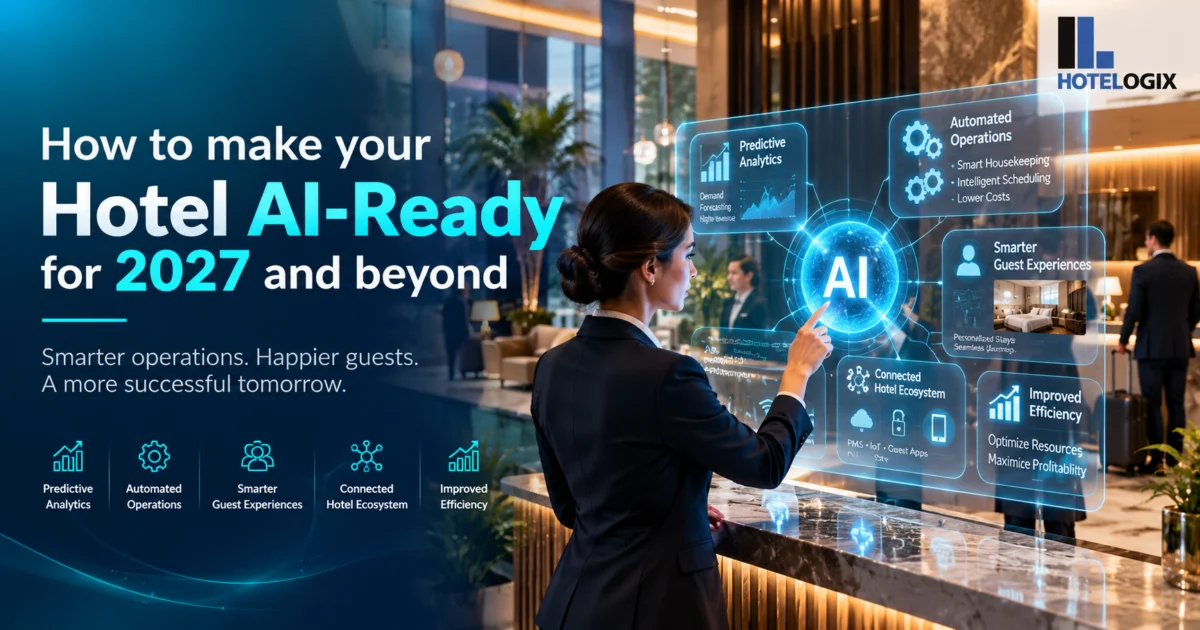
The Role of Artificial Intelligence
While "AI" is a buzzword, in 2027 it serves a practical purpose. AI-ready PMS solutions are beginning to assist with:
- Dynamic Pricing: Suggesting room rates based on real-time market demand.
- Guest Communication: Using chatbots to answer common pre-arrival questions.
- Predictive Reporting: Identifying trends in cancellations or booking sources before they impact revenue.
Implementation: A Step-by-Step Guide to Success
Switching systems is a major undertaking. To avoid operational disruption, follow this chronology:
- Review: Audit current workflows to identify bottlenecks.
- Data Cleansing: Purge duplicate guest profiles and ensure accurate rate mappings before migration.
- Configuration: Set up tax rules and payment gateways with the vendor’s implementation team.
- Integration Testing: Before going live, test the flow of data from OTAs to the PMS to ensure no reservations are lost.
- Training: Focus on role-based training. Front desk staff need to master the check-in flow, while finance teams must master reporting.
- The "Go-Live" Buffer: Run the new system alongside the old one for a short period if possible, or perform the switch during a period of lower occupancy.
Real-World Impact: Lessons from Success Stories
The effectiveness of these systems is best demonstrated by those who have already made the switch.
- Country Inn Hotels & Resorts: By consolidating nine properties onto a single platform (Hotelogix), the group achieved a 15x ROI and a 10% increase in revenue by eliminating manual OTA updates.
- Mint Hotels & Suites: Through automation, they saved over 1,500 staff hours per month, allowing the group to scale from seven to thirty properties without a proportional increase in administrative staff.
- Stately Suites: By moving to a cloud-based PMS, they reported a 20% growth in revenue and completely eradicated overbooking issues that previously plagued their business.
Final Verdict
The "best" hotel management software in India for 2027 is one that acts as an enabler rather than a gatekeeper. It must be flexible enough to handle the unique quirks of the Indian market—such as complex GST requirements and heavy reliance on local OTAs—while remaining simple enough for staff to use during the busiest check-in hours.
For independent hotels and growing chains alike, the path forward is clear: move to the cloud, prioritize connectivity, and choose a partner that offers not just software, but a strategy for growth. As you evaluate your options, remember that the goal is not to buy a tool, but to invest in an operational foundation that will support your business for years to come.
Recommendation: Shortlist two or three vendors, request a live demo focusing on your specific pain points, and prioritize the provider that demonstrates the strongest support structure for the Indian market.


 Evan Lee Salim
 Iffa Jayyana






