Lina Hope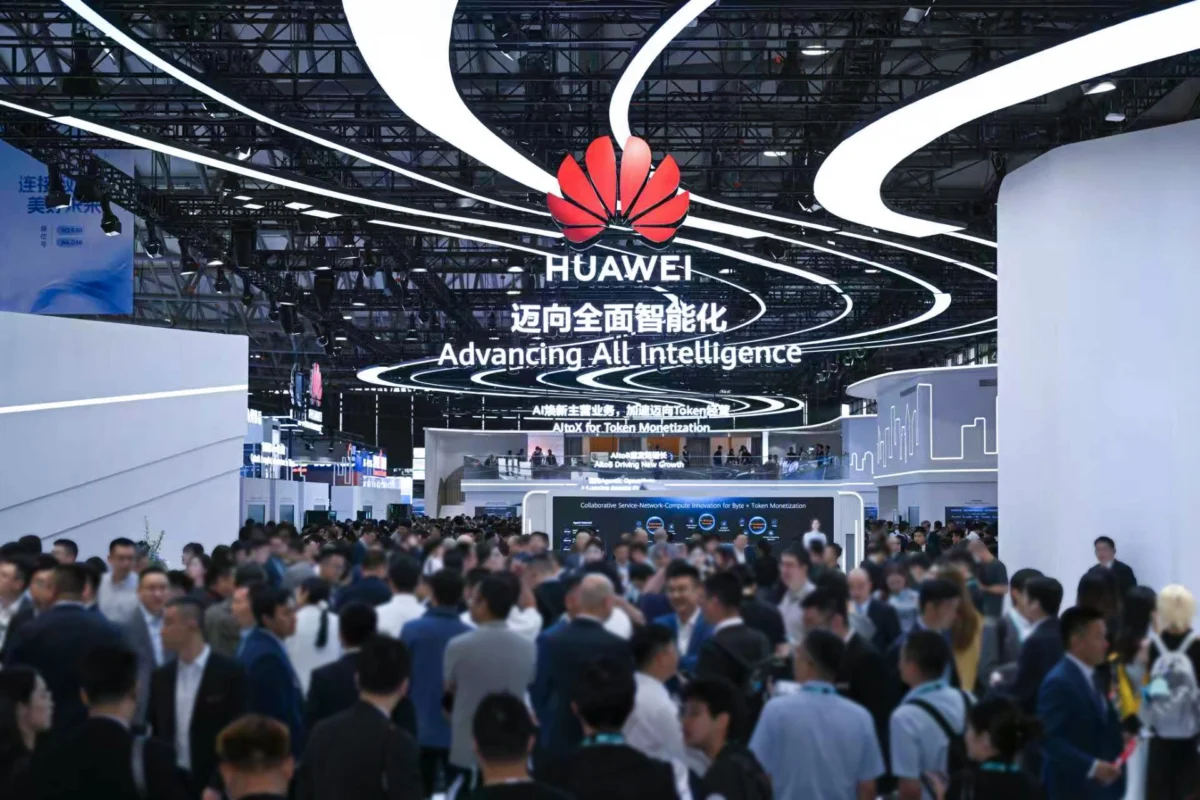
Introduction: The Paradigm Shift in Telecom
At MWC Shanghai 2026, the global telecommunications industry reached a critical inflection point. For decades, the narrative of mobile evolution was defined by the pursuit of raw speed and spectral efficiency. However, as industry leaders and thousands of senior executives gathered in Hall N1, a new, more ambitious mandate emerged: the transition from "data-pipes" to "intelligence-ready" infrastructures.
Huawei, anchoring the event under its Advancing All Intelligence theme, presented a compelling vision for the future of telecommunications. The company argues that the next phase of growth for operators will not be found in the traditional commoditization of data traffic, but in the monetization of the "tokens" that power the burgeoning artificial intelligence (AI) ecosystem. As AI models become ubiquitous, the way operators measure, price, and deliver network value is undergoing a fundamental transformation.
The Core Facts: From Bits to Tokens
The fundamental shift Huawei is advocating is the transition from a "byte-based" revenue model to a "token-based" one. Historically, mobile operators have been compensated for the volume of data transmitted—streaming, browsing, and downloading. However, in an era where AI agents, real-time translation, and autonomous analytics dominate, the value lies in the processing—the "tokens" consumed during AI interactions.
Huawei’s argument is strategic: by building "AI-centric target networks," operators can capture value not just from the connectivity they provide, but from the actual AI activity that occurs across their infrastructure. If a network is designed to be AI-native, the carrier becomes an essential participant in the AI value chain, rather than a mere utility provider.
Chronology of the 2026 MWC Shanghai Summit
The event, which drew nearly one million views across digital and partner channels, served as a launchpad for this new operational philosophy:
- Opening Keynote: David Wang, Huawei’s Deputy Chairman and Rotating Chairman, contextualized the last 40 years of mobile history, noting that each generation—from 1G to 5G-A—has consistently pushed the boundaries of performance to enable new services. He declared the industry is now entering the "Age of Intelligence."
- The Mid-Show Pivot: Through a series of technical briefings and demonstrations, Huawei transitioned the conversation from theoretical 5G-A benefits to the practical application of token monetization.
- Regional Pilot Announcements: Huawei announced strategic collaborations with carriers in Guangdong, Shanghai, and Hebei, aimed at redesigning consumer AI bundles.
- Technical Roadmap Disclosure: Discussions on the utilization of the upper 6 GHz band provided a roadmap for how global networks will sustain AI-heavy workloads over the next decade.
Supporting Data and Technical Infrastructure
The shift to an AI-centric model is not merely a marketing pivot; it is a significant engineering challenge that relies on the widespread adoption of 5G Advanced (5G-A).
Why Uplink Performance is the New Frontier
Unlike traditional mobile use cases, which are heavily download-centric (video streaming, web surfing), AI interactions are inherently bi-directional. AI-driven hardware, such as augmented reality (AR) glasses used for real-time language translation or industrial maintenance, requires consistent, high-speed uplink capabilities—often exceeding 20 Mbps—to function without latency.
Huawei’s data indicates that 5G-A is already supporting over 100 million users globally. By providing guaranteed uplink speeds, operators can shift from "best-effort" data plans to performance-based "AI-service" tiers, directly linking the quality of the user’s AI experience to the operator’s bottom line.
The Strategic Role of the 6 GHz Band
A major point of discussion at the show was the "upper 6 GHz" spectrum. With over 20 countries slated to adopt this band for mobile use starting in 2026, Huawei is positioning it as the vital resource required to provide the low-latency, high-bandwidth environment necessary to host large-scale AI services at the edge.
Official Responses and Industry Sentiment
The atmosphere at MWC Shanghai 2026 reflected a growing consensus that the traditional telecom model is under pressure. The presence of government and policy stakeholders signaled that this shift is not just a corporate strategy, but a matter of national digital infrastructure.
David Wang’s keynote emphasized a cooperative, ecosystem-driven approach. By moving away from the "data-traffic" focus, operators can theoretically escape the cycle of declining average revenue per user (ARPU). The official stance from Huawei executives is that the network is no longer a passive transport layer; it is an active compute-and-intelligence fabric.
Furthermore, the involvement of senior executives from outside the traditional telecommunications sector highlighted that AI-ready networks are becoming a foundational requirement for sectors as diverse as healthcare, manufacturing, and smart city management.
Implications: The Future of the Operator
The implications of this strategy are profound, potentially remapping the business of connectivity for the next decade.
1. Consumer Personalization
Huawei envisions a future where mobile and home internet plans are bundled with "AI agents." These assistants—managed via carrier-integrated services—would handle personal scheduling, media management, and automated communication. By embedding these services into the network layer, operators can capture revenue from the token processing that occurs every time an assistant triggers an action.
2. B2B and Enterprise Computing
For enterprise clients, Huawei is proposing a model where operators offer "computing-as-a-service." Instead of pushing all workloads to public clouds, businesses can use the operator’s infrastructure to run AI applications locally. This provides superior data security, lower latency, and local data residency—benefits that businesses are increasingly willing to pay a premium for.
3. The Automation Imperative
As networks become more complex, the cost of manual maintenance becomes unsustainable. Huawei is doubling down on AI-driven network management, where self-optimizing algorithms handle energy efficiency, maintenance, and traffic load balancing. This is particularly crucial for complex environments like stadiums, rail networks, and large corporate campuses, where AI-optimized network performance is a key differentiator.
Strategic Conclusion: The New Foundation of Growth
As MWC Shanghai 2026 concludes, the overarching takeaway is clear: the center of gravity in telecommunications has shifted. The industry is moving beyond the era of the "dumb pipe," where the goal was simply to move bits as cheaply as possible.
The future, as framed by Huawei, is one where the intelligence running over the network is as valuable as the network itself. By creating business models that account for token consumption, operators have a clear path to reclaiming their position as the primary enablers of the digital economy. Whether this transition will be smooth remains to be seen, but the intent is clear: for the next generation of mobile, intelligence is the new currency.
The industry is no longer just selling access to the internet; it is selling the infrastructure upon which the intelligence of the future will be built. As Huawei continues to push these technologies into the mainstream, the role of the operator will likely become more integrated, more sophisticated, and ultimately, more profitable in the age of artificial intelligence.


 Jia Lissa