Dwi Wanna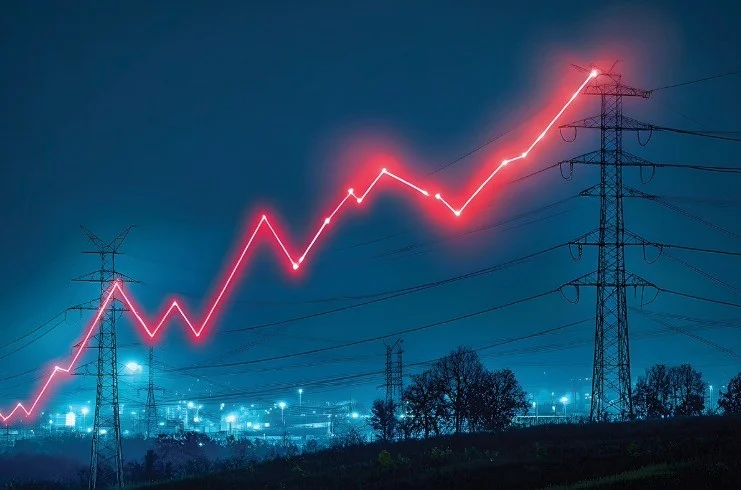
Three months into 2026, the hospitality sector is confronting a reality that can no longer be dismissed as a cyclical hiccup or a temporary inflationary phase. The operating environment has shifted fundamentally, signaling that the cost of running a hotel has become structurally more expensive. As profit margins tighten under the weight of labor shortages and rising capital costs, two primary forces—energy and water—are converging on hotel P&Ls with relentless pressure. Neither shows signs of reversing.
For hoteliers, the era of treating utility expenses as background noise to be managed at the margins is over. Today, resource management has ascended to a core operational discipline, determining which properties will thrive in an era of volatility and which will be eroded by the "hidden tax" of essential resource consumption.
Main Facts: The New Economic Reality of Hospitality
The fundamental shift in 2026 is driven by the realization that utility costs are no longer tethered solely to local usage, but to macro-level infrastructure demands that exceed current capacity.
- The Energy Tax: The rapid, unbridled expansion of Artificial Intelligence infrastructure—specifically energy-hungry data centers—is placing unprecedented strain on the national power grid. Hotels, as commercial electricity consumers, are effectively subsidizing the massive grid upgrades required to support the AI boom.
- The Water Crisis: Water scarcity has moved beyond a regional concern in the American Southwest. Persistent climate patterns and declining snowpack levels are forcing municipalities to implement aggressive rate hikes and strict usage regulations across formerly water-secure regions.
- The Inefficiency Leak: Beyond external utility costs, internal operational waste—particularly in food and beverage (F&B) and HVAC management—remains a significant, untapped drain on profitability. Modern estimates suggest that up to 60% of electricity in commercial buildings is wasted through outdated scheduling and lack of demand-responsive systems.
Chronology: From Utility Background to Operational Crisis
The transformation of utility management from a back-office administrative task to a strategic imperative can be traced through a distinct timeline:
- 2020–2022 (The Post-Pandemic Shock): Hotels focused on survival and staffing. Utility costs were seen as fixed or semi-variable costs that could not be easily mitigated during the volatile recovery period.
- 2023–2024 (The Infrastructure Realization): Utility rates began to climb significantly. Operators noted that the "hidden tax" of grid modernization was beginning to impact the bottom line, particularly in high-demand markets like California, where PG&E rates surged by over 60%.
- 2025 (The Convergent Pressure): Water scarcity became a national news cycle issue rather than a drought-stricken regional phenomenon. Major hotel brands began pilot programs for AI-driven leak detection and smart irrigation, signaling a shift in industry best practices.
- Q1 2026 (The Structural Pivot): The current landscape confirms that we have reached a "structural floor" for costs. Industry leaders are now codifying resource management into their standard operating procedures (SOPs), acknowledging that the cost of energy and water will remain high for the foreseeable future.
Supporting Data: The Metrics of Consumption
To understand the urgency, one must look at the raw numbers that define modern hotel operations.
The Energy Burden
The AI boom is not just a tech story; it is an energy story. As data centers proliferate to support generative AI and cloud computing, the national grid requires billions in transmission upgrades. These costs are passed directly to commercial users. In markets like California, where rates have climbed over 60% since 2020, forecasts indicate an additional 30% increase by 2030. This is not an isolated California anomaly; it is a preview of the national trajectory for commercial utility tariffs.
The Water Equation
The average hotel room is a high-volume water consumer. When aggregating guest usage, laundry services, kitchen operations, landscaping, and mechanical systems (cooling towers), a standard room consumes roughly 400 gallons per day.
- The Scale: A 200-room property requires over 80,000 gallons of water every 24 hours.
- The Cost: In the past, this volume was negligible. Today, as supplies dwindle and infrastructure requires expensive desalination or recycling upgrades, the cost per gallon is reaching record highs.
The Waste Factor
Operational inefficiency remains a "silent killer" of profitability. Data indicates:
- F&B Waste: A typical hotel with active F&B operations loses up to $40,000 annually due to procurement habits and overproduction.
- Electricity Inefficiency: Studies show that 40% to 60% of electricity consumed in commercial buildings is unnecessary, often attributed to HVAC systems running in unoccupied rooms or kitchen equipment operating on fixed, outdated schedules.
Official Industry Responses
The American Hotel & Lodging Association (AHLA) and other industry bodies have recently emphasized the mounting pressure of rising operational costs. While much of the dialogue has centered on labor, there is a growing consensus that the "utility envelope" is the next major battleground for margin preservation.
Leading hotel groups are responding with a shift in capital expenditure (CapEx) strategies. Instead of focusing solely on aesthetic renovations, major brands are prioritizing:
- Demand-Response HVAC Systems: Integrating guest-room management systems (GRMS) that tie directly into property management software (PMS).
- Smart Metering: Moving from monthly utility bills to real-time, circuit-level monitoring that identifies usage spikes before they become cost spikes.
- Procurement Audits: Moving away from traditional vendor relationships to data-driven procurement models that align food and material orders with real-time occupancy forecasting.
Implications: The Rise of the "Resource-Smart" Hotel
The implications of this new reality are profound. We are witnessing a bifurcation in the hospitality industry. On one side are the traditional operators who view utilities as a cost of doing business; on the other are the "Resource-Smart" hotels that view utility consumption as a core operational flow to be optimized.
Competitive Advantages
The operators who act now to implement systemic efficiency will enjoy a structural cost advantage. In two to three years, as energy and water prices reach their next projected thresholds, these properties will benefit from significantly lower operating expenses (OpEx) compared to their competitors. This margin advantage will provide the financial flexibility to either lower room rates to gain market share or invest back into guest experiences.
Operational Resilience
Beyond the P&L, resource management is now a matter of business continuity. As local governments increasingly implement mandatory water restrictions or load-shedding during peak grid usage, properties with sophisticated resource management systems will be the ones that remain operational and comfortable, while others are forced to curtail services.
The Strategic Imperative
The message to owners and operators is clear: the forces reshaping resource demand—AI infrastructure development, climate-driven water scarcity, and grid modernization—are not decelerating. They are accelerating.
The next generation of successful hotels will not be defined by who has the most opulent lobby or the most advanced room service tech. They will be defined by their internal intelligence—their ability to monitor, manage, and minimize the flow of resources through their properties.
This is no longer a forward-looking sustainability goal; it is a present-day financial decision. The investment in efficiency is an investment in the long-term viability of the asset. The window to gain a structural advantage over the competition is open, but it is closing fast. For the modern hotelier, the choice is simple: adapt the operating philosophy to the new reality of resource scarcity, or face the diminishing returns of a business model that is no longer sustainable in the 2026 landscape.


 Basiran
 Raul Delapena Setiawan