Nana
Nana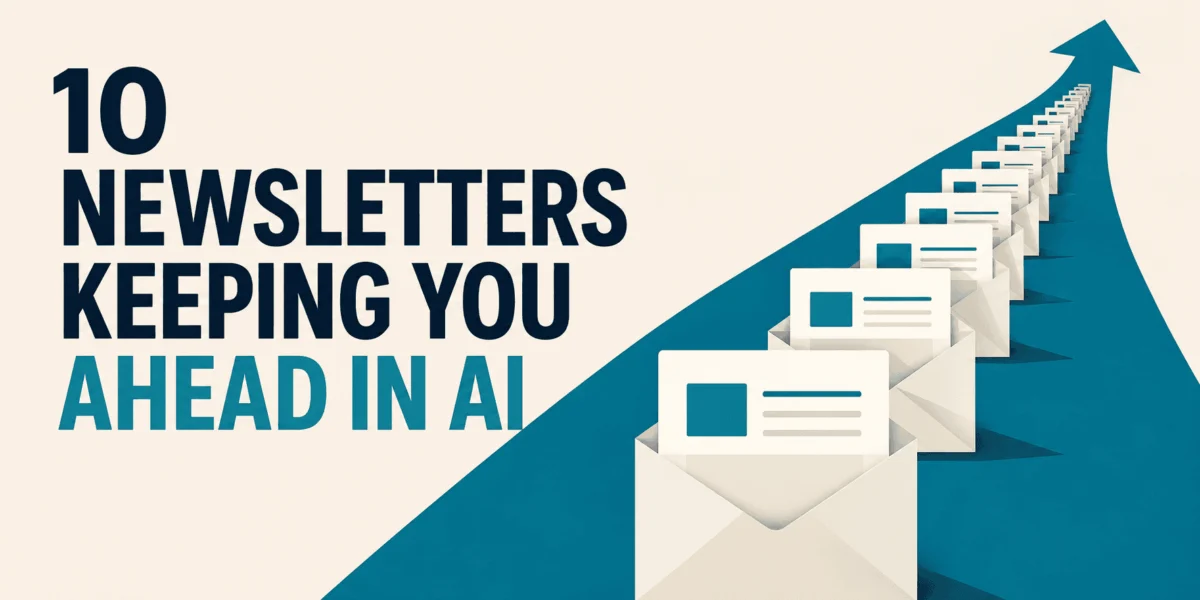
The pace of innovation in artificial intelligence has moved beyond the capacity of traditional news cycles. By the time a mainstream publisher confirms a breakthrough in large language models (LLMs) or agentic workflows, the open-source community has typically already reverse-engineered the architecture, optimized the inference speeds, and integrated the functionality into a dozen production-ready applications.
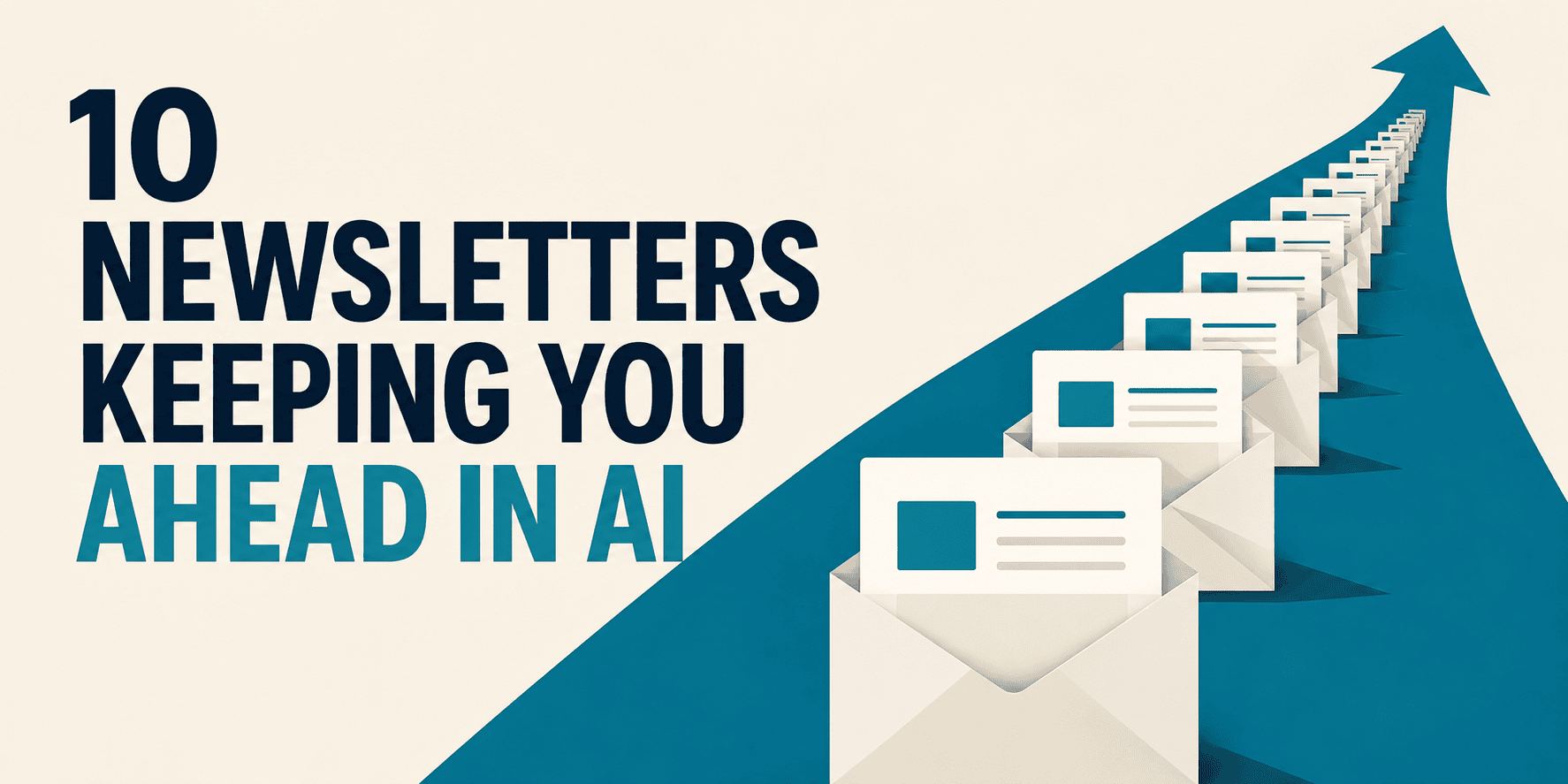
For data scientists, machine learning engineers, and software architects navigating the 2026 landscape, the inbox has evolved into the most critical dashboard for professional survival. In an era saturated with generic, AI-generated content, the challenge is no longer finding information—it is curating "high-signal" intelligence from credible practitioners. This guide dissects the top 10 AI newsletters that define the current industry pulse, categorized by their utility in your professional ecosystem.
1. The Daily Scans: Maintaining Situational Awareness
In a volatile market, the first few minutes of the workday are often spent scanning for critical updates. The following newsletters are engineered for speed, providing the breadth and technical context required to understand what shipped in the last 24 hours.
The Rundown AI
Boasting a readership in the millions, The Rundown AI, founded by Rowan Cheung, has become the industry standard for daily updates. It prioritizes scannability, utilizing a structured layout that breaks down major product launches, regulatory shifts, and funding news into bite-sized segments. For the professional who needs to know "what happened" before the morning stand-up, this is the primary source.
TLDR AI
A hallmark of the "no-nonsense" school of journalism, TLDR AI eschews marketing fluff in favor of raw data. Its editorial philosophy is ruthless: a headline, a two-sentence summary, and a direct link to the primary source or repository. It is particularly valuable for developers who prefer to evaluate the technical documentation themselves rather than reading a summary of a summary.
Superhuman AI
While others focus on market trends, Superhuman AI addresses the pragmatic "how." It shifts the focus from industry hype to utility, answering the specific question: "How can I use this new tool to optimize my existing workflow?" By focusing on productivity, it bridges the gap between emerging AI capabilities and actual office-floor efficiency.
2. The Research and Technical Dives: Frontier Knowledge
When the task requires moving beyond the "what" to the "how it works," practitioners turn to research-heavy publications. These newsletters provide the mathematical and architectural grounding necessary to understand the state of the art.
The Batch (DeepLearning.AI)
Published by the team behind Andrew Ng’s DeepLearning.AI, The Batch is the industry’s pedagogical benchmark. It provides a comprehensive analysis of research papers, explaining complex topics—such as transformer scaling laws or multi-modal integration—with a level of clarity that is rare in academia. It is essential for those looking to maintain a foundational understanding of the field’s scientific trajectory.
Ahead of AI
Sebastian Raschka, a leading voice in machine learning education, uses Ahead of AI to perform deep dives into the mechanics of open-source LLMs. Raschka’s background as a researcher and textbook author lends a unique authority to his analysis of fine-tuning techniques, model evaluation metrics, and the practical challenges of training at scale. It is effectively a masterclass delivered weekly to your inbox.
Interconnects
As the industry pivots from raw pre-training to post-training optimization, Interconnects has emerged as the definitive source for this transition. The newsletter focuses on the nuances of Reinforcement Learning from Human Feedback (RLHF), Direct Preference Optimization (DPO), and model alignment. For engineers building safety-critical or specialized models, this is required reading to understand the complexities of making a model "behave."
3. The Policy and Strategy Analysts: The Geopolitical Landscape
AI has transcended its origins as a computer science subfield to become a central pillar of geopolitical strategy. Understanding the intersection of compute, regulation, and national policy is no longer optional for leadership roles.
Import AI
Written by Anthropic co-founder Jack Clark, Import AI has served as the industry’s "North Star" since 2016. Clark’s unique vantage point—spanning both technical research and high-level policy—allows him to explain how laboratory breakthroughs translate into national security concerns and legislative frameworks. It remains the most respected voice for those operating at the intersection of AI and society.
The Median
Published by DataCamp, The Median connects the dots between global AI developments and workforce skills. It serves as an essential bridge for leaders and managers who need to contextualize how current research trends—such as the rise of agentic frameworks—will impact their organization’s talent needs and training requirements over the next 12 to 24 months.
4. The Builder Ecosystem: Application Layer Development
For those at the "application layer"—the startup founders and software engineers building the next generation of AI-native products—the following feeds are the community’s central nervous system.
Ben’s Bites
Ben’s Bites is the default feed for the indie hacker and venture capital community. It functions as a rapid-fire index of new startups, GitHub repositories, and product launches. If a new framework or developer tool gains traction, it appears here first, making it an indispensable resource for keeping a pulse on the competitive landscape.
Latent Space
Latent Space, curated by Swyx, is arguably the most influential publication for the modern "AI Engineer." It does not merely report on news; it synthesizes the cultural and technical shifts within the engineering community. By bridging the gap between traditional software engineering practices and the idiosyncratic world of ML research, it provides the tactical framework for building reliable, production-grade AI systems.
Implications for the Future of Work
The emergence of these specialized newsletters highlights a broader trend: the fragmentation of the AI discourse. In 2026, the sheer volume of information generated by automated systems and research labs makes "generalist" news coverage obsolete. Professionals are now forced to curate their own information diets to avoid the cognitive load of the "AI hype cycle."
The implications for the workforce are significant. Those who rely solely on mainstream tech news are increasingly falling behind the "real-time" developments occurring in open-source repositories and technical forums. By shifting focus toward these ten specialized newsletters, professionals can move from a state of reactive panic to one of proactive expertise.
Establishing Your Strategy
You do not need to consume all ten of these resources daily. The most efficient approach involves a tiered strategy:
- The Daily Filter: Choose one from the "Daily Scans" to maintain general awareness.
- The Technical Anchor: Select one "Research and Technical" newsletter that aligns with your specific stack (e.g., Ahead of AI for model fine-tuning).
- The Strategic Lens: Dedicate time once a week to Import AI or The Median to ensure your technical work aligns with broader organizational and regulatory realities.
As Vinod Chugani, a leading educator in the field, notes: "Good signal is rare, and the ability to filter noise is now a competitive advantage." By curating your inbox, you are not just keeping up with the industry—you are positioning yourself to lead it. Spend a month rotating through these sources, identify which provide the highest ROI for your specific role, and prune the rest. In a field moving at the speed of light, precision is the only way to stay ahead.

 Ali Ikhwan