Ali Ikhwan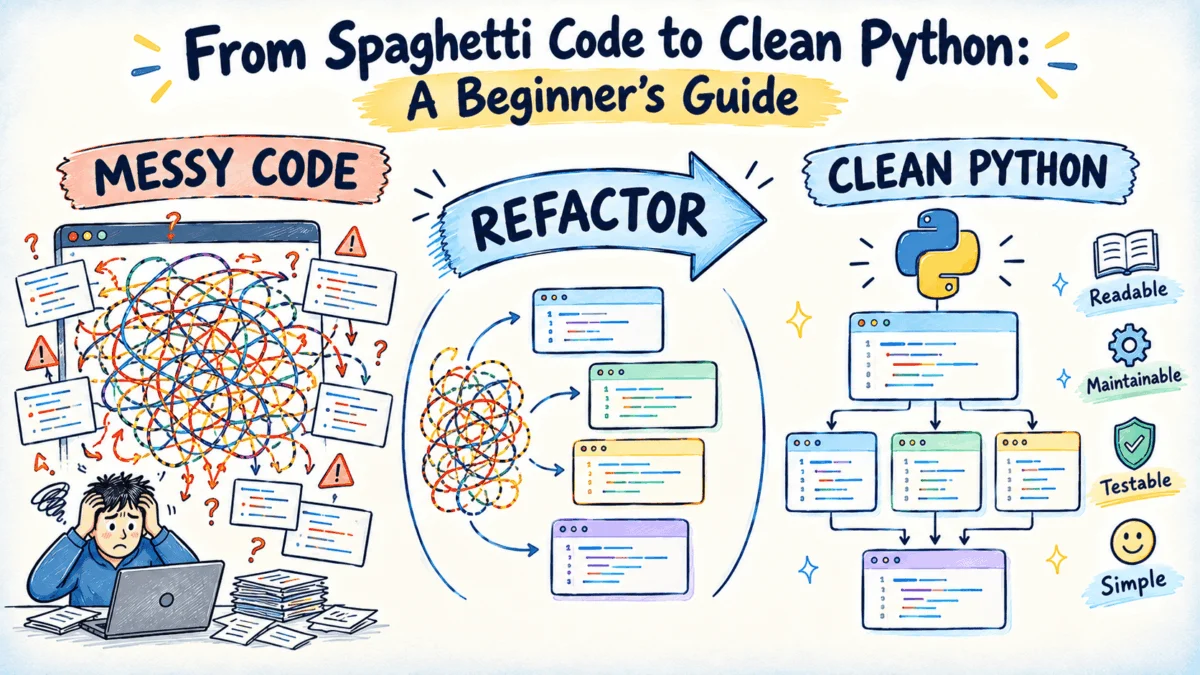
In the world of software development, "spaghetti code" is more than just a derogatory term; it is a technical liability that acts as a silent tax on productivity. When functions grow into sprawling, multi-purpose monoliths, they become the primary source of technical debt, making systems fragile, difficult to debug, and nearly impossible to scale.
For many Python developers, the language’s inherent flexibility—which allows for quick prototyping and rapid iteration—often serves as a double-edged sword. It is easy to write a script that works, but it is significantly harder to write a script that endures. This article explores the transition from tangled, monolithic logic to clean, modular, and maintainable Python, providing a roadmap for developers looking to refine their craft.
The Anatomy of the Mess: Why Monoliths Fail
At its core, spaghetti code is defined by tangled dependencies and obscured logic. Problems typically arise when a single function attempts to handle multiple distinct responsibilities simultaneously. When logic is tightly coupled, changing a single line of code can have unforeseen side effects in unrelated modules.
The primary danger of this approach is the "ripple effect." In a monolithic function, a calculation might be dependent on the order of execution, or a variable might change its meaning halfway through the function body. These aren’t just stylistic issues; they are architectural flaws that hide bugs in plain sight.
The Case Study: An Order Processing Nightmare
Consider an illustrative example: an order-processing function designed for an e-commerce platform. In its initial state, this function is tasked with calculating subtotals, applying dynamic discounts, updating a global inventory dictionary, determining shipping costs, and triggering email notifications.
inventory = "sku-1042": 18, "sku-2077": 4

def process_order(order):
    total = 0
    for item in order["items"]:
        # Logic is tightly coupled and fragile
        price = item["unit_price"] * item["quantity"]
        if order["customer_type"] == "vip":
            price = price * 0.85
        elif order["customer_type"] == "regular" and total > 100:
            price = price * 0.95
        total += price
        # Mutating global state inside a loop
        if item["sku"] in inventory:
            inventory[item["sku"]] -= item["quantity"]
        else:
            print(f"Warning: item['sku'] not found in inventory")
    # ... logic continues ...
The bug here is insidious. Because the discount for "regular" customers is tied to the total variable during the iteration of items, the discount application depends on the order of the list. If a high-priced item appears last in the input, the customer might miss out on a discount they rightfully earned. This is a classic symptom of poor code architecture where execution order dictates business logic.
The Path to Modularization: A Strategic Refactor
The antidote to spaghetti code is the strict adherence to the Single Responsibility Principle (SRP). By breaking monolithic functions into smaller, focused units, we isolate logic, making it easier to test and modify.
Step 1: Decoupling Calculations
The first step is to strip away the "worker" logic and turn the main function into a "coordinator." By defining clear, input-output-focused functions, we remove the reliance on hidden states.
def calculate_subtotal(items):
    return sum(item.unit_price * item.quantity for item in items)

def apply_discount(subtotal, customer_type):
    if customer_type == "vip": return subtotal * 0.85
    if customer_type == "regular" and subtotal > 100: return subtotal * 0.95
    return subtotal
By passing raw values and receiving calculated results, these functions become "pure." They do not rely on global variables or external side effects, which makes them inherently thread-safe and trivial to unit test.
Step 2: Formalizing Data Structures with Dataclasses
One of the most common sources of runtime errors in Python is the reliance on dictionaries with opaque string keys. When you pass a dictionary around, you are effectively operating in the dark, hoping that every function correctly interprets the expected keys.
Python’s dataclasses module provides a structured alternative. By defining an Order and OrderItem class, we gain type safety and clear schema definitions.
from dataclasses import dataclass

@dataclass
class OrderItem:
    sku: str
    unit_price: float
    quantity: int

@dataclass
class Order:
    customer_email: str
    customer_type: str
    items: list[OrderItem]
Using these classes, the process_order function shifts from a confusing mess of dictionary lookups to a readable, high-level workflow:
def process_order(order: Order, inventory: dict) -> float:
    subtotal = calculate_subtotal(order.items)
    discounted = apply_discount(subtotal, order.customer_type)
    total = discounted + calculate_shipping(discounted)
    update_inventory(order.items, inventory)
    return total
Implications: Quality Assurance and Error Handling
Refactoring is not just about aesthetics; it is about creating a system that communicates failure clearly. In the original version, a missing SKU merely triggered a print statement. In a production environment, this is a recipe for disaster, as the system continues to process the order in an invalid state.
Replacing Warnings with Exceptions
By raising an explicit ValueError when an inventory update fails, we force the program to halt before it commits to an invalid state. This is a fundamental tenet of defensive programming: fail early, fail loudly.
The Role of Automated Testing
Once logic is modularized, the testing landscape changes entirely. Instead of writing complex integration tests that simulate an entire order pipeline, developers can write granular unit tests for each individual function. Using tools like pytest, we can verify the discount logic in isolation, ensuring that specific scenarios—like a VIP customer with a small order—are handled correctly without needing to touch the database or the inventory system.
Summary: A Checklist for Clean Code
As you look to refactor your own codebase, follow this professional checklist to ensure your progress remains systematic and safe:
- Identify the Monolith: Look for functions that handle more than one specific task.
- Extract the Logic: Create smaller, single-purpose functions for each distinct task (e.g., calculating, validating, updating).
- Define Data Contracts: Use
dataclassesorNamedTuplesto formalize the data flowing through your application. - Enforce Error Handling: Replace "silent" warnings with meaningful exceptions that stop execution when a constraint is violated.
- Verify with Tests: Write unit tests for your newly extracted functions to ensure they behave exactly as expected in isolation.
The Long-Term Benefit
The transition from spaghetti code to clean, modular Python is an investment. While it requires more upfront time to define classes and split functions, the long-term payoff is a codebase that is resilient to change. When business requirements shift—such as adding a new discount tier or changing the inventory database—you only need to modify the relevant module, rather than untangling a decade of spaghetti code.
In modern software development, maintainability is the true metric of success. By adopting these patterns, developers ensure that their code is not just a collection of instructions for a computer, but a readable, testable, and robust document for the next developer who has to maintain it.
For those looking to dive deeper into these practices, the source code used in this refactoring guide is available on GitHub.


 Nana
Nana