
 Asep Darmawan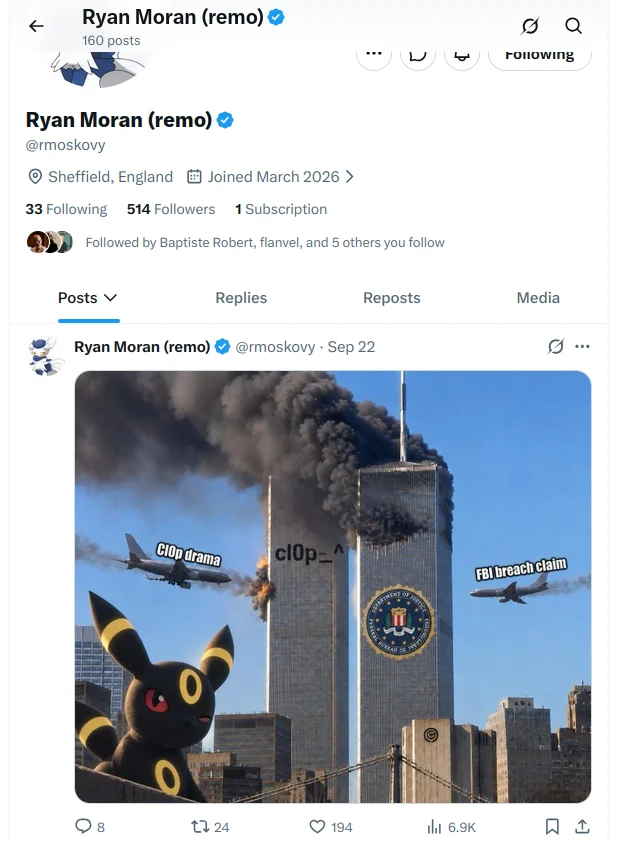
The shadowy world of international cybercrime has been rocked by the detention of a central figure in the notorious extortion collective known as "ShinyHunters." Saif Al-din Khader, a teenager operating from Amman, Jordan—known to the underground hacking community simply as "Rey"—has been apprehended by Jordanian authorities. According to reports, Khader is now actively cooperating with the Federal Bureau of Investigation (FBI), providing a roadmap into the inner workings of a group that has plagued global corporations and government agencies for years.
The arrest marks a significant turning point in the campaign against a group that had evolved into a sophisticated, franchise-like entity. As the FBI peels back the layers of this organization, the investigation reveals a chaotic narrative of teenage bravado, high-stakes extortion, and an ironic entanglement with the very infrastructure his family served.
The Chronology of a Digital Downfall
The downfall of the modern iteration of ShinyHunters did not happen overnight. It was the result of months of persistent, international police work targeting the "franchise" model the group had adopted.
The Rise of the Teenager
Saif Al-din Khader first gained notoriety in late 2025, when investigative security researchers profiled him as a prolific actor working across multiple ransomware silos. Using the handle "Rey," he quickly positioned himself as a central node in the cybercrime ecosystem, coordinating with various affiliates to exploit vulnerabilities in Software-as-a-Service (SaaS) platforms.

The Dutch Connection and the "Umbreon" Feud
The pressure on the group intensified in September 2026. On September 15, Dutch authorities conducted a high-profile raid in Amsterdam, deploying flash-bang grenades to apprehend 24-year-old Pepijn van der Stap. Van der Stap, a convicted cybercriminal who had attempted to rebrand himself as a "reformed" security professional at Neo Security, was suspected of facilitating data thefts for ShinyHunters under the alias "Umbreon."
In an act of desperate misdirection, "Rey" assumed total control of the ShinyHunters brand immediately following Van der Stap’s arrest. He launched a public campaign of taunts against the FBI and the rival ransomware group "Cl0p," using memes and social media to frame the incarcerated Dutchman for his own crimes. This digital theater, however, failed to deter investigators, who were already closing the net on the Amman-based teenager.
The Boeing Connection: A Geographic Irony
Perhaps the most striking detail of the investigation involves the target that precipitated Khader’s final downfall. Before his detention, Rey was in the midst of an aggressive extortion attempt against a business unit divested by the global aerospace giant, Boeing. The unit, Jeppesen ForeFlight, deals in critical navigation and aviation data.
The irony is profound: Khader’s father is reportedly an employee of Royal Jordanian Airlines, a carrier whose long-haul fleet is comprised almost exclusively of Boeing aircraft. Sources close to the investigation suggest that the FBI’s urgency in the case spiked when it became clear that the stolen data from the Boeing subsidiary contained information that could pose operational safety risks to the aviation industry.

Technical Vulnerabilities: The Oracle PeopleSoft Campaign
The success of the recent ShinyHunters campaign was not rooted in genius, but in the persistent exploitation of a critical vulnerability in Oracle’s PeopleSoft platform, tracked as CVE-2026-35273.
Exploitation Tactics
The group utilized this zero-day vulnerability starting in June 2026 to infiltrate human resources, payroll, and recruitment databases. While the group initially failed in their attempt to breach the FBI’s own internal PeopleSoft database, they successfully compromised an Accenture contractor responsible for the FBI’s recruitment portal. This oversight led to the exposure of sensitive personal data for over 5,000 FBI personnel, including medical and psychological records—a move that fundamentally changed the Bureau’s approach to the group.
The WAF Bypass
Security researchers from Mandiant and the Google Threat Intelligence Group (GTIG) confirmed that the group employed a sophisticated URL-encoding trick to bypass web application firewall (WAF) rules intended to mitigate the PeopleSoft exploits. This technical agility allowed ShinyHunters to move laterally across industries, impacting healthcare, higher education, and government sectors globally.
Official Responses and Corporate Damage Control
The fallout from the breach has forced major organizations to clarify their security posture.

- Boeing’s Position: Boeing issued a statement acknowledging the extortion attempts, noting that while they are reviewing the matter with the Jeppesen ForeFlight team, the data was associated with a unit they divested in November 2025.
- Jeppesen ForeFlight’s Stance: In contrast, Jeppesen ForeFlight maintained a firm public stance, claiming that their internal investigation found no evidence of operational impact or product compromise.
- The FBI’s Retaliation: The Bureau has taken the unprecedented step of removing an Accenture contractor for failing to maintain the security patches required to prevent the breach of the recruitment site. This serves as a stark reminder of the "zero-tolerance" policy the FBI is now applying to vendors handling sensitive government data.
Implications: The "Dread Pirate Roberts" of Cybercrime
The investigation into ShinyHunters has fundamentally changed how law enforcement views modern hacking collectives. Experts compare the current ShinyHunters structure to the "Dread Pirate Roberts" from The Princess Bride: the name is not a single person, but a brand—a title passed from one criminal to another as leaders are arrested or burned.
The "Battle" for Legitimacy
The reputation of the ShinyHunters brand has been severely tarnished by the "Rey" era. Within underground chat rooms, veteran cybercriminals have ridiculed the teenager for his perceived amateurism. A Telegram channel dubbed "The Battle" has spent weeks documenting his errors, noting that he was effectively "larping" as a member of a group that had already been dismantled by French authorities.
According to these sources, Khader reportedly caused over $200 million in damages while helping a network of freelancers monetize stolen data for a 25–30% commission. This "gig economy" approach to extortion highlights a dangerous shift: the democratization of high-level cybercrime, where technical exploits are sold to the highest bidder by opportunistic intermediaries.
The Shadow of Murder-for-Hire
As the dust settles, the situation for the arrested Dutch operative, Pepijn van der Stap, has worsened. Reports from Dutch news outlet RTL suggest that investigators are now looking into allegations that Van der Stap attempted to orchestrate at least two contract murders. This escalation from data theft to physical violence marks a terrifying new frontier for the cyber-underground.

Conclusion: A Precarious Future
The detention of Saif Al-din Khader serves as a cautionary tale for the next generation of cyber-aspirants. While the "Rey" persona may have felt untouchable behind the safety of a VPN and the anonymity of Telegram, the reality of international law enforcement cooperation proved otherwise.
However, the threat remains far from neutralized. The "franchise" model of ShinyHunters ensures that as long as there are vulnerabilities like the PeopleSoft exploit and a market for stolen data, the brand will likely be resurrected by another actor. The FBI’s recent focus on dismantling the infrastructure of these groups—rather than just chasing the individual avatars—is the only viable path toward restoring order to a digital landscape that has become increasingly hostile. For now, the "King" of ShinyHunters remains in custody, his digital empire reduced to a series of deleted social media accounts and a trail of evidence that will keep federal prosecutors busy for years to come.


 Ali Ikhwan
 Basiran




