Evan Lee Salim
The software industry is currently undergoing a paradigm shift that few predicted would arrive this quickly. For decades, the "Big Tech" giants—Adobe, Microsoft, and their peers—have maintained a stranglehold on professional workflows, fueled by massive subscription fees and the high "switching costs" associated with proprietary interfaces. Today, however, that moat is being breached not by massive corporate competitors, but by individual developers leveraging the power of autonomous AI coding agents.
We are witnessing the rise of "AI Software Clones"—projects that prioritize user familiarity, native workflow replication, and open-source accessibility. By using tools like Reverse Engineer Anything (REA) and the rapid-prototyping capabilities of models like Claude and GPT-4o, a new generation of developers is effectively "deconstructing" the monopoly of expensive SaaS (Software as a Service) platforms.
The Chronology of a Disruption
The current wave of development began as a trickle of "vibe coding"—a term used to describe the process of using LLMs to generate functional code based on natural language prompts. However, the movement gained significant momentum with the emergence of specialized, AI-driven reverse-engineering frameworks.
- Phase 1 (The Foundation): Developers began using AI to automate the creation of simple, standalone applications. While these early efforts were functional, they lacked the polished UX/UI that keeps users anchored to platforms like Photoshop or Excel.
- Phase 2 (The Tooling Revolution): The release of REA (Reverse Engineer Anything) marked a turning point. Within a matter of days, the project garnered over 130,000 stars on GitHub, signaling a massive developer appetite for tools that can decode binary logic.
- Phase 3 (The Replication Era): Projects like ArtCraft moved from conceptual testing to the active reconstruction of industry-standard software suites. By integrating AI agents with powerful programming languages like Rust, developers began systematically recreating the "look and feel" of commercial software, focusing on shortcuts and menus that users have spent decades memorizing.
REA: The Toolkit That Cracked the Code
At the heart of this disruption is Reverse Engineer Anything (REA). Historically, reverse engineering was a gatekept field, requiring years of expertise in assembly language, binary analysis, and tools like IDA Pro or Ghidra. It was the exclusive domain of security researchers and advanced software engineers.
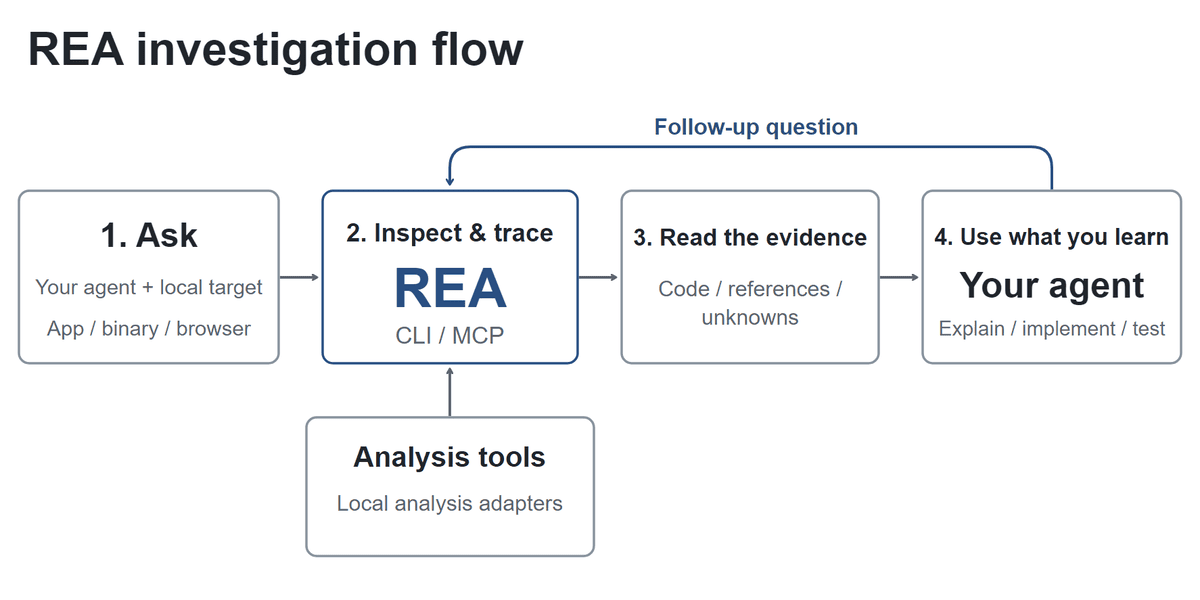
REA changes this equation by acting as a bridge between high-level AI agents (such as Claude Code or Cursor) and low-level analysis tools. By feeding an application’s binary into the REA pipeline, an AI agent can map out function calls, identify critical dependencies, and extract internal logic without ever needing access to the original source code.
The implications are profound. Developers are now using REA to:
- Extract Legacy Algorithms: Successfully recovering complex mathematical routines from vintage software.
- Feature Mapping: Analyzing how a specific tool, such as Notion’s clipboard system, functions at the byte level to recreate that functionality in a neutral, open-source environment.
- Cross-Platform Porting: Allowing developers to understand how proprietary software handles cross-platform data, enabling the creation of interoperable, free alternatives.
ArtCraft and the Quest for Feature Parity
While REA provides the "how-to," projects like ArtCraft provide the "what." Spearheaded by developer Brandon Thomas, the ArtCraft suite is an ambitious attempt to build a drop-in replacement for the Adobe Creative Cloud.
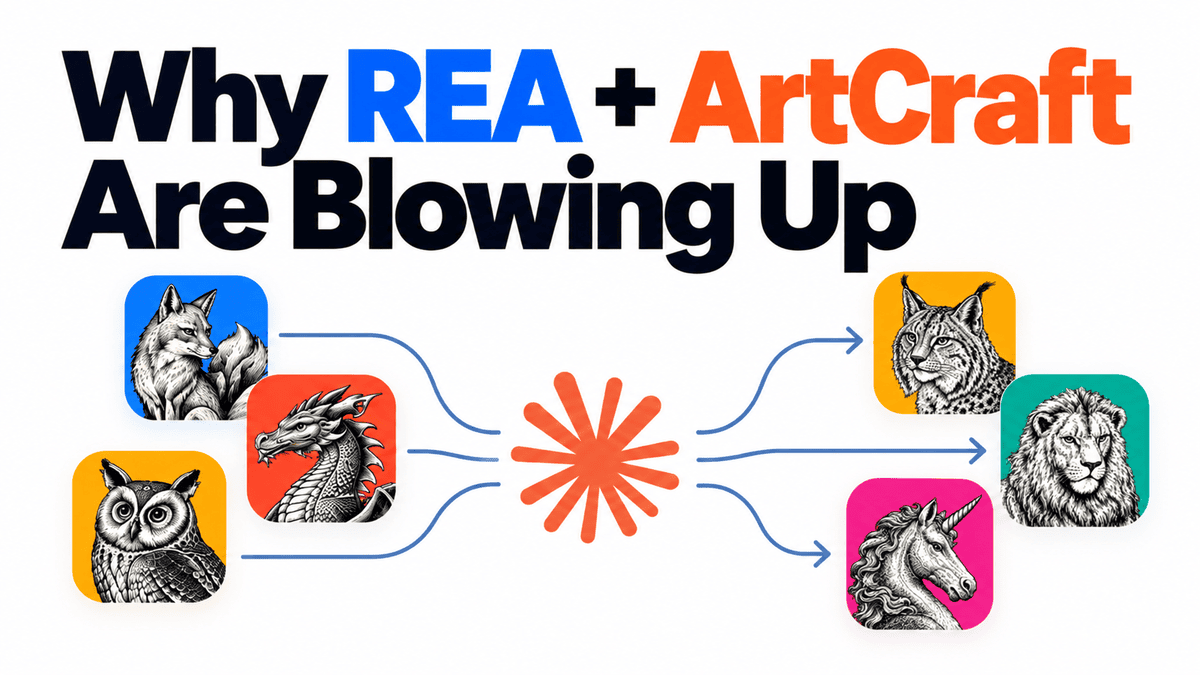
The suite—which includes PhotoCraft (Photoshop), VectorCraft (Illustrator), and FilmCraft (Premiere)—is built on the premise that the barrier to leaving Adobe is not the lack of features, but the muscle memory of the user. By designing interfaces that mimic the industry standard, ArtCraft aims to remove the "switching cost."
The speed at which these projects are evolving has stunned the industry. Skeptics point to the immense complexity of modern software suites; Adobe Photoshop, for instance, contains millions of lines of code developed over thirty years. However, the proponents of this movement argue that AI agents do not need to rewrite the entire legacy codebase. Instead, they can focus on the 20% of features that 80% of users actually rely on, delivering a lean, fast, and subscription-free alternative.
Supporting Data: Why the Model is Shifting
The enthusiasm surrounding these tools is backed by a clear market dissatisfaction. Data from recent developer surveys suggests that:
- Subscription Fatigue: Over 60% of independent creative professionals express frustration with mandatory monthly recurring costs for software they rely on for their livelihood.
- GitHub Velocity: The exponential growth of REA (130k+ stars in under a week) represents one of the fastest adoption rates for a technical tool in GitHub history.
- The AI Multiplier: Studies on AI-assisted coding suggest that developers using advanced agents can increase their feature-completion speed by 3x to 5x compared to manual coding, allowing small teams to achieve what previously required a medium-sized enterprise engineering department.
Official Responses and Industry Outlook
To date, major software corporations have remained largely silent, likely adhering to a policy of "wait and see." However, legal analysts suggest that the rise of these clones will eventually trigger a collision with intellectual property law.
While the look and feel of an application cannot always be copyrighted, the internal implementation and patented algorithms are protected. The legal community is currently debating whether AI-assisted reverse engineering constitutes "fair use" or a breach of End User License Agreements (EULAs).
Meanwhile, open-source advocates argue that the democratization of software is an inevitable progression. "If an AI can look at a binary and understand how it works, we are essentially moving toward a world where software is a commodity rather than a proprietary service," notes one industry analyst.
The Broader Implications: A New Era of Ownership
The movement toward AI-cloned software represents a return to the foundational ethos of the early internet: Software as a utility, not a tax.
1. The Death of the "Switching Cost"
For years, professional software has been protected by the "familiarity moat." By making open-source software that looks and acts like its proprietary counterpart, these AI developers are removing the final hurdle for mass migration. If a professional can move from Photoshop to PhotoCraft without re-learning their hotkeys, the commercial vendor loses its primary leverage.
2. Radical Accessibility
High-cost software acts as a gatekeeper for creative and professional fields. By lowering the barrier to entry, these tools could spark a global wave of creativity, particularly in developing nations where current Adobe or Microsoft pricing is prohibitive.
3. Personal Ownership vs. Subscription
We are approaching a crossroads where users must decide if they value the "convenience" of a managed, cloud-synced, subscription-based ecosystem, or the "autonomy" of a local, AI-rebuilt tool that they truly own. The clones being built today are not yet as stable or feature-rich as their commercial counterparts, but the trajectory of AI development suggests this gap is closing monthly, not annually.
Conclusion: The Future is Under Construction
The rise of REA and ArtCraft is a clear signal that the status quo is under threat. We are witnessing the first generation of software built by developers for themselves, utilizing the very tools that are accelerating the pace of innovation.
The threat to Adobe, Microsoft, and others is not necessarily that these new tools are "better" in every technical metric today—it is that they are "good enough" for a massive portion of the user base. When an individual developer can replicate the core functionality of a billion-dollar product in a fraction of the time, the subscription-based business model faces a structural crisis.
We are just beginning to see what is possible. As AI agents become more autonomous and more adept at understanding complex architectures, the "monopoly of the familiar" will continue to erode. For the user, this may lead to a future where software is finally free, modular, and—above all—owned by the person using it. The next few years of software development will not just be about adding new features; they will be about the wholesale reclamation of the tools we use to build our digital lives.

 Ammar Sabilarrohman
 Ali Ikhwan