Dwi Wanna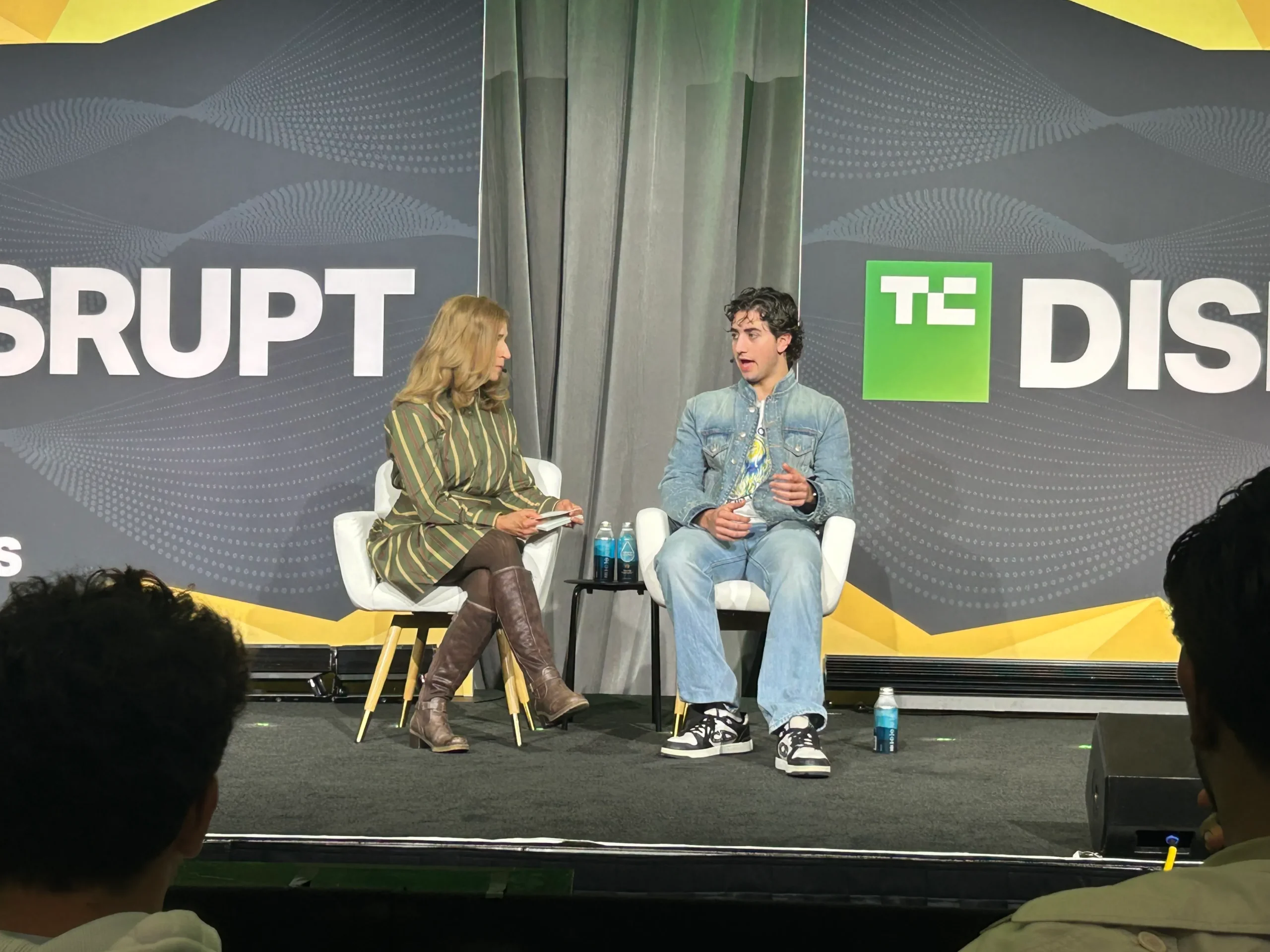
For most 19-year-olds, the primary challenge of the post-high school transition involves navigating the complexities of university life or landing an entry-level position. For Zach Yadegari, however, the past two years have been defined by a meteoric rise through the tech ecosystem, characterized by viral growth, a multimillion-dollar acquisition, and a fresh $10 million infusion for his latest venture.
Yadegari, a Forbes 30 Under 30 alumnus, recently took the stage at TechCrunch Disrupt to deconstruct the rapid scaling of Cal AI, the calorie-tracking application he founded in 2024. In just 24 months, Yadegari transformed a nascent idea into a powerhouse that generated over $30 million in revenue, ultimately catching the eye of industry titan MyFitnessPal, which acquired the startup in March 2026.
The Mechanics of Viral Success: A Formulaic Approach
At the heart of Cal AI’s success was a ruthless, calculated approach to influencer marketing. Rather than relying on traditional venture-backed advertising channels, Yadegari deployed a "small army" of content creators.
During his keynote, Yadegari explained that the breakthrough occurred when a single influencer post triggered a surge of approximately 1,000 new users in just 48 hours. This empirical evidence served as the catalyst for his aggressive scaling strategy. "From there, we figured out, okay, this can actually work for us, and so we started recruiting influencers as fast as we could," Yadegari told the audience.
The Economics of Influence
Yadegari’s strategy was predicated on a linear, highly predictable conversion funnel. By negotiating performance-based payouts, he effectively turned influencers into a scalable distribution network. He noted that many of these creators—often "broke college kids"—were highly motivated by clear, output-based incentives.
"You just ask them, okay, we’ll pay you this, but we need to get us at least this amount of use and keep posting until you get there," Yadegari explained. By quantifying the reach of influencers with "tight-knit communities," Cal AI bypassed the inefficiencies of traditional marketing, ensuring that every dollar spent had a direct, measurable impact on user acquisition.
Chronology of a Tech Prodigy
To understand the speed of Yadegari’s trajectory, one must examine the timeline of his ventures:
- 2024: Foundation of Cal AI. The company begins testing influencer-led growth strategies.
- Late 2024 – Early 2026: Cal AI experiences explosive growth, leveraging social media arbitrage to reach millions of users and generating $30 million in cumulative revenue.
- March 2026: MyFitnessPal officially acquires Cal AI for an undisclosed sum, marking a high-profile exit for the teenage founder.
- October 2026: Yadegari shifts focus, launching Persona, an AI agent startup.
- Late October 2026: Persona announces a $10 million seed round, signaling significant investor confidence in Yadegari’s vision for the future of personal computing.
The Philosophical Shift: Education vs. Ambition
One of the most provocative moments of Yadegari’s Disrupt appearance came when he addressed the value of formal education. When asked if his success was a product of his academic background, he offered a blunt assessment.
"I think the only real reason to go to college is if you want to have a fun social time as a kid and be with other people," he said, drawing laughter from the audience. This sentiment reflects a growing cohort of "founder-first" entrepreneurs who prioritize real-world iteration and market-driven data over the structured, often slower-moving environment of higher education. Yadegari openly credited his family—specifically his father, who was present in the audience—for providing the autonomy and support necessary to pursue his ambitions at such a formative age.
Persona: The Next Frontier of AI Integration
With the MyFitnessPal acquisition behind him, Yadegari is now turning his attention to Persona. The startup, which has already secured $10 million in funding, seeks to move beyond the "app-centric" model of current AI tools to create an integrated, omnipresent assistant.
Bridging the Gap Between Computing and Life
The "overarching mission" of Persona, according to Yadegari, is to "make computing seamless with human life." Unlike standard AI chatbots that require users to navigate to a specific website or application, Persona is designed to be platform-agnostic.
"The AI will live anyplace with an internet connection," Yadegari noted, citing integration points such as iMessage, email, phone calls, and dedicated applications.
Building a Hardware Ecosystem
Perhaps the most ambitious aspect of Persona is the plan to develop a hardware ecosystem around the AI. By controlling both the software layer and the hardware interface, Yadegari aims to reduce the friction between user intent and digital execution. This vertical integration suggests a long-term goal of becoming a primary interface for human-computer interaction, moving beyond the screen-based limitations of the current mobile era.
Implications for the Startup Landscape
The success of Zach Yadegari serves as a case study for the "new guard" of tech entrepreneurship. Several key implications emerge from his journey:
1. The Death of Traditional Marketing
Yadegari’s reliance on performance-based influencer contracts demonstrates that distribution is often more important than the product itself in the early stages. By treating influencers as a tactical asset rather than a brand-awareness vehicle, startups can achieve viral growth with minimal overhead.
2. The Rise of the "Micro-Exit"
The acquisition of Cal AI by MyFitnessPal underscores a growing trend where established incumbents look to acquire successful, high-growth startups to instantly absorb their user base and technology. For founders, this creates a viable path to liquidity that does not necessarily require the traditional decade-long "build-to-IPO" journey.
3. The Shift Toward Ambient Computing
The launch of Persona signals that the AI gold rush is moving into a new phase. We are transitioning from the "generative chat" era—characterized by standalone tools like ChatGPT—to the "ambient agent" era, where AI is expected to function as an invisible, omnipresent layer over existing communication channels.
Conclusion: A Founder to Watch
Zach Yadegari is arguably a poster child for the modern, AI-native generation of entrepreneurs. He possesses an innate understanding of social media psychology, a clinical approach to unit economics, and an aggressive, forward-looking vision for the future of technology.
As Persona begins its development cycle, the tech world will be watching to see if Yadegari can replicate his previous success on a larger, more complex scale. If his track record is any indication, the 19-year-old founder has only just begun to disrupt the status quo. By prioritizing seamless integration and human-centric design, Yadegari is not merely building another startup; he is attempting to reshape the fundamental way in which humans interact with the digital world.
Whether his bet on a hardware-integrated AI agent will pay off remains to be seen, but for now, Yadegari remains a compelling figure—a testament to what happens when raw ambition meets the unprecedented leverage of modern artificial intelligence.



 Sagoh
Sagoh