Dwi Wanna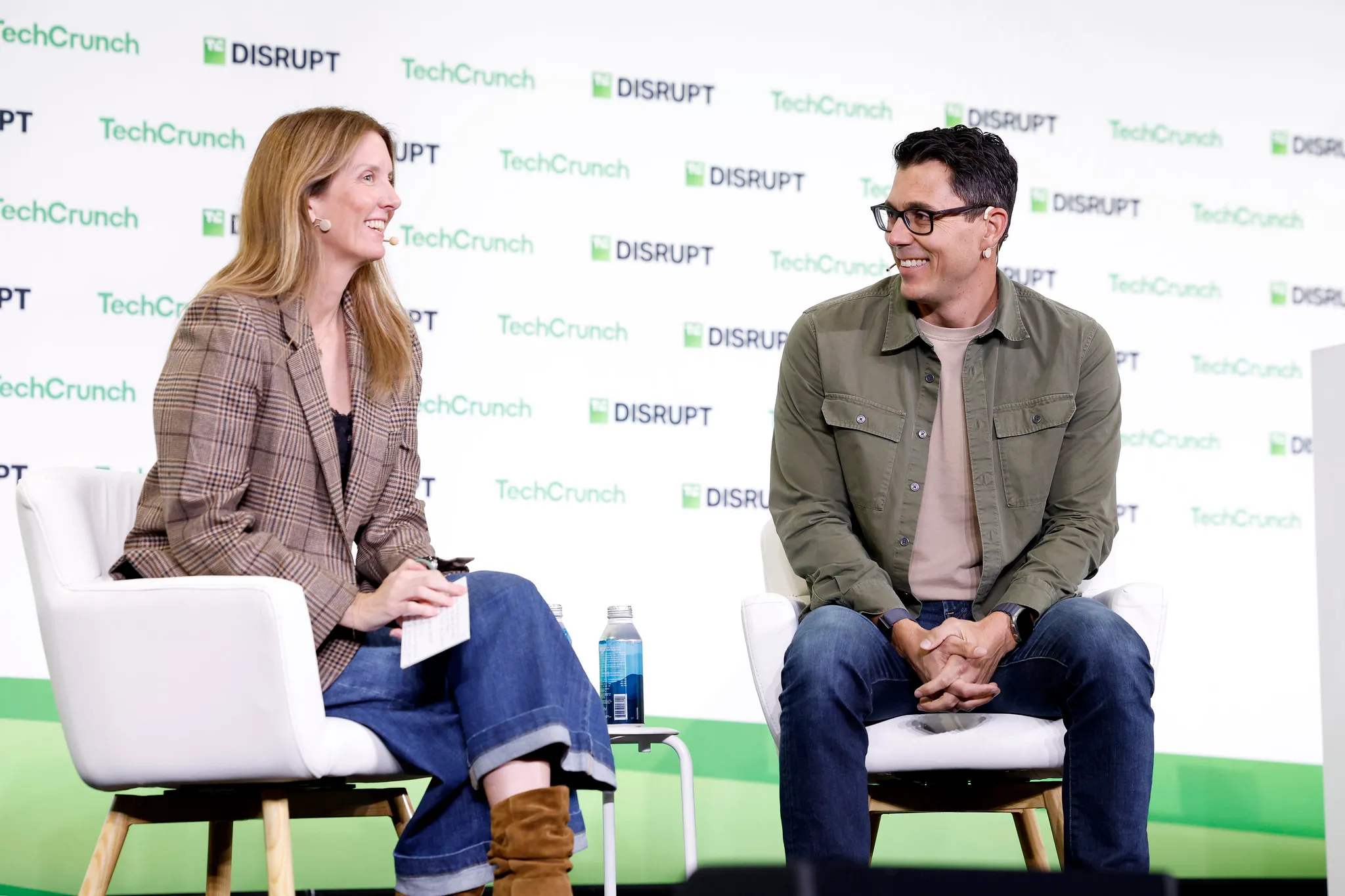
In the rapidly evolving landscape of automotive technology, the "software-defined vehicle" has moved beyond mere over-the-air updates and infotainment screens. It is now entering the era of the intelligent agent. Rivian, the Irvine-based electric vehicle manufacturer, is positioning itself at the vanguard of this shift, recently unveiling an AI-powered voice assistant capable of managing vehicle functions through natural language. However, as CEO RJ Scaringe recently suggested, this is merely the foundational layer of a much more ambitious ecosystem: a future where Rivian vehicles serve as hosts for third-party AI agents from the industry’s leading frontier labs.
The Evolution of the In-Car Assistant
Rivian’s current AI rollout represents a significant departure from the clunky, command-based voice recognition systems that have plagued the automotive industry for decades. By building its software stack from the ground up—eschewing the crutches of Apple CarPlay or Android Auto—Rivian has maintained granular control over the vehicle’s hardware interface.
The current system acts as a sophisticated traffic controller. When a passenger issues a command, the vehicle’s onboard "agentic framework" parses the intent. If the request is simple—such as adjusting climate control, activating seat warmers, or summarizing a news feed—the vehicle executes the task using local edge computing. For more complex queries requiring broader knowledge, the system seamlessly bridges to the cloud, selecting the most appropriate model to process the request.
As of May 2024, this capability has already begun to extend beyond the car’s immediate parameters, integrating with external productivity tools like Google Calendar. But according to Scaringe, speaking at TechCrunch Disrupt, the true "magic" lies in the next phase of development: the integration of third-party frontier models.
Chronology: From Proprietary Software to Open Ecosystems
To understand the significance of Rivian’s trajectory, one must look at the company’s history of software development:
- Foundational Development: Unlike legacy automakers that rely on tiered supplier software, Rivian committed to an in-house, vertically integrated software stack. This allowed the company to treat the vehicle as a unified computer rather than a collection of disparate electronic control units (ECUs).
- The In-House Agent Launch: Rivian introduced its first-party AI assistant to provide a frictionless interface for core vehicle functions, emphasizing privacy and low-latency responses by prioritizing local processing.
- Integration Milestones: Throughout 2024, the company integrated popular third-party applications like Apple Music, demonstrating a willingness to partner while maintaining control over the user interface.
- The "Agentic" Shift: At TechCrunch Disrupt in late 2024, Scaringe publicly articulated the roadmap toward hosting external AI agents, such as those from Anthropic, OpenAI, or Meta, signaling a move from a closed system to a platform model.
- Upcoming Milestone: The industry now turns its eyes toward Rivian’s "AI & Autonomy Day," scheduled for December, where the company is expected to provide deeper technical insights into this architectural transition.
The Technical Plumbing: Challenges and Safety Protocols
While the prospect of having a model like Claude or an assistant like Meta’s Muse in the passenger seat is compelling, the technical implementation is fraught with complexity. Scaringe emphasized that the "plumbing" required to allow these models to communicate with the vehicle’s internal systems is significant.
The Safety-Critical Boundary
Perhaps the most crucial aspect of this roadmap is the strict delineation between "convenience" and "control." Scaringe was unequivocal: AI agents will not be granted access to the vehicle’s primary safety systems.
"You wouldn’t want an agent to determine, ‘hey, it’s time to apply the brakes, or time to steer the vehicle,’" Scaringe noted. By siloing the vehicle’s dynamic controls—brakes, steering, and acceleration—from the AI assistant, Rivian aims to mitigate the risks of "hallucinations" or unexpected model behaviors interfering with the driver’s ability to control the car. The AI is intended to be a digital concierge, not a co-pilot.
Contextual Continuity
The true goal of these agents is to provide a unified user experience. Scaringe envisions a world where the car acts as a continuation of the user’s digital life. For example, a driver could command the car to adjust the cabin temperature while simultaneously asking the AI to help plan a dinner menu based on a conversation held earlier that day on a mobile device. This requires a sophisticated level of context-sharing and data synchronization, a feat that requires deep collaboration between automotive engineers and AI research labs.
Implications for the Competitive Landscape
Rivian is not operating in a vacuum. The race to define the "AI-first" cockpit is accelerating. Earlier this year, Tesla integrated SpaceX’s Grok chatbot into its vehicles, allowing for a more conversational—and at times, opinionated—in-car experience.
However, Rivian’s strategy differs in its potential for modularity. While Tesla tends toward a closed ecosystem, Rivian’s stated interest in hosting third-party agents suggests a more "platform-agnostic" approach. If Rivian can successfully build the APIs that allow external models to interact safely with the vehicle’s internal state, it could turn its fleet into a hardware platform for the world’s most advanced AI companies.
The Developer Ecosystem
If Rivian succeeds in building a secure, developer-friendly "agentic framework," it could create a new app store model—not for icons and games, but for intelligence. Imagine a scenario where a user chooses to have a "Productivity Agent" during their morning commute and a "Travel Guide Agent" during a weekend road trip. This flexibility would offer a level of personalization that traditional, static infotainment systems cannot replicate.
Conclusion: The Road Ahead
The integration of generative AI into the automotive environment is a transition that goes far beyond voice commands. It is a fundamental shift in how humans interact with machines that are essentially high-powered computers on wheels.
As Rivian approaches its "AI & Autonomy Day," the company faces a dual challenge: it must convince consumers that these advanced AI agents are safe, privacy-conscious, and truly useful, while simultaneously proving to investors that its proprietary software stack is robust enough to act as an open platform for external innovators.
The "magical" future Scaringe describes is one where the car anticipates needs before they are articulated, bridging the gap between the digital and physical worlds. Whether this manifests as a seamless, high-utility experience or a complex technological hurdle remains to be seen. However, by prioritizing safety-critical boundaries while embracing the potential of frontier AI, Rivian is setting a standard that the rest of the automotive industry will undoubtedly be forced to address.
For now, the industry watches and waits for December, anticipating that the "plumbing" Scaringe mentions will reveal a sophisticated architecture capable of turning the modern vehicle into the ultimate AI-driven environment.

 Sagoh
Sagoh
 Layla Zulfa