Sagoh
Sagoh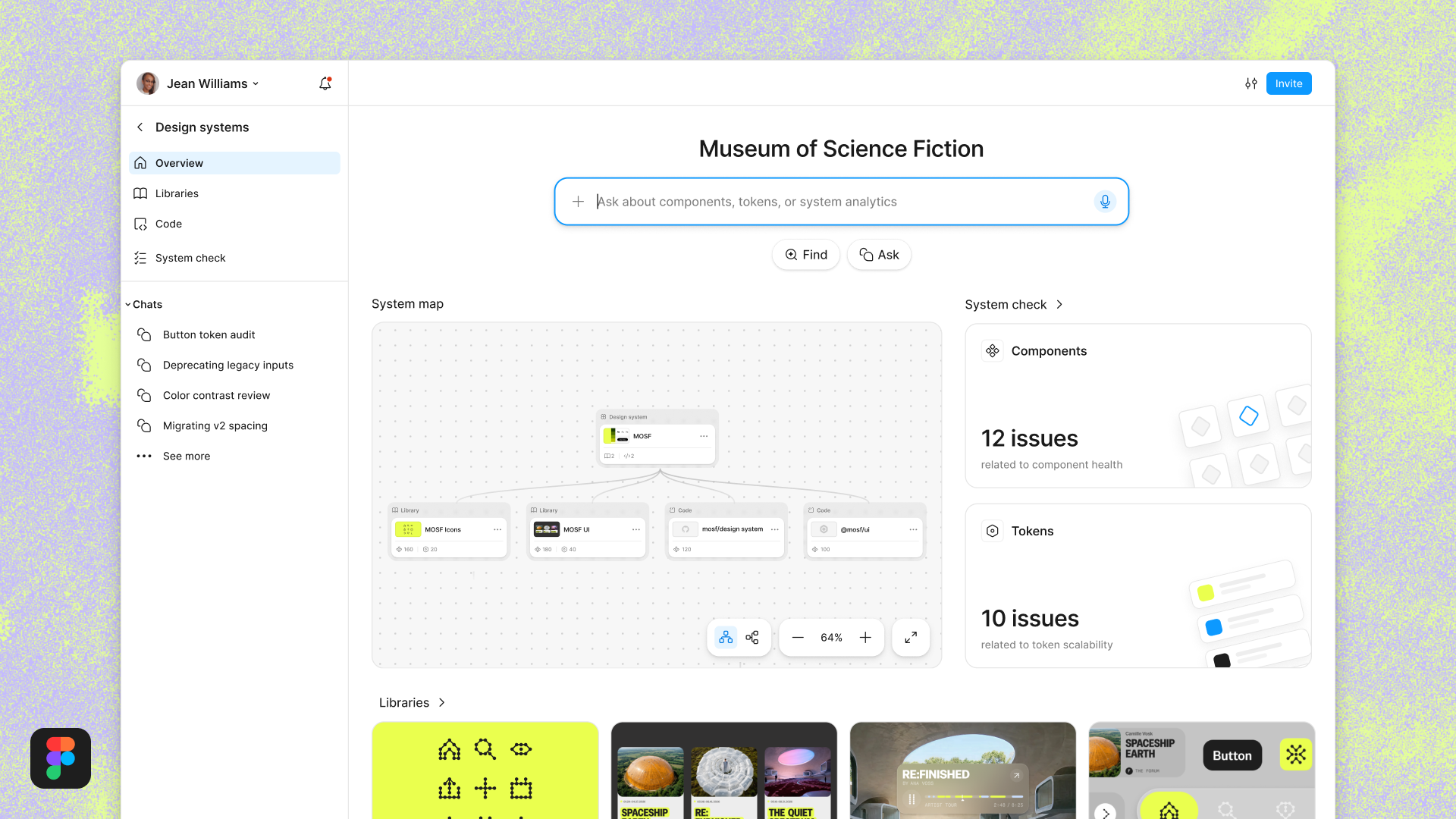
At its inaugural Config event in India, design powerhouse Figma unveiled a suite of transformative tools aimed at fundamentally altering how software teams bridge the gap between abstract design and production-ready code. By introducing a new Markdown-based editor and deepening its integration with the Payload headless content management system (CMS), Figma is positioning itself as more than just a wireframing tool—it is evolving into a centralized "source of truth" for the entire software development lifecycle.
This evolution is driven by a clear imperative: in an era of hyper-productive AI, the challenge for companies is no longer the generation of code, but the alignment of that code with a consistent, governed design language.
Main Facts: The New "Specs" and Ecosystem Integration
The cornerstone of Figma’s latest announcement is Figma Specs, a sophisticated Markdown-based editor designed to codify a company’s design language. In traditional workflows, design systems are often relegated to static documentation that exists outside the design tool, leading to "documentation drift." Figma Specs solves this by enabling teams to define their design rules—typography, spacing, color palettes, and component usage—directly within the Figma ecosystem.
These documents are highly dynamic. They can exist as standalone files or be embedded directly within the active canvas. Crucially, they serve as a living reference point for both human designers and AI agents. By embedding FigJam diagrams, live code layers, and interactive design elements into these Markdown files, teams create a single, unified repository of intent.
Furthermore, Figma is expanding its reach through its Model Context Protocol (MCP) support. The platform now supports over 20 third-party tools, including Open Code, Dia, Grok Bot, and the prominent Indian AI startup Sarvam. This interoperability ensures that Figma’s design system isn’t a siloed entity but a foundational layer that can inform a broad array of generative AI agents, ensuring they adhere to brand-specific guardrails.
Chronology: From Private Beta to Public Utility
Figma’s journey toward this "AI-first" design architecture has been deliberate and iterative:
- June 2026: Figma introduces "Code Layers" in private beta. This feature allowed designers to inject actual code into their canvas, enabling more interactive, high-fidelity prototypes that behave more like finished software than static mockups.
- Late 2025: Sensing the massive growth potential in the region, Figma establishes its first physical office in India, focusing on sales, go-to-market strategies, and product support.
- October 2026: At the inaugural Config India event, Figma shifts the paradigm. The company transitions Code Layers into a public beta, inviting a wider user base to iterate on prototypes by asking agents to convert design components into functional code snippets or modify existing logic on the fly.
- Present Day: The launch of Figma Specs and the deeper integration with the Payload CMS marks the latest phase, where the platform attempts to close the loop between the "design-to-code" pipeline and content management.
Supporting Data: Why India and Why Now?
Figma’s decision to debut these features at its first Indian Config event is underscored by compelling market data. India has rapidly become Figma’s largest user base outside of the United States, representing a vital hub for global product development.

The adoption rate among India’s corporate elite is equally striking: 40% of the top 100 companies listed on the Bombay Stock Exchange (BSE) are now leveraging Figma’s platform to manage their design operations. This indicates that Figma is no longer just a tool for boutique design agencies or Silicon Valley startups; it has become a mission-critical utility for large-scale enterprises.
The rationale behind these product changes is supported by industry-wide productivity metrics. As Loredana Crisan, Figma’s Chief Design Officer, noted during the event, the current development landscape is experiencing a "productivity paradox." While AI has enabled the production of 17 times more lines of code than in the past, the actual volume of software releases has only grown by 1.3 times.
"A lot of that code actually is not necessarily built to ship, but really built to discover what the product is," Crisan explained. "It’s built to design." Figma’s new tools aim to shorten that discovery phase by ensuring that the "design" and "build" stages are synchronized from the outset, reducing the wasted effort that occurs when developers and designers work from disconnected versions of the truth.
Official Responses and Strategic Philosophy
Figma’s leadership is explicit about the company’s role in the age of generative AI. By providing tools like Specs and Code Layers, they are attempting to solve the "non-deterministic" nature of AI.
When developers use AI to generate code, the result is often unpredictable and prone to "hallucinations" that deviate from a company’s established brand identity. By embedding design libraries, code guidelines, and brand documentation into a centralized, AI-readable format, Figma is effectively "steering" AI models. When an agent is prompted to create a button or a navigation bar, it no longer guesses the design rules; it references the "Specs" file to ensure compliance with the organization’s design system.
The acquisition of the open-source headless CMS, Payload, further reinforces this strategy. Since the acquisition, Payload’s downloads have increased sixfold, signaling a strong market desire for a unified content-to-design workflow. By integrating Payload with "Figma Make," the company is moving toward a future where a designer can update a component in Figma, and that change can propagate through the CMS and into the live, production-ready website automatically.
Implications: The Future of "Ship-Ready" Design
The implications of these announcements are profound for both the design and engineering disciplines.

1. The Decline of "Design-to-Code" Handoff
For years, the "handoff" has been the most painful point in product development. Designers would create beautiful mockups, and developers would spend weeks manually translating those into code, often losing nuance in the process. Figma’s vision—facilitated by Code Layers and the new Specs editor—is to eliminate the handoff entirely. When code is an inherent layer of the design, the distance between a visual idea and a shipped feature shrinks toward zero.
2. AI Governance via Documentation
As companies lean more heavily on AI for software engineering, the risk of "brand drift" becomes acute. If every developer’s AI assistant is interpreting design rules differently, a product can quickly become a disjointed mess. Figma Specs acts as a central governance layer. By treating design rules as structured data (Markdown), Figma makes brand identity something that can be programmatically enforced rather than just "suggested" in a PDF guide.
3. The Democratization of Complex Systems
By bringing these high-level architectural tools to a broader audience in markets like India, Figma is democratizing the ability to build sophisticated, scalable software. A startup in Bangalore can now leverage the same design governance and AI-assisted prototyping tools as a Fortune 500 company in San Francisco, potentially accelerating the pace of global innovation.
4. Convergence of CMS and Design
The integration with Payload points toward a future where "Content" is no longer an afterthought. By managing dynamic content directly within the design environment, Figma is blurring the lines between a design tool and a publishing platform. This is a clear signal that Figma intends to stay involved in the product lifecycle long after the pixels have been finalized.
Conclusion
Figma’s announcements at Config India signal a transition from a creative tool to an architectural platform. By creating a unified space where design systems, code libraries, and content management intersect, the company is tackling the primary bottleneck of the AI era: the gap between rapid generation and intentional production. As software teams continue to grapple with the sheer volume of code being produced, Figma’s move to provide a "source of truth" for AI agents and human designers alike may prove to be the most significant development in the company’s history.
For the millions of users currently relying on the platform, the message is clear: the future of design is not just about drawing screens—it is about defining the logic, rules, and code that bring those screens to life.


 Layla Zulfa
 Muslim