Layla Zulfa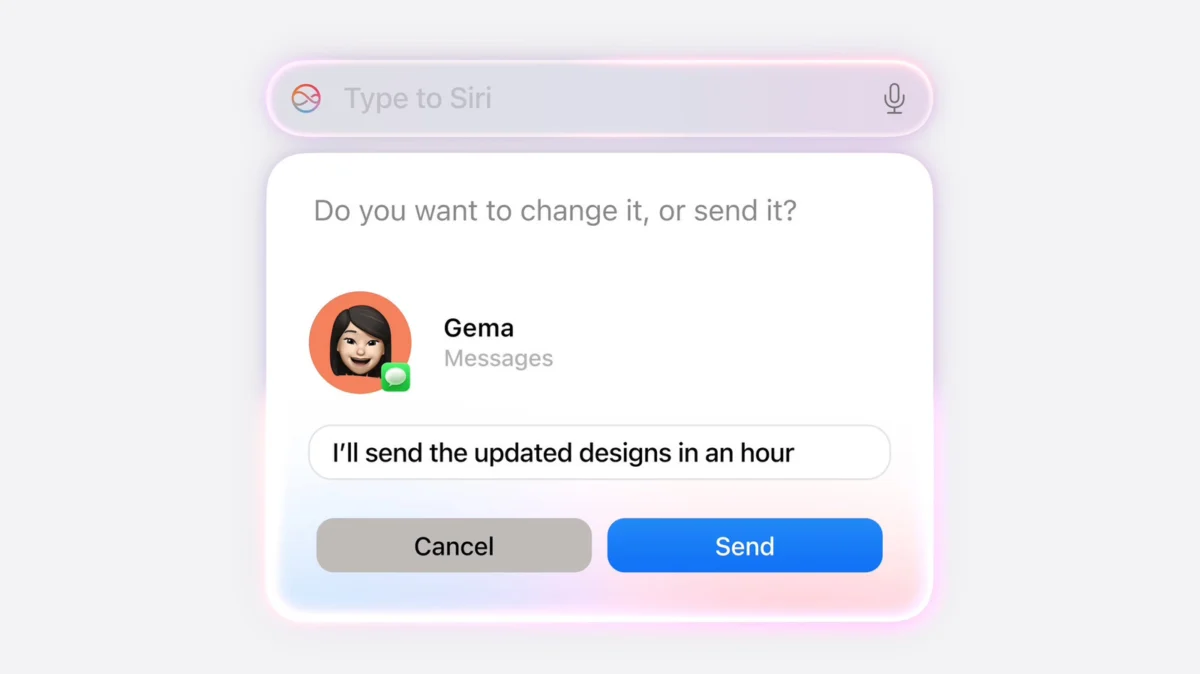
As the global race for artificial intelligence dominance intensifies, Apple is preparing to deploy a distinctive strategy that prioritizes user sovereignty over data accumulation. With the upcoming release of iOS 27, the Cupertino giant is poised to introduce a revamped Siri that challenges the current industry standard of persistent data retention. According to reports from Bloomberg’s Mark Gurman, Apple is set to launch a suite of privacy-centric controls for its voice assistant, effectively turning its perceived weakness—the slower adoption of massive LLM training models—into its greatest marketing asset.
Main Facts: The New Siri Architecture
The core of the upcoming Siri overhaul lies in its granular approach to conversation history. Apple intends to introduce a toggle-based settings menu that dictates the lifecycle of a user’s interaction with the AI. Users will be able to set a definitive expiration date for their chat logs, with options ranging from a 30-day auto-delete cycle to a one-year retention period, or, for those who prefer continuity, an indefinite "forever" setting.
Furthermore, Apple is introducing "Contextual Anchoring" toggles. This feature allows users to choose whether a new Siri session inherits the context of the previous conversation or initiates a "blank slate" experience. This is a significant departure from the current industry norm, where chatbots are designed to ingest as much historical data as possible to build a comprehensive user profile. By allowing users to treat every interaction as an isolated event, Apple is positioning Siri as a tool for discrete tasks rather than a persistent, omniscient digital companion.
A Chronology of Apple’s AI Evolution
To understand the significance of this move, one must examine the timeline of Apple’s journey into the AI landscape:
- 2011: Apple introduces Siri on the iPhone 4S, setting the stage for voice-activated computing.
- 2020: During WWDC 2020, Apple reaffirms its "Privacy by Design" philosophy, setting the stage for future on-device processing requirements.
- 2024-2025: As competitors like OpenAI, Google, and Anthropic rapidly scale their models, Apple faces mounting pressure to deliver a truly "intelligent" Siri.
- May 2026: Leaks emerge regarding iOS 27, confirming that Apple is prioritizing privacy settings—including auto-deleting chat logs—as a core pillar of the revamped AI experience.
- June 8, 2026: The official debut of the next-generation Siri is scheduled for the keynote of WWDC2026.
Supporting Data: The Privacy vs. Performance Trade-off
The industry standard for large language models (LLMs) relies on the "data flywheel" effect: the more data a model consumes, the more accurate its future responses become. By training on vast troves of personal user data, companies can tailor responses to individual idiosyncrasies.
However, this reliance on user data has created significant legal and ethical vulnerabilities. Recent history has shown that chat logs are increasingly becoming targets for subpoenas in criminal cases and civil lawsuits. Competitors have responded by adding "incognito" or "temporary" modes as an optional feature. Apple, conversely, is attempting to move the needle by making these protections an ingrained, non-negotiable architectural choice.
Apple’s alternative approach utilizes synthetic data generation. Instead of scraping real user conversations, Apple’s researchers are creating high-quality, artificial datasets to train their models. While this strategy has historically left Apple lagging behind competitors in "raw intelligence" benchmarks, the company is now betting that users will value the "Privacy Premium"—the assurance that their most intimate conversations are not being harvested for advertising or model improvement.
Official Responses and Strategic Implications
While Apple has remained characteristically tight-lipped regarding the specifics of the upcoming announcement, the strategic implications are clear. By positioning privacy as a default rather than an option, Apple is creating a massive hurdle for its competitors.
The Marketing Pivot
For years, the critique of Apple has been that its commitment to privacy inhibits its AI capabilities. With iOS 27, Apple is flipping this narrative. By acknowledging that its AI may be "less trained" on individual user data, Apple is reframing its product as the "Safe AI" choice for enterprise and privacy-conscious consumers. This is a masterclass in product positioning: turning a technical limitation into a moral virtue.
The Legal and Regulatory Environment
The timing of this pivot is not coincidental. With global regulators—such as the EU’s AI Act—tightening the leash on how companies store and process user information, Apple’s preemptive move to limit data retention could shield it from future liability. While other tech giants may face regulatory scrutiny for the vast, permanent databases of user behavior they maintain, Apple’s "auto-delete" feature provides a built-in defense mechanism.
The Implications for the Future of AI
As we look toward the June 8 debut at WWDC2026, the implications of this shift are profound.
1. The Death of the "Persistent Profile"
If Apple’s model succeeds, it could force the industry to move away from the current model of permanent, server-side data storage. If users begin to prefer a Siri that "forgets" their previous mistakes or irrelevant queries, competitors will be forced to follow suit, effectively ending the era of the omniscient, data-hungry chatbot.
2. The Rise of Localized Intelligence
The requirement for Siri to function without relying on massive, long-term cloud logs implies that the processing power must exist increasingly on the device itself. This necessitates more powerful Neural Engines in the A-series and M-series chips. This creates a vertical integration advantage for Apple that competitors—who rely on massive cloud server farms—cannot easily replicate.
3. A New Definition of "Intelligence"
For the past three years, the industry has defined intelligence as the ability to recall everything. Apple is proposing a new definition: intelligence is the ability to understand the current request perfectly, without needing to archive the previous request. It is a more minimalist, task-oriented philosophy that could define the next decade of human-computer interaction.
Conclusion: The WWDC2026 Reckoning
The stakes for WWDC2026 are higher than they have been in a decade. After failing to deliver its promised AI-powered Siri on schedule, resulting in significant public and financial pressure, Apple is in a "make or break" moment. The integration of auto-deleting chats and optional context-sharing is more than just a software update; it is a declaration of independence from the data-mining business model that currently defines Silicon Valley.
As the tech world watches, the question remains: will users trade the "convenience" of a memory-heavy AI for the security of a privacy-first assistant? Apple’s gamble is that the future of AI will not be won by the company that knows the most about its users, but by the company that users trust the most.
As we approach June 8, the focus will shift from what Siri can do to what Siri should do. In the evolving landscape of artificial intelligence, Apple is banking on the idea that in the long run, the most powerful feature a digital assistant can possess is the ability to respect the boundaries of its user. By choosing to prioritize user privacy, Apple isn’t just updating an app; it is attempting to set the moral architecture for the next generation of personal computing. Whether this strategy will allow them to close the gap with the industry leaders or keep them permanently on the sidelines remains the defining question of the year.


 Lina Hope
 Jia Lissa