
 Reynand Wu
For millions of users, the ritual is identical: strap on the Apple Watch, start a workout, and watch the "Active Calories" ring close. It has become a cornerstone of modern wellness culture, a digital arbiter of our physical exertion. Yet, beneath the sleek interface and the precision of the haptic feedback lies a fundamental scientific disconnect. Despite the rapid evolution of wearable technology since the Apple Watch’s 2015 debut, current research suggests that these devices are not the calorie-counting authorities we perceive them to be. In reality, the calorie data presented on your wrist is less of a medical fact and more of an sophisticated, algorithmic "best guess."
The Core Problem: Measuring the Immeasurable
At its simplest, a calorie is a unit of energy. To measure it accurately, one would need to calculate the precise energy expenditure of a human body, a process that involves internal metabolic rate, oxygen consumption, carbon dioxide production, and hormonal variables.
While the Apple Watch Series 11 and its contemporaries are world-class at tracking heart rate—thanks to advanced photoplethysmography (PPG) sensors—they are fundamentally incapable of measuring your internal metabolism. Because they cannot "see" your body’s chemical processes, they rely on proxy metrics. They look at your heart rate, the cadence of your stride, and your GPS-tracked velocity, and then feed those inputs into a machine learning model. That model then outputs a number that represents what a "statistically average" person would likely burn under those conditions. The gap between that statistical average and your unique physiology is where the inaccuracy lives.
A Chronology of Skepticism: What the Data Says
The scientific community has been sounding the alarm on wearable accuracy for nearly a decade. The disconnect between consumer marketing and empirical performance has been highlighted by several landmark studies.
2017: The Stanford Awakening
The conversation surrounding wearable inaccuracy gained significant momentum in 2017 when the Stanford University School of Medicine published a seminal study in the Journal of Personalized Medicine. Researchers evaluated seven popular wearables—including the Fitbit Surge, Microsoft Band, and early iterations of the Apple Watch—against medical-grade metabolic testing. The findings were jarring.
While the devices showed a high degree of accuracy for heart rate monitoring, they failed miserably at energy expenditure. The most accurate device in the study still missed the mark by 27 percent, while the least accurate device had an error rate of 93 percent. Dr. Euan Ashley, the study’s senior author, noted at the time that the magnitude of the errors was unexpected, suggesting that the industry was prioritizing aesthetic and lifestyle features over clinical-grade metabolic precision.
2025: The ‘Nature’ Findings and Sensor Limitations
Fast forward to the current year, and recent research published in the journal Nature confirms that these issues persist. The study highlights a "compounding error" problem: because wearables rely on multiple sensors—accelerometers, gyroscopes, and heart-rate monitors—an error in one sensor cascades through the entire calculation.
Furthermore, the 2025 study introduced new variables into the conversation, noting that external factors often ignored by marketing campaigns significantly skew results. These include skin tone (which can affect how light-based heart rate sensors penetrate the skin), moisture levels (sweat interfering with electrical conductivity), and even the fit of the strap. When a sensor’s baseline data is skewed by even a few percentage points, the final calorie estimate is mathematically compromised.
The Algorithmic Guessing Game: How It Works
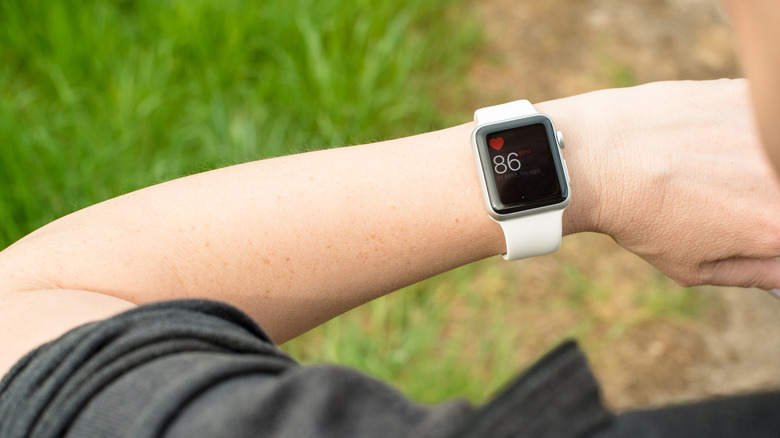
To understand why the numbers vary so wildly, it is helpful to look at how these devices "decide" what you are doing. Modern smartwatches use pattern recognition to categorize your movement.
- Motion Detection: Using the internal accelerometer and gyroscope, the watch determines if your body is in a state of rhythmic motion.
- Activity Classification: If your heart rate is elevated and your wrist is moving in a repetitive, rhythmic pattern (like a stroke in rowing or a pedal rotation in cycling), the device assigns a specific "MET" (Metabolic Equivalent of Task) value to that activity.
- The "Black Box" Calculation: Once the activity is classified, the device applies a proprietary formula that takes into account your age, weight, and height—data you provided during setup.
The issue, as noted by Assistant Professor Anna Shcherbina, is that these algorithms are trained on aggregate data. They are designed to be "good enough" for the widest possible demographic. If you are an elite athlete with a high VO2 max, your body burns energy differently than an sedentary individual of the same height and weight. The watch, however, does not know your fitness level; it only knows your demographics. Therefore, it applies a generic formula that fails to account for individual metabolic efficiency.
The Official Stance: Why It Stays This Way
Neither Apple nor its competitors have ever claimed their watches are medical devices for metabolic tracking. In the fine print of every user agreement and product manual, these devices are categorized as "fitness tools" rather than diagnostic equipment.
From a product design perspective, this is a calculated trade-off. To make a device that truly measures calories, a user would need to wear a mask to measure oxygen intake and exhaled carbon dioxide—a process known as indirect calorimetry. This is impossible for a wearable. Consequently, tech companies have optimized for user engagement rather than laboratory accuracy. The goal of the "rings" on an Apple Watch is to motivate movement and provide a consistent, if imperfect, trendline. The psychological benefit of seeing a "closed ring" often outweighs the biological accuracy of the specific number provided.
Implications for Health and Wellness
The inaccuracy of these trackers has real-world implications, particularly for those using them to manage weight.
- The "Eat-Back" Trap: Many users fall into the trap of "eating back" their burned calories. If your watch tells you that you burned 800 calories on a run, you might feel justified in consuming an extra 800-calorie meal. If the watch has overestimated your burn by 30 percent, you are inadvertently creating a caloric surplus, which can lead to unintended weight gain.
- The Psychological Toll: For individuals with a history of disordered eating, the obsession with a specific, highly inaccurate number can be detrimental. Relying on a device that provides a false sense of precision can lead to a distorted relationship with food and exercise.
- A Shift in Perspective: The medical community generally advises that fitness trackers should be used as a tool for trend analysis rather than data collection. It is more useful to look at the relative change in your activity levels week-over-week than it is to obsess over the total calorie count of a single day.
Conclusion: Use the Data, Don’t Trust It
The Apple Watch remains an extraordinary piece of engineering, and its ability to track heart rate, sleep, and overall activity patterns is undeniably beneficial for public health. However, users must cultivate a healthy skepticism toward the calorie metric.
When you see that number on your screen, view it as a "relative effort score" rather than a nutritional fact. It is a helpful signpost that you are moving, but it is not a scientific ledger of your body’s energy economy. In the quest for health, the best metrics remain those that are within our control: how we feel, our recovery, and the consistency of our movement. As for the calories? They are, and will remain, an educated guess.


 Sagoh
Sagoh
 Asep Darmawan