Azzam Bilal Chamdy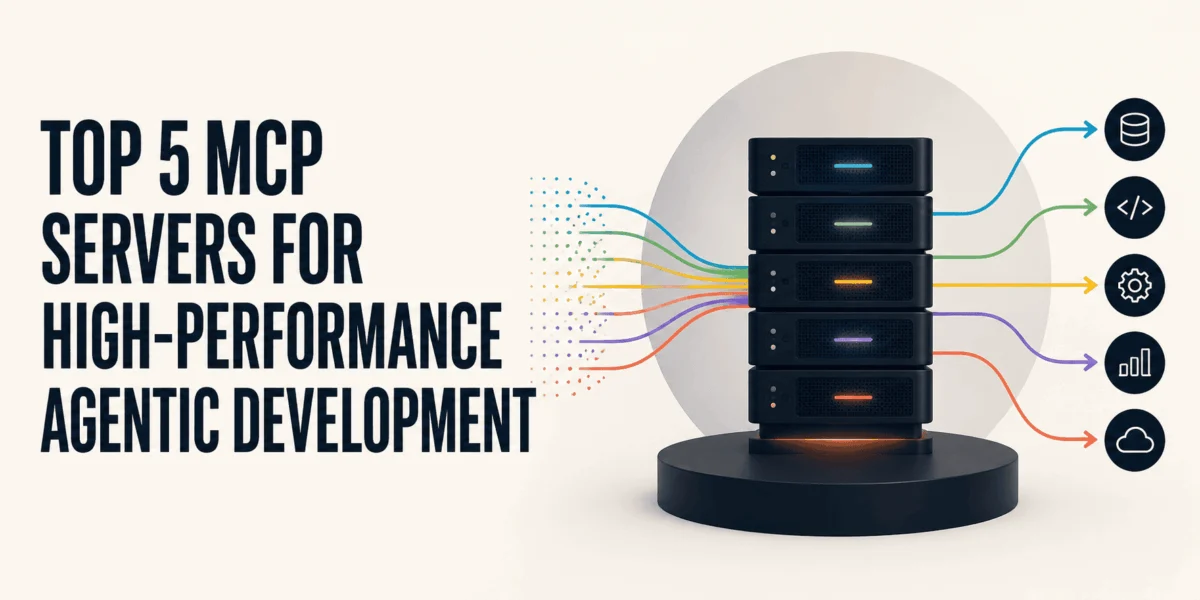
Introduction: The "USB-C" Moment for Artificial Intelligence
Eighteen months ago, the frontier of AI agent development felt like a fragmented landscape of proprietary walled gardens. For developers, connecting an intelligent agent to an external tool—such as a database, a code repository, or a web browser—meant writing bespoke, brittle "glue code." This manual overhead made scaling autonomous systems nearly impossible, as every integration required custom maintenance and fragile API wrappers.
The turning point arrived in late 2024 when Anthropic open-sourced the Model Context Protocol (MCP). By providing a universal standard for how AI models interact with external data sources and tools, MCP acted as the "USB-C" of the agentic era. Following its adoption by industry titans like OpenAI, Google, and Microsoft throughout 2025, and its subsequent transition to a Linux Foundation-governed body, the protocol has become the bedrock of modern AI engineering.
However, the rapid democratization of this protocol has led to a noisy ecosystem. Developers frequently find themselves misled by outdated "listicle" content recommending archived or deprecated servers. To build a high-performance agentic stack, one must distinguish between experimental fluff and production-grade tooling. Below, we examine the five essential MCP servers that define the current state of the art.
Chronology: From Bespoke Glue to Universal Protocol
The evolution of the Model Context Protocol is a testament to the industry’s shift toward modularity.
- Pre-2024 (The Era of Fragmentation): Agents were isolated entities. Developers spent roughly 60–70% of their time building custom integration layers for every new tool, leading to massive technical debt and "agent fatigue."
- Late 2024 (The Catalyst): Anthropic releases the MCP specification. The industry responds with immediate, enthusiastic adoption, recognizing that a unified interface for tools is the missing link for agentic scalability.
- 2025 (Standardization and Maturation): OpenAI, Google, and Microsoft integrate MCP into their core enterprise offerings. The protocol is formally donated to the Linux Foundation, ensuring vendor-neutral governance.
- Present Day (The Ecosystem Explosion): Thousands of community-contributed servers exist. The challenge has shifted from "how to connect" to "which connections are stable and performant."
The Top 5 MCP Servers for Professional Development
1. The GitHub MCP Server: The Development Backbone
The official GitHub MCP server is the non-negotiable entry point for any developer-centric agent. Rather than merely viewing code, it grants the agent the agency to interact with the full software development lifecycle (SDLC).
- Functionality: It exposes repository contents, issue tracking, pull request management, and CI/CD security workflows.
- Why it matters: It transforms an agent from a passive "code reader" into an active "contributor." An agent equipped with this server can triage incoming issues, suggest fixes via pull requests, and audit failing workflows in real-time. Because it is maintained by GitHub, it stays synchronized with the platform’s API evolution, preventing the breakage common in community-made wrappers.
2. Microsoft Playwright MCP: Deterministic Browser Interaction
Web automation has historically been a graveyard for AI agents, which often struggle with vision-based models that hallucinate pixel coordinates or misinterpret complex UI elements.
- Functionality: The Playwright MCP server utilizes the accessibility tree to drive browser interactions.
- The Technical Advantage: By providing the agent with structured, deterministic data rather than raw visual pixels, it eliminates the need for expensive and error-prone vision-to-text processing. This ensures that agents can perform complex web tasks—such as scraping, form submission, or end-to-end testing—with near-100% accuracy.
3. Upstash Context7: Solving the Hallucination Crisis
One of the most persistent bottlenecks in AI coding is the "stale documentation" problem. Models are trained on static data, making them prone to recommending deprecated APIs or hallucinating non-existent function signatures.
- Functionality: Context7 acts as a dynamic retrieval layer, injecting up-to-date, version-specific library documentation directly into the agent’s context window.
- Impact: By ensuring the agent is always aware of the latest API changes, Context7 significantly reduces the debugging phase of the development cycle. It is the highest-leverage tool for agents tasked with writing code for fast-moving frameworks.
4. Serena: Semantic Code Understanding
Traditional agents often rely on crude text search-and-replace patterns to edit files, which is computationally expensive and prone to syntax errors.
- Functionality: Serena leverages the Language Server Protocol (LSP) to provide the agent with a deep, semantic understanding of a codebase across 40+ programming languages.
- The Practical Payoff: Instead of pattern-matching strings, the agent can target specific symbols, functions, or class definitions. This level of precision is critical for large, complex repositories where "dumping" files into the context window is both cost-prohibitive and technically inefficient. It gives an agent the structural awareness of a senior developer using a professional IDE.
5. The Official Reference Servers: The Essential Primitives
No stack is complete without the foundational building blocks provided by the official MCP reference collection.
- The Core Kit: This collection includes the Filesystem (for local storage), Git (for version control), Fetch (for HTTP requests), and Memory/Sequential Thinking (for complex reasoning).
- The Caveat: While these servers boast over 80,000 collective stars, they are primarily intended as educational references. Developers should view them as "hardened templates" that may require minor configuration for production-grade environments.
Supporting Data: Why Ecosystem Selection Matters
The urgency of choosing the right servers is rooted in the volatility of the current market. Many older, highly-starred repositories have been archived, rendering them "dead weight" for new projects.
| Server | Primary Strength | Current Market Position |
|---|---|---|
| GitHub MCP | SDLC Integration | Industry Standard |
| Playwright MCP | Browser Automation | High Reliability |
| Context7 | Documentation Accuracy | Essential for Coding |
| Serena | LSP-based Editing | High Performance |
| Reference Collection | Primitives/Plumbing | Foundational |
Note: Star counts and maintenance status are dynamic; developers are advised to verify the "last commit" date on GitHub before integrating any server into a production pipeline.
Implications: The Future of Autonomous Development
The adoption of MCP is fundamentally shifting the role of the software engineer. We are moving away from being "code authors" toward becoming "architects of autonomous workflows."
When an agent is equipped with these five servers, it gains a "coherent set of hands." It can reason (Sequential Thinking), search (Context7), edit (Serena), automate (Playwright), and manage (GitHub). The bottleneck is no longer the ability to connect to tools, but the ability to orchestrate them effectively.
As the Linux Foundation continues to standardize the protocol, we can expect to see "MCP-compatible" become a standard requirement for all SaaS products. For developers, the message is clear: stop building custom integrations. Start mastering the orchestration of these standardized servers to build the next generation of high-performance, agentic software.
About the Author:
Nahla Davies is a software developer and technology writer. With a background as a lead programmer at an Inc. 5,000 experiential branding agency, she has architected solutions for global giants including Samsung, Netflix, and Sony. Her work focuses on the intersection of developer productivity and the rapid evolution of the AI agent ecosystem.

 Ali Ikhwan
 Nana
Nana