Ali Ikhwan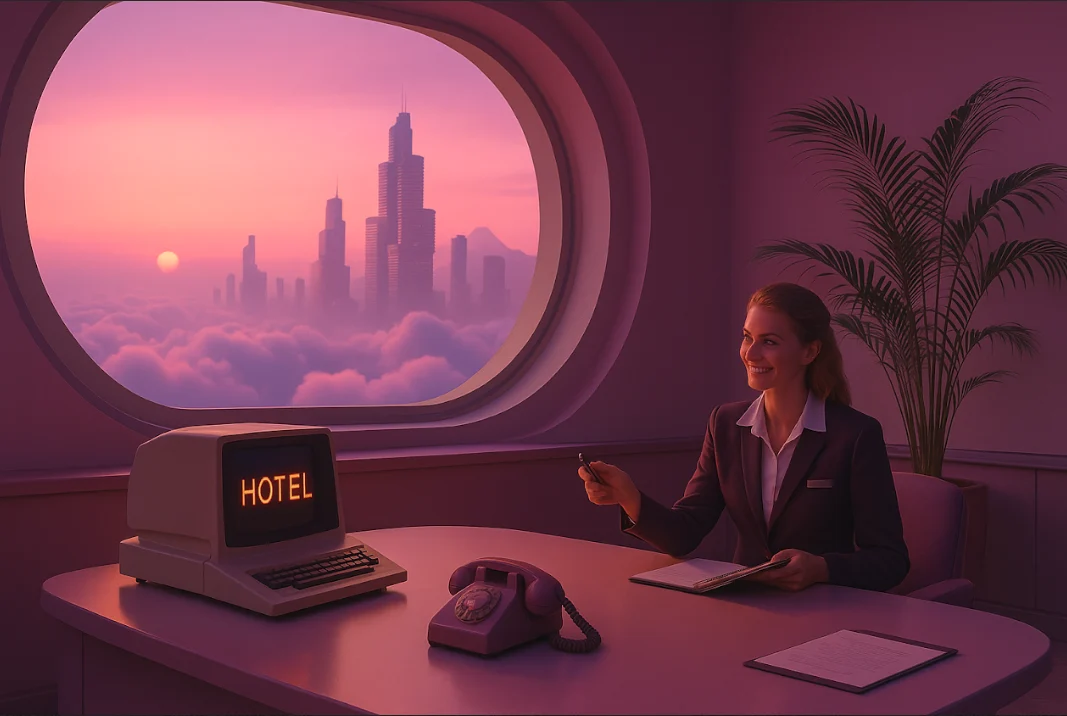
The hospitality industry stands at a pivotal crossroads. For decades, the narrative has been defined by a David-versus-Goliath struggle: independent hotels and boutique chains attempting to claw back market share from the monolithic Online Travel Agencies (OTAs). Despite the proliferation of "Book Direct" campaigns, the reality remains stark—Booking.com, Expedia, and Agoda continue to command the digital storefront of the travel industry, capturing over two-thirds of all traveler searches.
However, as we move deeper into 2026, the competitive landscape is no longer just about OTAs. We are witnessing a tectonic shift driven by "agentic booking behavior"—the rise of AI-powered travel assistants. As travelers increasingly entrust their itineraries to ChatGPT, Gemini, and specialized AI planners, the challenge for hoteliers is to pivot from competing against static search algorithms to engaging with dynamic, automated decision-flows that prioritize speed and efficiency above all else.
The State of the Industry: A Chronology of Disruption
To understand the current urgency, one must look at how the digital booking funnel has evolved over the last twenty years:
- The Early 2000s: The rise of the OTA. Hotels ceded digital distribution to third parties in exchange for global reach and marketing muscle.
- The 2010s: The "Book Direct" push. Hotels invested heavily in loyalty programs and website optimization, yet struggled to overcome the convenience factor offered by OTA aggregators.
- 2023–2025: The AI Inflection Point. The integration of Large Language Models (LLMs) into search engines transformed how users discover destinations. Discovery moved from "searching and clicking" to "conversing and confirming."
- 2026 and Beyond: The era of the Autonomous Agent. Travelers are now delegating the act of booking to AI, moving from information gathering to automated transaction execution.
This evolution has created an environment where brand loyalty is increasingly fragile, vulnerable to the algorithmic suggestions of an AI that may prioritize price or convenience over a hotel’s unique value proposition.
Supporting Data: Why the Shift is Real
The data supporting this transformation is compelling. Recent reports indicate that approximately one in three travelers are now open to allowing AI-powered assistants to handle not just the planning of their trip, but the actual booking process as well.
This behavior is not merely a tech trend; it is a fundamental shift in consumer trust. Travelers are signaling that they value the time-saving capabilities of AI. When an AI assistant presents three hotel options in seconds—complete with summarized reviews and price comparisons—the friction of visiting a hotel’s individual website often becomes an insurmountable barrier. For the hotelier, this means that if you are not optimized for AI discovery, you are effectively invisible to a significant, high-intent segment of the traveling public.
The Seven Pillars: Strategies to Outpace OTAs in 2026
Winning in this hybrid landscape requires a dual-pronged approach: leveraging technology to remain discoverable while utilizing human-centric strategies to build the emotional connection that machines cannot replicate.
1. Converting the "OTA Ghost" into a Loyal Fan
Most hotels treat OTA-booked guests as transactional data points that disappear after checkout. To change this, you must treat the post-booking, pre-arrival window as a critical data-collection phase. By using automated messaging to invite guests to share preferences—such as room type, dietary needs, or special occasions—you can transition them from the OTA’s ecosystem into your own proprietary database. Once they are in your system, you can offer loyalty incentives that provide a tangible reason for them to book directly on their next visit.
2. Radical Pre-Arrival Engagement
The "check-in" experience should begin the moment the booking is confirmed. By deploying personalized, automated communications—such as curated city guides or personalized welcome messages—you move the guest from being a room number to being a "guest of the house." AI tools now allow for this at scale, ensuring that even a property with hundreds of rooms can provide a boutique, high-touch feel that the mass-market nature of an OTA cannot mirror.
3. The Power of the Post-Stay Campaign
The 48-hour window following a guest’s departure is the most receptive moment for re-engagement. When the memory of the stay is fresh, a well-timed campaign offering a "Return Visitor" perk—such as a preferred rate or a complimentary room upgrade—can turn a one-time OTA traveler into a repeat direct-booker. Research consistently shows that personalized post-stay outreach achieves significantly higher conversion rates than generic email blasts.
4. AI-Agent and LLM Discoverability
You must view your hotel’s digital footprint through the eyes of an AI. If your website is not structured to provide clear, concise answers to the questions AI agents ask—such as "Does this hotel have a spa?" or "Is this property close to the city center?"—you will be excluded from their recommendations.
- Structured Data: Ensure your website uses schema markup so search engines and AI agents can easily index your room types, amenities, and location.
- Content Optimization: Move away from purely aesthetic marketing copy toward informational content that answers specific, long-tail search queries.
5. Curated Perks: The Value-Add Equation
Price will always be a factor, but it is not the only factor. By offering "Direct-Only" perks—such as complimentary early check-in, flexible cancellation, or a curated local experience—you provide a rational reason for the traveler to bypass the OTA. These perks create a perception of value that exceeds the discount offered by a third-party site, transforming the booking into an experience-based decision rather than a price-based one.
6. Deploying Conversational AI Agents
Static chatbots that offer limited, pre-programmed responses are a relic of the past. Modern AI agents are capable of handling complex booking inquiries, comparing room types, and even executing upselling strategies. By integrating these agents into your booking engine, you eliminate the "wait time" of manual inquiries, capturing high-intent travelers who expect immediate, intelligent responses 24/7.
7. The Currency of Social Proof
Reviews are the fuel for your discoverability. They provide the "fresh" data that search engines and AI models prioritize. Beyond SEO, positive reviews act as social proof that reduces the perceived risk of booking directly. When you proactively respond to reviews and feature guest stories on your platforms, you provide the validation needed to push a hesitant traveler toward a direct conversion.
Implications for the Future of Hospitality
The arrival of the "Agentic" traveler does not mean the end of the traditional hotel business; it means the end of passive distribution. The implications are clear: hoteliers who rely solely on third-party channels will find themselves increasingly squeezed by commissions and alienated from their own guests.
Conversely, the hoteliers who embrace AI-driven discovery while doubling down on the "human" aspects of hospitality—recognition, personalization, and genuine relationship-building—will thrive. The goal for 2026 is not to wage war against the OTAs, but to build a digital presence that is so compelling and efficient that the direct path becomes the most logical choice for the guest.
Official Perspective: The Human-Tech Equilibrium
Industry leaders emphasize that technology should not be seen as a replacement for service, but as an enabler of it. As one analyst noted, "The goal of AI in hospitality is to remove the friction so that the human connection can flourish."
When an AI handles the logistics of a booking, the hotel staff is freed from administrative burdens, allowing them to focus on the unique, in-person experiences that create long-term loyalty. This symbiosis between data-driven efficiency and human-centered hospitality is the hallmark of the successful hotelier in the modern era.
Ultimately, the future of the hotel industry will be defined by those who can bridge the gap between the efficiency of the machine and the empathy of the human. By mastering these seven strategies, you are not just securing a booking; you are building an ecosystem where your brand remains the primary choice in an increasingly automated world.
As we look toward the remainder of 2026 and beyond, the message is clear: Adapt to the agentic revolution, prioritize the direct relationship, and ensure that your hotel is not just a destination, but a recognized partner in your guest’s journey.


 Nila Kartika Wati
 Layla Zulfa