Jia Lissa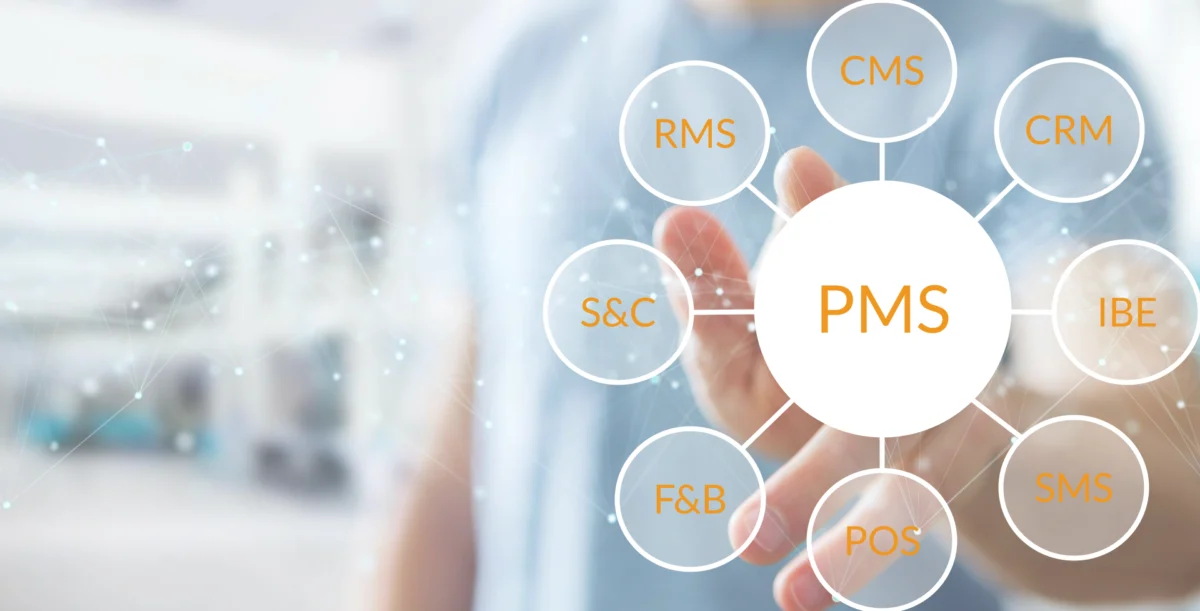
To understand the current state of hospitality technology, one must first address a foundational question: What is a Property Management System (PMS) integration?
At its essence, a PMS integration is the architectural "bridge" that establishes a secure, real-time data exchange between a hotel’s central management system and the vast array of third-party applications or hardware that define the modern guest experience. This connectivity allows a unified ecosystem to emerge, where a guest’s journey—from the initial booking on a mobile app to the final room charge for a late-night amenity—is tracked, analyzed, and optimized within a single, coherent data layer.
In an era where guest expectations are dictated by the immediacy of digital platforms, the ability of a hotel to synchronize its operations has become the primary differentiator between industry leaders and those struggling to maintain relevance.
The Evolution: From Siloed Systems to Connected Ecosystems
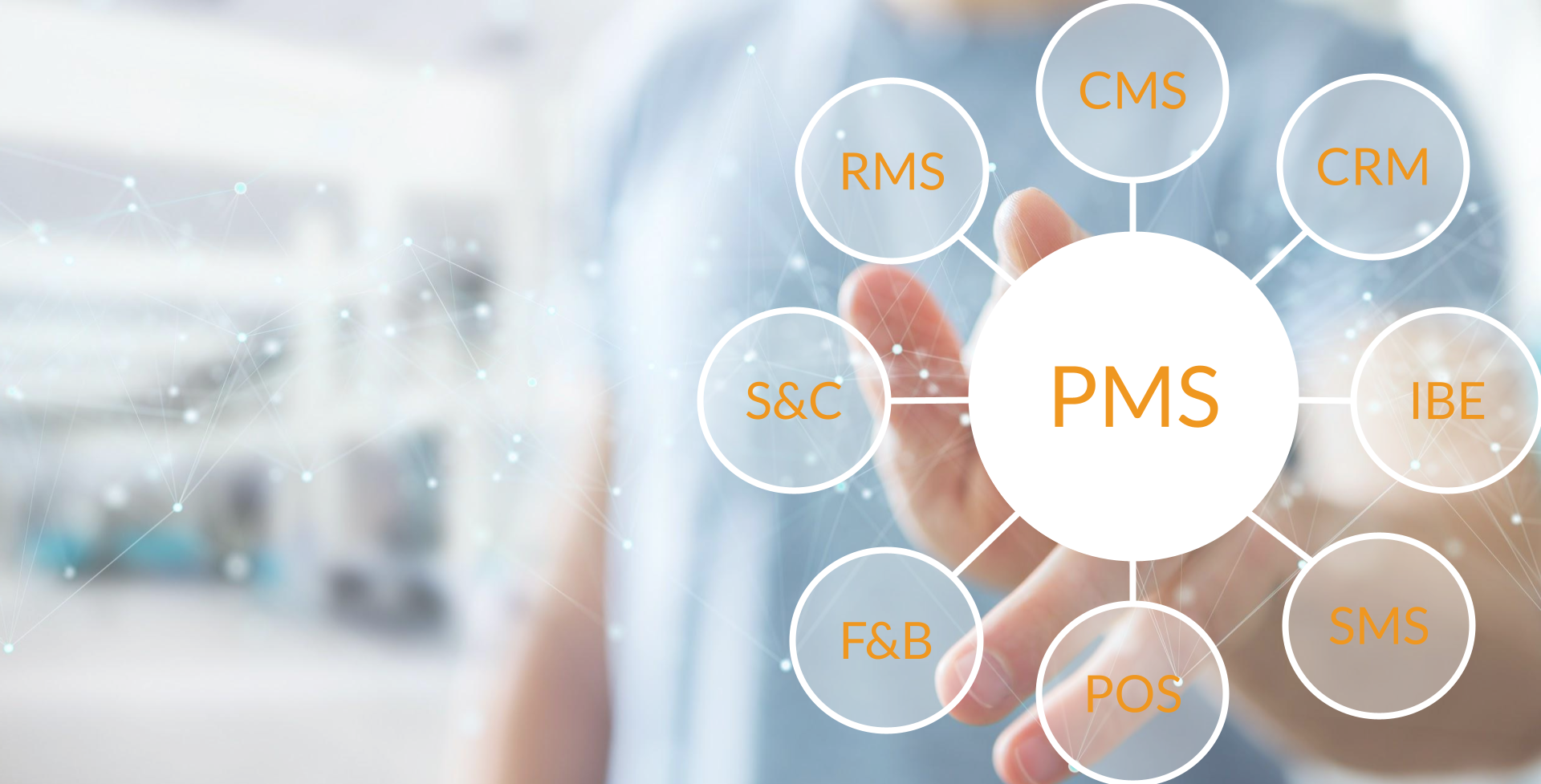
Historically, hotel technology operated in rigid, isolated silos. A property management system handled reservations, a separate Point of Sale (POS) system managed transactions, and disparate platforms oversaw revenue management, housekeeping logistics, digital payments, and guest communication. These systems rarely communicated, forcing staff to manually bridge the gap by transferring data between platforms—a process prone to human error, latency, and significant administrative fatigue.
This fragmented approach did more than just create inefficiencies; it obscured the hotel’s "single source of truth." Management lacked the visibility required to make data-driven decisions in real-time, and the guest experience suffered as a result of disjointed communications.
The industry has since undergone a radical shift. We have moved away from on-premise, monolithic hardware cycles toward cloud-native, API-first platforms. These modern solutions are designed for continuous availability, boasting near-100% uptime and the agility to adopt emerging technologies without the costly "rip and replace" hardware cycles of the past. This evolution has created a distinct competitive advantage for hotels that prioritize a connected stack, with data suggesting that such integrations can reduce administrative costs by 20% to 40% while simultaneously bolstering Revenue Per Available Room (RevPAR) through dynamic, automated pricing strategies.

The Mechanics of Modern Integration: How Systems Talk
Modern hotels rely on an intricate web of software, including channel managers, housekeeping automation apps, sophisticated CRM platforms, and IoT-enabled room controls. To function as a cohesive unit, these tools must share information with the PMS instantly. This is achieved through three primary technical pillars:
- API (Application Programming Interface): These are the established protocols that allow two software programs to communicate. An open, well-documented API is the hallmark of a future-proof PMS.
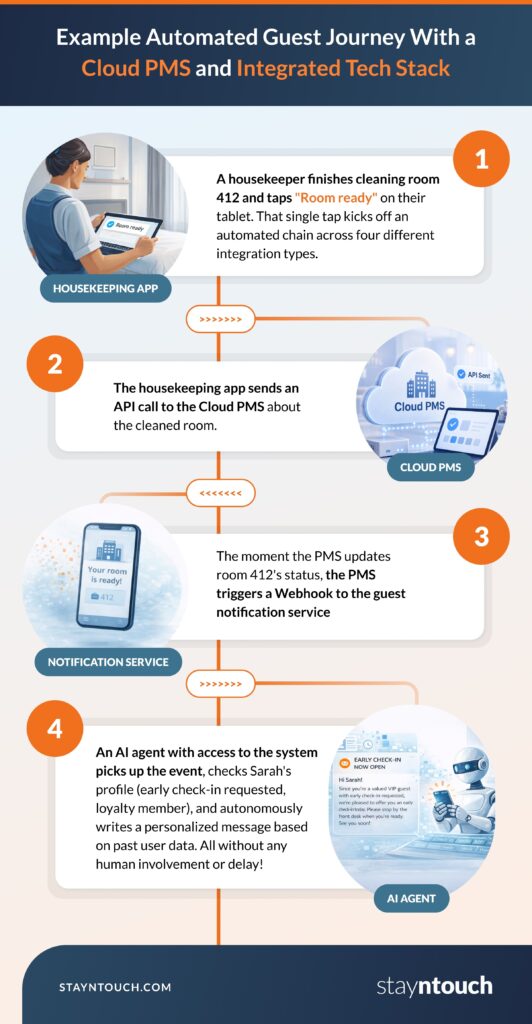
- Webhooks: Unlike traditional "polling" (where a system asks for data at set intervals), webhooks push data to other systems the moment an event occurs—such as a guest checking in or a room status changing to "clean."
- Middleware/Integration Hubs: These layers act as translators, ensuring that different software languages can understand each other, thereby reducing the complexity of individual point-to-point connections.
Strategic Implications: Operational and Financial Gains
The shift toward a connected PMS is not merely a technical upgrade; it is a financial and operational imperative. By automating the flow of information, hotels can fundamentally alter their cost structure and service delivery.
1. Streamlining Operations and Reducing Manual Work
Integrations eliminate the "swivel-chair" effect—where staff must manually enter the same data into multiple screens. When a reservation is made via an Online Travel Agency (OTA), the data flows directly into the PMS, which then communicates with the channel manager to update availability across all platforms simultaneously. Properties utilizing robust channel manager integrations report a significant decrease in overbookings and a drastic reduction in the manual labor hours required to manage inventory.

2. Enhancing the Guest Experience Through Personalization
A connected PMS enables a "frictionless" guest journey. With integrated systems, a hotel can anticipate needs before the guest even arrives. For example, if a guest is a repeat visitor with a history of requesting hypoallergenic pillows, the PMS can flag this to housekeeping automatically.
Furthermore, the rise of AI agents is transforming the front desk. AI chatbots, integrated with the PMS, handle pre-arrival questions, offer room upgrades, and provide local recommendations 24/7. Data indicates that these AI-driven touchpoints can increase direct booking conversion rates by as much as 14%.
3. Smarter Revenue Management
Real-time integration ensures that pricing strategies are never based on stale data. By feeding competitive data and real-time occupancy rates into revenue management systems, hotels can adjust rates dynamically across all channels. This agility allows for maximum yield management, ensuring the right room is sold to the right guest at the right price point.

4. IoT and Sustainability
Smart rooms are the new frontier of efficiency. By integrating Internet of Things (IoT) devices with the PMS, hotels can automate energy consumption. When the PMS shows a room is "vacant/not clean," the HVAC system can enter a power-saving mode. This is not only a boon for environmental, social, and governance (ESG) goals but a significant driver of utility cost reduction.
Choosing the Right Strategy: What to Look For
Not all integrations are created equal. A hotel’s integration strategy must be built on a framework that supports long-term growth. When evaluating a PMS provider, stakeholders should prioritize the following:
- Cloud-Native Architecture: Ensure the system is built for the cloud from the ground up, not just a legacy system "lifted and shifted" to a server. This ensures the reliability required for 24/7 operations.
- Open APIs: Flexibility is paramount. An open API allows you to plug and play with the best-in-class software of your choice rather than being locked into a proprietary ecosystem that may not offer the best tools for your specific needs.
- Real-Time Data Exchange (Webhooks): Speed is the currency of modern hospitality. Ensure the system supports push-based updates rather than batch processing.
- Pre-built Integration Library: A robust, pre-existing library of integrations reduces the time and cost of deployment.
- Strategic Partnership: Treat your PMS provider as a technology partner, not just a vendor. Look for providers that offer dedicated configuration support and proactive updates.
The Pitfalls of "All-in-One" Marketplaces
While "all-in-one" app marketplaces or suites may appear convenient, they often come with hidden costs. These "closed" ecosystems frequently force hotels to accept mediocrity by limiting their ability to integrate with specialized, best-in-class third-party tools. As a hotel group grows, these limitations often become a bottleneck, preventing the adoption of innovative technologies that could provide a competitive edge.
The "best-in-class" strategy—selecting the best software for each specific hotel function and connecting them via a robust, open-API PMS—remains the gold standard for scaling businesses.
Final Thoughts: The Essential Nature of Connectivity
In the modern hospitality landscape, an integrated PMS is the digital nervous system of the hotel. It is the core that enables efficiency, powers the guest experience, and drives profitability. In a market where connectivity dictates performance, a truly integrated PMS is no longer a "nice-to-have" luxury; it is the fundamental requirement for survival and success.
As technology continues to advance, the gap between connected, data-driven hotels and those operating in silos will only widen. For operators, the message is clear: invest in the integration framework today, or risk being disconnected from the future of the industry.


 Nila Kartika Wati
 Layla Zulfa