Lina Hope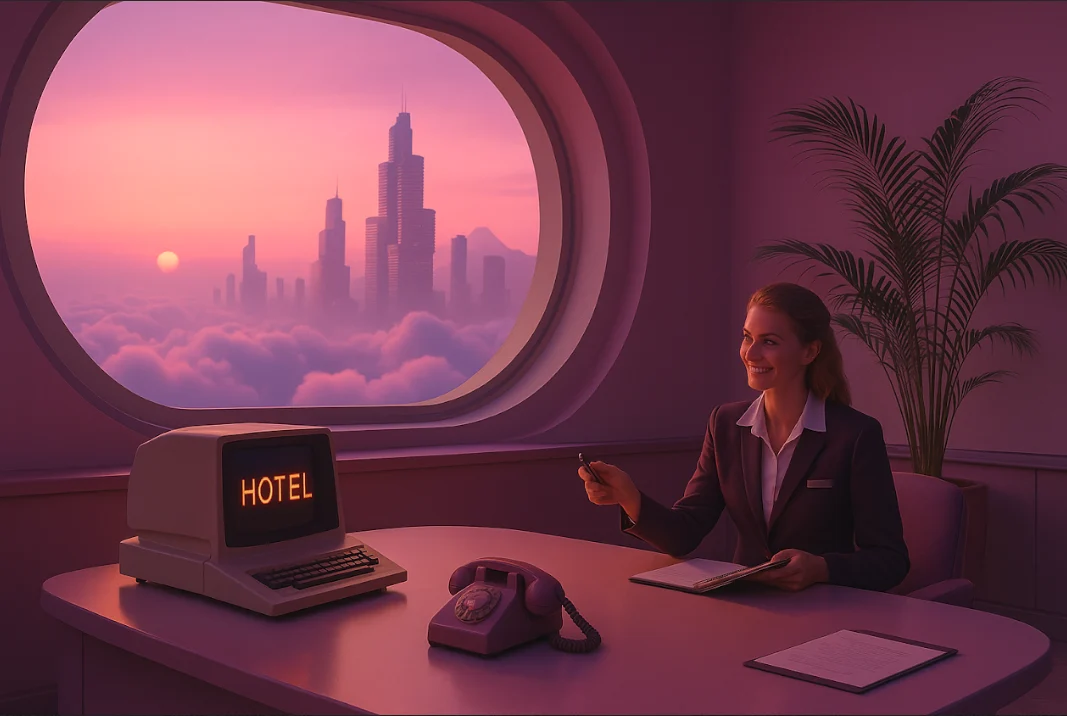
The hospitality industry has long been defined by a tense, symbiotic relationship between independent properties and Online Travel Agencies (OTAs). For decades, the "book direct" campaign has been the rallying cry for hoteliers looking to reclaim their margins from the giants of the industry—Booking.com, Expedia, and Agoda. Yet, despite these efforts, the data remains sobering: over two-thirds of travelers continue to initiate and finalize their booking journeys through these massive digital intermediaries.
In 2026, however, the landscape is undergoing a tectonic shift. The dominance of OTAs is no longer just being challenged by brand-loyalty initiatives; it is being disrupted by a new paradigm of "agentic booking." With the rise of AI-powered travel assistants—ranging from ChatGPT and Gemini to specialized travel-planning AI—the way guests discover, evaluate, and reserve stays is fundamentally changing. As we look toward the remainder of the decade, hoteliers are not merely competing with OTA algorithms; they are competing with autonomous AI decision-flows that prioritize raw efficiency over brand equity.
The Chronology of Disruption: From Portals to Agents
To understand the current state of play, one must look at the evolution of travel distribution.
- The Early 2000s (The Portal Era): Travelers shifted from phone calls and travel agents to web-based search. OTAs emerged as the gatekeepers, offering a consolidated view of inventory that individual hotel websites could not match in terms of user experience.
- The 2010s (The Loyalty & Direct Push): Hotels invested heavily in "Best Rate Guarantees" and loyalty programs to pull guests away from intermediaries. While successful for large chains, independent boutiques struggled to compete with the marketing budgets of global OTA conglomerates.
- 2024–2025 (The AI Inflection Point): The mainstreaming of Large Language Models (LLMs) turned search into conversation. Travelers began asking, "Find me a hotel in Paris with a view of the Eiffel Tower under $400," rather than browsing grids of results.
- 2026 and Beyond (The Agentic Era): We have entered the era of the "Agent." Consumers are now increasingly comfortable allowing AI to act on their behalf, moving beyond simple research to executing transactions.
This progression marks the death of the linear funnel. Today, the "funnel" is a cloud of AI-assisted decision-making.
Supporting Data: Why the Shift is Irreversible
The shift toward AI-assisted booking is not a niche trend; it is a fundamental behavioral change. Recent industry reports indicate that nearly one in three travelers are now willing to delegate the discovery phase of their trip to an AI assistant. More importantly, a significant percentage of these users are granting these systems the autonomy to complete bookings.
This "agentic" behavior is driven by two factors: speed and perceived value. AI algorithms are designed to strip away the "noise" of marketing and present results that align with the user’s specific constraints—price, location, and amenity requirements. When an AI presents a hotel, it does so with a cold, calculated efficiency that ignores traditional brand loyalty. For a hotel to win in this environment, it must ensure it is "visible" to these AI systems—a concept known as LLM Discoverability.
The Case for Human-Centric Hospitality
Despite the mechanical efficiency of AI, the core desire of the traveler remains unchanged: they crave connection. The hospitality industry’s "secret weapon" in 2026 is that AI and OTAs are inherently transactional. They lack the capacity to build a relationship.
Guests want to be recognized. They want to be greeted by name, to have their preferences stored and respected, and to feel that their patronage is rewarded. When a hotel provides these elements, they move the relationship from a one-time transaction to a recurring, loyal partnership. The challenge for hoteliers is to scale this feeling—to use the same AI that threatens to commoditize them to instead facilitate a more personal, high-touch experience.
Seven Proven Strategies to Reclaim the Direct Channel
To outpace the reach of OTAs and the cold logic of AI, hoteliers must adopt a multi-faceted approach that balances technological integration with emotional engagement.
1. Converting the OTA Guest: From Ghost to Fan
The "OTA black box" is the biggest drain on hotel profitability. When a guest arrives via an OTA, they are often treated as a transient entity. This must change. The moment a booking is confirmed, the hotel has a vital window to capture first-party data. By utilizing automated, personalized welcome sequences that invite guests to join a loyalty program or specify room preferences, hotels can begin the process of "de-intermediating" the guest before they even arrive.
2. Pre-Arrival Engagement as a Value Add
Engagement should not begin at check-in. A well-crafted pre-arrival campaign—sent via email or SMS—that offers curated local insights or personalized service options transforms the stay from a transaction into a narrative. This builds an emotional connection that an OTA’s confirmation email simply cannot replicate.
3. The Power of Post-Stay Campaigns
The 24 to 48 hours following checkout represent the "golden window" for loyalty. During this time, the guest is still emotionally tethered to the experience. A personalized, automated post-stay follow-up—thanking them for their visit and offering an exclusive incentive for a future direct booking—is one of the most effective ways to break the OTA habit loop.
4. Mastering AI and LLM Discoverability
If your hotel is not in the "dataset" of an AI assistant, you do not exist. To succeed, hotels must optimize their digital footprint for AI. This involves:
- Structured Data: Ensuring your website uses schema markup that AI can easily parse.
- High-Quality FAQs: Creating comprehensive content that answers the questions travelers ask AI (e.g., "Does this hotel have high-speed Wi-Fi and proximity to public transport?").
- Review Management: Actively curating reviews, as AI assistants frequently synthesize this content to provide "sentiment summaries" to users.
5. Curating Exclusive, Non-Price Perks
Winning direct bookings does not always require a price war. Often, travelers choose the lowest price because they perceive no difference in value. By offering "direct-only" perks—such as complimentary early check-in, a signature cocktail, or exclusive spa access—hotels can provide tangible value that OTAs cannot match. These perks differentiate the brand and reinforce the wisdom of booking directly.
6. Deploying Conversational AI Agents
Static websites are a thing of the past. Today, AI Agents—sophisticated, LLM-driven chatbots—act as virtual concierges. Unlike the clunky bots of the early 2020s, modern AI Agents can handle complex booking flows, compare room types in real-time, and process payments. Integrating these agents into your booking engine reduces friction and ensures that no potential guest leaves your site due to a lack of immediate support.
7. Leveraging Social Proof as Fuel
Reviews are the bedrock of modern trust. Beyond simply being "nice to have," reviews serve as the training data for AI models. A hotel with a high volume of descriptive, positive reviews will naturally rank higher in AI-assisted search results. Encouraging guest feedback and responding to it with professional, personalized replies turns social proof into a powerful SEO and AI optimization tool.
Implications for the Future
The implications for the hospitality sector are clear: the "wait and see" approach is no longer viable. By 2026, the hotelier’s job description has expanded to include the role of a digital orchestrator.
The OTA giants will remain significant players; their scale and marketing budgets ensure their continued relevance in the global travel ecosystem. However, they are no longer the exclusive arbiters of the guest journey. The future belongs to those who can bridge the gap between high-tech discovery and high-touch hospitality.
By leveraging AI to handle the operational heavy lifting—data collection, personalized communication, and immediate booking assistance—hotels can reclaim the time and resources necessary to focus on what they do best: creating exceptional, human experiences. The goal is not to eliminate the OTA, but to ensure that when a guest chooses a destination, the most compelling, frictionless, and personalized path is the one that leads directly to your front door.
The battle for the direct booking is not being fought with discounts alone; it is being won with strategy, data, and the relentless pursuit of the guest experience. As the industry moves further into this decade, those who embrace these technological shifts will not only survive the disruption—they will define the new standard for the hospitality industry.


 Ammar Sabilarrohman
 Laily UPN