Lina Hope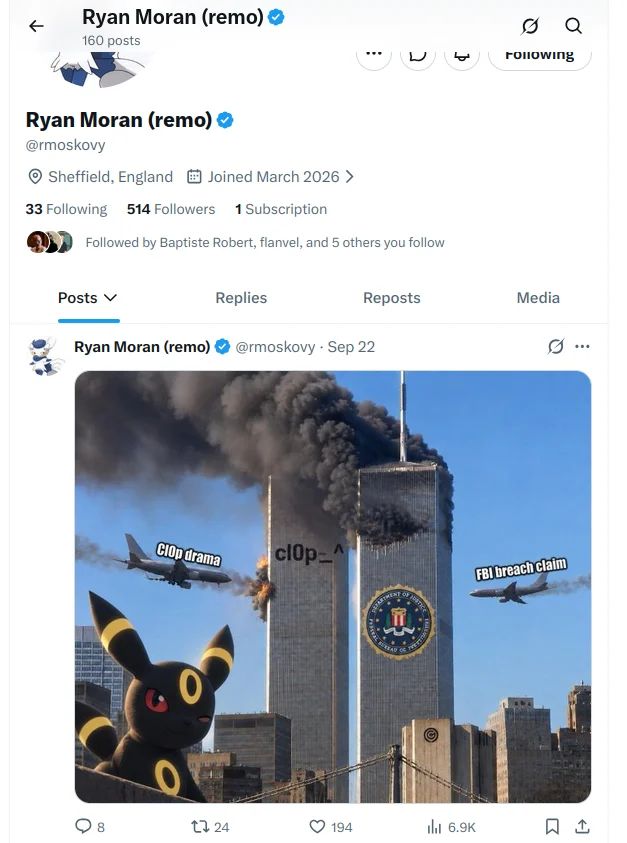
The shadowy world of international cybercrime was sent into a tailspin this month following the detention of a key operative in Amman, Jordan. The suspect, a teenager known in hacking circles by the handle “Rey,” is alleged to be a central figure in the notorious data theft and extortion syndicate ShinyHunters. According to reports, the young hacker is currently cooperating with the Federal Bureau of Investigation (FBI), providing a roadmap into the inner workings of a group that has plagued global corporations and government entities for years.
The Architect of Chaos: Who is ‘Rey’?
KrebsOnSecurity has identified “Rey” as Saif Al-din Khader, a figure first profiled in late 2025 for his ties to a sprawling network of ransomware and data-extortion groups. Khader’s rise to prominence within the cyber-underground was marked by a blend of technical audacity and performative cruelty. He was not merely a hacker; he was a brand manager for digital anarchy.
Khader’s arrest came at a critical juncture. ShinyHunters was in the midst of an aggressive extortion campaign targeting a business unit recently divested by the aerospace giant Boeing—specifically, Jeppesen ForeFlight. The irony of the target is not lost on investigators: Khader’s father is reportedly an employee of Royal Jordanian Airlines, a carrier that relies heavily on Boeing’s fleet for its long-haul operations. This connection highlights the precarious intersection of personal life and digital crime that often defines the modern threat landscape.
A Chronology of Escalation
The downfall of the current iteration of ShinyHunters began with a series of high-profile blunders and tactical overreaches.

- June 2026: ShinyHunters begins exploiting a zero-day vulnerability (CVE-2026-35273) in Oracle’s PeopleSoft, a SaaS platform ubiquitous in human resources and payroll departments.
- September 15, 2026: In a coordinated raid involving flash-bang grenades, Dutch authorities arrest 24-year-old Pepijn van der Stap, an alleged accomplice known by the handle “Umbreon.”
- September 22, 2026: Following the arrest of his associate, Rey launches a desperate disinformation campaign, posting memes on X (formerly Twitter) that attempt to frame Van der Stap for hacks against the FBI and the Cl0p ransomware group.
- October 3, 2026: Reuters reports the detention of Saif Al-din Khader in Amman, confirming his cooperation with U.S. federal authorities.
- October 5, 2026: The FBI terminates an Accenture contractor responsible for the security of an FBI recruitment portal, citing a failure to patch the very PeopleSoft vulnerability ShinyHunters exploited to leak the medical and psychiatric records of over 5,000 personnel.
The Oracle PeopleSoft Campaign: A Global Breach
The exploitation of CVE-2026-35273 stands as one of the most significant mass-exploitation campaigns of the year. While the group initially targeted the FBI’s own database—an effort that reportedly failed—they pivoted successfully to dozens of other organizations. Mandiant and the Google Threat Intelligence Group (GTIG) confirmed that the breach touched virtually every major sector, including higher education, healthcare, technology, and government.
The group’s persistence was highlighted by their ability to bypass security countermeasures. When Mandiant issued web application firewall (WAF) rules to mitigate the PeopleSoft vulnerability, ShinyHunters utilized a classic URL-encoding obfuscation technique to bypass the filters, showcasing a level of technical agility that kept security teams scrambling throughout the summer.
The Boeing-Jeppesen Extortion Attempt
The investigation gained significant momentum when ShinyHunters targeted Jeppesen ForeFlight, which Boeing sold to private equity firm Thoma Bravo in November 2025. Sources close to the investigation suggest that the stolen data included information sensitive enough to potentially compromise operational safety.
Boeing issued a measured statement confirming they were aware of the threat actor’s claims regarding the former subsidiary. Meanwhile, Jeppesen ForeFlight maintained that their internal investigation showed no impact on their core operations or products. However, the intensity of the FBI’s pursuit of Khader suggests that the federal interest in this specific breach was far greater than a standard data theft case.

The ‘Umbreon’ Connection and Murder-for-Hire Allegations
The case of Pepijn van der Stap, or “Umbreon,” adds a dark, criminal layer to the narrative. Despite his public posturing as a “reformed” hacker—a narrative he peddled to tech media while working for a Dutch security firm—Dutch authorities are now investigating allegations that he orchestrated at least two murders.
The contrast between his public persona as an “offensive security lead” at Neo Security and the private allegations of violent crime underscores the danger of the “reformed hacker” archetype. Van der Stap’s arrest in mid-September, executed with military-grade precision, marked the beginning of the end for the current ShinyHunters structure.
Implications: The Franchise Model of Cybercrime
Industry analysts have long noted that "ShinyHunters" is no longer a cohesive group, but rather a franchise brand. Like the Dread Pirate Roberts from The Princess Bride, the name is passed from one criminal to the next to maintain fear and extortion leverage.
The current crop of hackers, led by the likes of Khader, has been criticized by established members of the cyber-underground for "larping"—pretending to be the original, elite group to gain influence. By buying old PGP keys and hijacking established Telegram channels, these "script kiddies" have successfully extorted millions, but their lack of operational security ultimately led to their undoing.

Official Responses and Strategic Failures
The FBI’s May 2026 flash notice warning companies not to pay the group was a turning point. ShinyHunters viewed the warning as a direct threat to their business model. In a misguided attempt to "protect their business," they targeted the FBI itself, hoping to prove their superiority. Instead, they succeeded only in drawing the full weight of the Bureau’s investigative resources.
The breach of the FBI recruitment site was a watershed moment. The exposure of sensitive medical and psychiatric data of agents was not just a data breach; it was an intelligence failure. The subsequent firing of the Accenture contractor responsible for the security oversight reflects the stern consequences that follow when cybersecurity lapses intersect with national security.
The Digital Paper Trail
Despite Khader’s attempt to delete his digital footprint, his GitHub blog remained a glaring piece of evidence. His obsession with the Russian-linked Cl0p ransomware group—going as far as to “dox” their core operators—demonstrates the internecine warfare currently raging within the cybercriminal community. This infighting, combined with the pressure from international law enforcement, has effectively crippled the ShinyHunters brand.
Conclusion: A Lesson in Hubris
The story of “Rey” is a cautionary tale of hubris. Khader, a teenager with access to his father’s work credentials, attempted to play a high-stakes game against the world’s most powerful intelligence agencies. His desire for notoriety, evidenced by his taunting memes and social media bravado, became his primary vulnerability.

As the dust settles, the "franchise" of ShinyHunters remains in tatters. The arrests of Khader and Van der Stap serve as a reminder that in the digital age, anonymity is fleeting, and the transition from a basement-dwelling hacker to a federal informant is a path many young cybercriminals will likely traverse in the coming years. For the victims—from the FBI personnel whose records were exposed to the corporate entities caught in the crossfire—the focus now shifts to remediation and the long process of securing systems against those who seek to weaponize information for profit.


 Nana
Nana
 Pevita Pearce