 Neng Nana
In the rapidly shifting landscape of artificial intelligence and data science, the ability to synthesize information from the vast, unstructured expanse of the internet has become a foundational skill. As we move further into 2026, the distinction between "web scraping" and "web crawling" has not only become more pronounced but has also become a critical factor for developers building high-performance AI applications.
While scraping historically referred to the extraction of data from a single, static page, modern web crawling has evolved into an AI-native discipline. Today’s sophisticated tools are designed to traverse interconnected domains, navigate complex site architectures, and transform raw HTML into structured, LLM-ready datasets for Retrieval-Augmented Generation (RAG) pipelines and autonomous research agents.
The Core Distinction: Crawling vs. Scraping
To understand the current market, one must first distinguish between these two methodologies. Web scraping is an surgical operation; it involves targeting a specific URL to retrieve data points—such as price tags, product titles, or contact information—and cleaning them into a readable format.
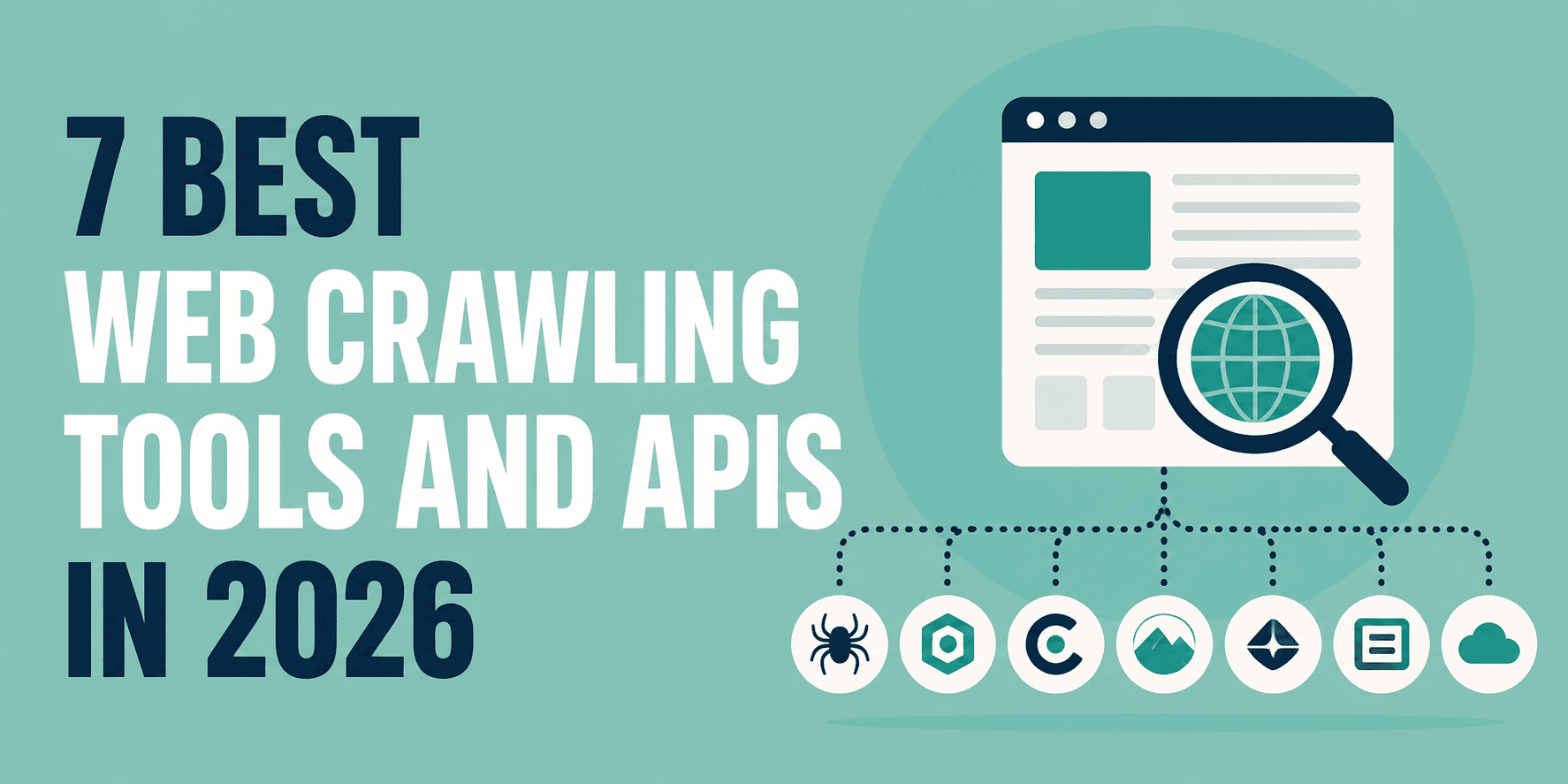
Web crawling, by contrast, is an exploratory mission. By providing a single seed URL, a crawler systematically follows internal and external links to index entire domains. This is essential for organizations that need to ingest entire knowledge bases, documentation hubs, or massive corporate wikis. In 2026, this process has been augmented by AI. Modern crawlers are no longer just gathering raw text; they are utilizing prompts, JSON schema enforcement, and screenshot capabilities to deliver data that is pre-processed for immediate consumption by Large Language Models (LLMs).
Chronology of the Crawling Revolution
The journey to the present day has been defined by three distinct phases:
- The Manual Era (2010–2015): Developers relied on custom scripts, often struggling with dynamic JavaScript-heavy websites and IP blocking.
- The Framework Era (2016–2021): The rise of mature open-source frameworks like Scrapy and Crawlee provided standardized ways to handle pagination, request queues, and proxy management.
- The AI-Native Era (2022–Present): With the explosion of RAG, the industry shifted toward "Crawl-as-a-Service" models. These platforms handle the infrastructure, rendering, and data structuring, allowing developers to focus on the application layer rather than the maintenance of the pipeline.
The Top 7 Tools Shaping Data Acquisition in 2026
1. Olostep: The Efficiency Leader
Olostep has rapidly emerged as a dominant force in the managed API space. Its architecture is specifically optimized for full-site traversal, making it an ideal choice for developers building complex RAG pipelines.

- Key Capabilities: Beyond simple extraction, Olostep supports Model Context Protocol (MCP) servers, allowing it to integrate directly into agentic environments like Claude Code or Cursor.
- Implications: Its cost-effectiveness makes it the primary choice for startups and enterprises that need to scale their data acquisition without exponential increases in operational costs.
2. Firecrawl: The Industry Standard for LLMs
Firecrawl has cemented its reputation by streamlining the "web-to-LLM" pipeline. It provides a clean, highly reliable interface that converts complex website structures into Markdown, which is the native language of most LLM architectures.
- Strategic Value: Its focus on speed and reliability has made it the go-to tool for developers who require consistent, error-free documentation ingestion.
- Official Stance: Users frequently report that Firecrawl’s ability to handle dynamic content—such as pages rendered via React or Vue—removes the need for cumbersome browser-automation libraries like Playwright or Selenium.
3. ScrapeGraphAI: The Open-Source Powerhouse
For those who prefer a "bring-your-own-model" approach, ScrapeGraphAI is the definitive choice. By utilizing graph-based logic and LLM orchestration, it allows for highly customizable data extraction.
- Customization: Users can plug in OpenAI, Gemini, or local models via Ollama. This flexibility ensures that the extraction logic can be fine-tuned to the specific nuances of the target website.
4. Scrapling: The Adaptive Framework
Scrapling represents the cutting edge of Python-based crawling. Its "adaptive parser" is a technological breakthrough, allowing the crawler to automatically adjust to layout changes on websites—a common pain point that has historically caused crawlers to break.

- Technical Edge: By reducing the need for constant maintenance of CSS selectors or XPath queries, Scrapling significantly lowers the total cost of ownership for long-term data collection projects.
5. Crawl4AI: The Self-Hosted AI Specialist
Crawl4AI caters to the developer who wants the features of a managed service but the control of a self-hosted solution. It is explicitly designed to turn websites into LLM-ready markdown.
- Workflow Integration: Because it supports parallel crawling and advanced session management, it is highly efficient for heavy-duty scraping tasks that require deep interaction with browser environments.
6. Scrapy: The Institutional Veteran
Despite the emergence of AI-native tools, Scrapy remains the industry’s backbone for large-scale, production-grade projects. Its modular design allows teams to build highly custom pipelines that handle everything from complex authentication to database exports.
- The Trade-off: While it lacks built-in "AI-native" features, its robustness makes it indispensable for teams that need to crawl millions of pages with high precision and reliability.
7. Crawlee: The Modern Multi-Language Solution
Crawlee, developed by Apify, has become the standard for developers working across JavaScript, TypeScript, and Python. It abstracts away the "boilerplate" of crawling—such as proxy rotation and retries—while providing a clean, developer-friendly interface.

Supporting Data and Comparative Analysis
In head-to-head testing across various parameters—including cost, latency, and extraction accuracy—the tools diverge based on their core mission:
| Tool | Primary Architecture | Best For | Learning Curve |
|---|---|---|---|
| Olostep | Managed API | Agentic Workflows | Low |
| Firecrawl | Managed API | RAG/LLM Ingestion | Low |
| ScrapeGraphAI | Open-Source | Custom AI Pipelines | Moderate |
| Scrapling | Framework | Adaptive Extraction | Moderate |
| Crawl4AI | Self-Hosted | AI Data Preparation | Moderate |
| Scrapy | Framework | High-Scale Production | High |
| Crawlee | Framework | Cross-Language Teams | Moderate |
Implications for the Future of Data
The shift toward AI-native crawling has profound implications for data privacy, content ownership, and the future of search. As tools become more efficient at "reading" the web, the tension between content creators and AI companies will continue to rise.
For developers, the implication is clear: the focus is shifting from how to get the data to how to structure the data for reasoning. We are moving into an era where "raw data" is considered a liability, and "structured knowledge" is the only asset that matters. The tools listed above are not just browsers; they are the translators between the chaos of the open web and the structured requirements of artificial intelligence.

Conclusion
The choice of a crawling tool is no longer just a technical decision—it is a strategic one. If you are building a research agent, you may prioritize the agentic integrations of Olostep. If you are building a knowledge-based chatbot, the clean Markdown output of Firecrawl might be superior. For teams requiring deep control over their infrastructure, frameworks like Scrapy and Crawlee remain untouchable.
Ultimately, the best tool is one that minimizes the "maintenance tax" of your data pipeline. As we look toward the remainder of 2026, the winners in this space will be those that provide the most seamless bridge between the public internet and the internal logic of the next generation of AI applications.

 Asro
Asro
 Siti Muinah