Asro
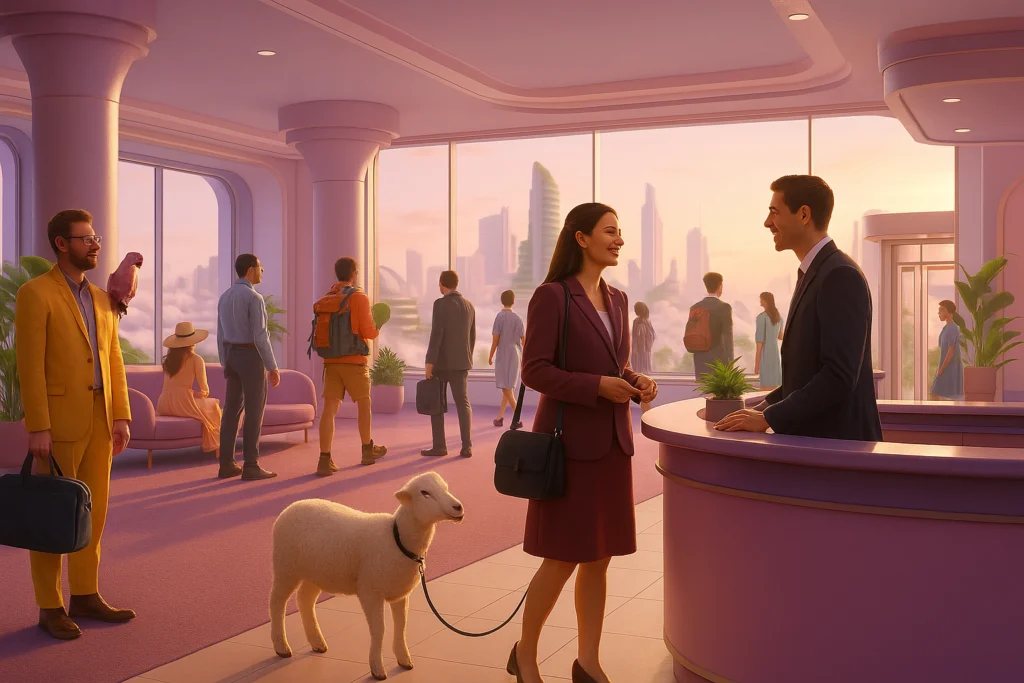
By 2026, the hotel industry has undergone a fundamental metamorphosis. Data is no longer a historical artifact stored in quarterly reports or static spreadsheets; it has become the lifeblood of daily operations. In the modern hospitality landscape, hotels are functioning less like traditional service providers and more like dynamic, living systems where every interaction, search, and click acts as a vital signal for the next business move.
The industry’s transformation is not defined by the sheer volume of information collected—most properties already possess an abundance of data—but by the architecture of connectivity. Success today is determined by how effectively a hotel can synthesize disparate data points into actionable intelligence, turning static information into a powerful engine for growth.
Main Facts: The New Hospitality Paradigm
The core shift in 2026 lies in the transition from reactive management to real-time agility. Previously, revenue meetings were scheduled monthly, and pricing decisions were often based on historical averages that ignored the volatility of the current market. Today, these decisions occur in real-time, often automated by sophisticated machine learning models that process bookings, cancellations, website behavior, guest sentiment, and macro-pricing signals simultaneously.
The properties currently outperforming their competitors are not necessarily the ones with the largest footprints or the most iconic locations. They are the organizations that have mastered the "data-action loop." By reducing decision cycles from weeks to hours, these hotels have achieved a level of responsiveness that allows them to thrive even in unpredictable economic climates.
Chronology of Transformation
The journey to the 2026 data-centric model did not happen overnight. It was a phased evolution of technological integration and cultural shifts:
- 2020–2022 (The Awareness Phase): The industry grappled with fragmented systems. Data existed in silos—the Property Management System (PMS) didn’t talk to the Customer Relationship Management (CRM) tool, and marketing teams operated on intuition rather than empirical evidence.
- 2023–2024 (The Integration Phase): Hotels began prioritizing the "single source of truth." The rise of the Customer Data Platform (CDP) allowed for the consolidation of guest profiles, finally breaking down the barriers between sales, marketing, and operations.
- 2025 (The Automation Phase): AI-driven tools began automating routine tasks. Revenue managers stopped spending hours on manual rate adjustments, shifting their focus toward high-level strategy and market positioning.
- 2026 (The Intelligent Ecosystem): Data-driven decision-making is now the standard. Every department—from housekeeping to the front desk—operates with real-time visibility into guest intent and demand patterns.
Supporting Data: The ROI of Connectivity
The financial implications of this shift are quantifiable. According to recent industry analysis, hotels that have adopted a centralized CDP architecture have seen up to a 25 percent increase in marketing efficiency. This efficiency is driven by the ability to move away from "spray and pray" mass marketing toward hyper-personalized engagement.
Furthermore, the integration of real-time segmentation has allowed hotels to optimize their Average Daily Rate (ADR) far more effectively. By understanding that two guests booking the same room type may have wildly different price sensitivities and lifetime values, revenue managers can tailor offers that increase conversion rates without sacrificing brand equity or falling into the trap of unnecessary discounting.
Official Responses and Strategic Perspectives
Industry leaders emphasize that technology is only half the battle. "Creating a smarter hotel requires more than just high-end software," notes one industry analyst. "It requires a fundamental shift in mindset. When data becomes the primary reference point, teams stop relying on past habits. They gain the confidence to act on signals without waiting for long, archaic approval chains."
This cultural shift is essential for internal alignment. A major challenge in the early 2020s was the "silo effect," where the revenue team would see high demand while the marketing team, looking at different data, would see falling conversion. Today’s unified data environment creates a single version of reality, ensuring that all departments are pulling the organization in the same direction.
Real-Time Segmentation: Beyond Demographics
Traditional segmentation based on rigid labels like "leisure," "corporate," or "group" has become obsolete. In 2026, segmentation is fluid and behavior-based.
A guest’s profile is no longer a static document; it is a living entity that updates in response to every touchpoint. Whether a guest is browsing on a mobile device at 2:00 AM or interacting with a specific loyalty promotion, the system recognizes the intent. This allows hotels to align value with specific needs instantly. By treating guests as individuals rather than averages, hotels are seeing significant improvements in customer lifetime value (CLV) and guest loyalty.
Forecasting and Dynamic Pricing: The Predictive Edge
Modern forecasting has moved beyond the spreadsheet. By 2026, predictive models act as early-warning systems. They absorb external factors—such as local events, market trends, and even search demand—to predict occupancy shifts weeks before they materialize in the booking engine.
This leads to a more nuanced approach to dynamic pricing. Pricing is no longer a simple exercise of increasing rates during high occupancy. It now incorporates demand elasticity, channel cost, and the specific booking intent of the guest. When the system detects high-value, low-sensitivity demand, it can protect inventory, while simultaneously automating adjustments to capture price-sensitive segments during softer periods.
Implications for the Future of Operations
The most significant implication for hotels in 2026 is the necessity of a holistic data management strategy. Connectivity is the defining feature of a modern hotel. If a hotel’s reservation system, marketing platform, and guest engagement tools do not "speak" to one another, the data is essentially noise.
The Role of the CDP
The Customer Data Platform (CDP) has emerged as the foundational layer of this strategy. By acting as the connective tissue, a CDP like the one offered by TrustYou allows hotels to:
- Unify Guest Profiles: Consolidating data from all channels into one 360-degree view.
- Enable Personalization: Tailoring the guest experience from pre-arrival to post-stay.
- Drive Efficiency: Reducing the manual labor required to manage complex data sets.
Governance and Trust
With the power of data comes the responsibility of governance. A successful data-driven culture requires clear ownership and clean data. When teams understand what the numbers represent—and when they trust the integrity of those numbers—the transition from "guessing" to "knowing" becomes seamless.
Conclusion: The Path to Sustainable Growth
The future of the hotel industry is not about replacing human intuition with machines, but about augmenting human expertise with the precision of data. By leveraging real-time segmentation, predictive forecasting, and intelligent dynamic pricing, hotels are building a foundation for sustainable growth that is resilient to market volatility.
The winning strategy for 2026 is clear: connect your data, trust your insights, and act with speed. In an era where the guest experience is defined by relevance and timeliness, those who master the art of data-driven decision-making will not only survive—they will define the new standard of hospitality excellence. As the industry continues to evolve, the ability to turn raw information into meaningful, guest-centric action will remain the ultimate competitive advantage.


 Rifan Muazin
 Evan Lee Salim