Muslim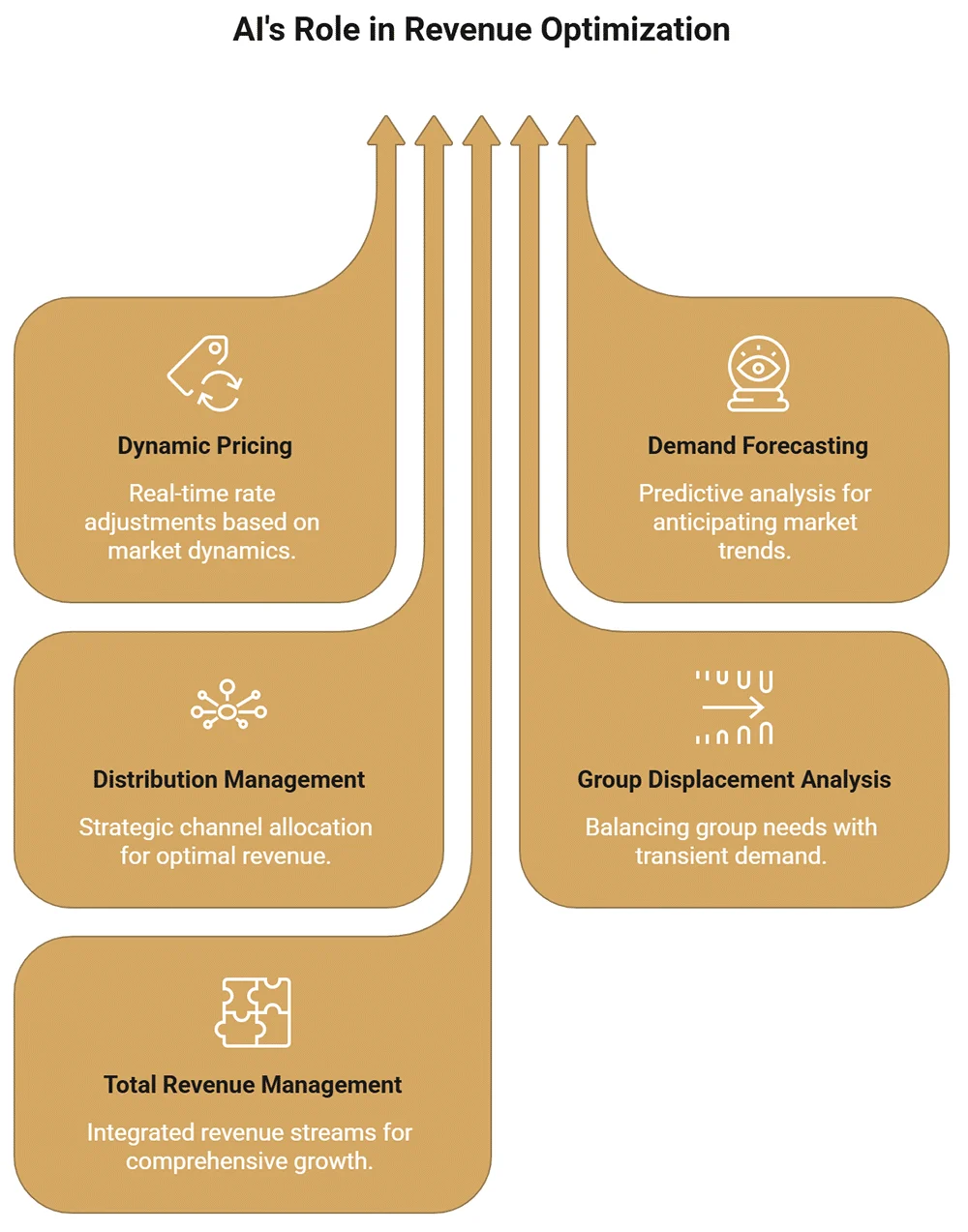
In the rapidly evolving landscape of hospitality technology, a fundamental shift is underway. For decades, the hotel revenue management discipline has relied on Revenue Management Systems (RMS) that serve as sophisticated advisors, providing data-driven recommendations that human analysts then review, tweak, and execute. However, the emergence of AI agents marks a transition from "advisory" to "agentic" workflows—systems that do not just recommend, but perform.
As hoteliers face increasing pressure to respond to market volatility in real-time, AI agents are becoming a strategic necessity. These software systems, capable of executing complex, multi-step tasks with minimal human intervention, are poised to redefine the daily operations of revenue teams worldwide.
The Core Shift: From Copilots to Autonomous Agents
To understand the current technological leap, one must distinguish between the tools of the past and the agents of the future. A standard RMS provides insights, forecasting, and pricing suggestions based on historical data and market demand. A chatbot, conversely, is a conversational interface designed to answer questions. An AI agent sits in a different category entirely: it is a software entity with a defined objective—such as maximizing Revenue Per Available Room (RevPAR) over a 90-day window—and the autonomy to plan and execute the necessary tasks to reach that goal.
The agentic shift is characterized by a transition in the revenue manager’s role. In a traditional setup, the manager is a "reviewer of recommendations." In an agent-driven environment, the manager becomes an "architect of boundaries" and an "auditor of outcomes."
The Chronology of Adoption
The evolution of revenue technology has been a steady march toward automation, but the acceleration seen today is unprecedented:
- The Predictive Era (1990s–2010s): Early RMS platforms brought mathematical rigor to forecasting, enabling hoteliers to move beyond manual spreadsheets.
- The Integration Era (2010s–2023): Platforms began integrating PMS data with channel managers and rate shoppers, creating a "single source of truth."
- The Agentic Era (2024–Present): The focus has shifted from data aggregation to "workflow execution." AI agents are now being engineered to connect disparate systems, monitor competitor moves, adjust pricing within guardrails, and generate performance reports without requiring a human to click "confirm."
Supporting Data: The Global AI Landscape
The hospitality industry is not acting in a vacuum. According to McKinsey’s Global Survey on AI, 62% of organizations across all sectors are currently experimenting with or actively deploying AI agents. Hospitality is tracking this trajectory closely, as companies behind established revenue management platforms began embedding agentic capabilities into their software suites as of 2026.
Despite this excitement, adoption remains in the early stages. McKinsey and Skift’s joint research indicates that while 90% of travel executives use generative AI in some capacity, only 2% report that agentic AI—autonomous execution—is currently widespread across their organizations. This gap between interest and implementation highlights the "pilot trap," where many projects remain in testing phases due to a lack of rigorous governance.
Which Revenue Jobs Should AI Agents Handle First?
For hoteliers looking to implement this technology, the goal should be to identify high-frequency, data-heavy, and easily measurable workflows. The most effective early use cases include:
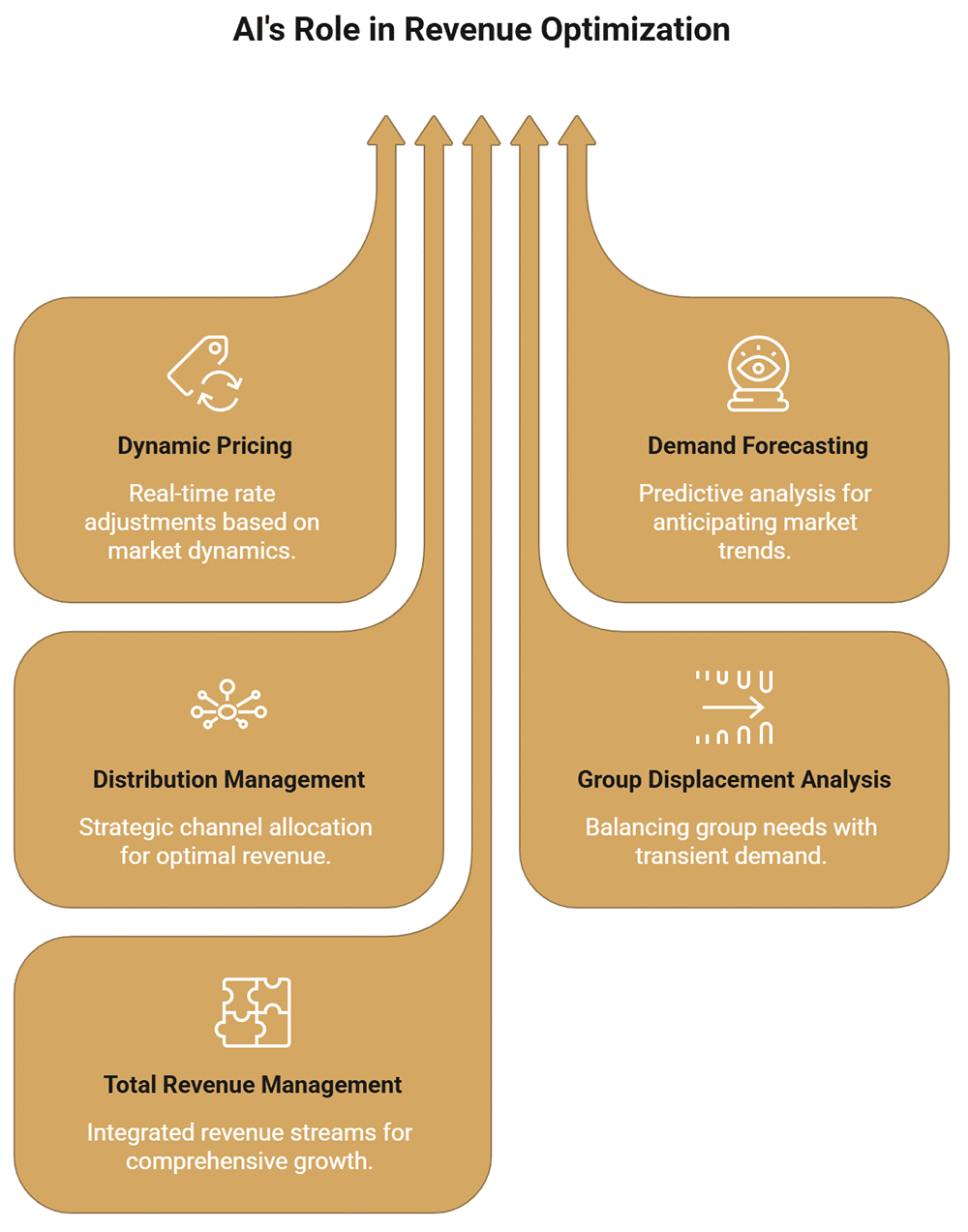
- Overnight Competitive Monitoring: Agents can scan competitor rate changes 24/7, flagging significant shifts that occur while the revenue team is offline.
- Dynamic Pricing Adjustment: Within strictly defined rate floors and ceilings, agents can adjust "Best Available Rates" (BAR) to capture demand surges or mitigate low-pickup trends.
- Forecast Refinement: When real-time pickup data deviates from historical patterns, agents can automatically recalibrate demand forecasts, ensuring the RMS remains accurate.
- Variance Summaries: Agents can aggregate data from the PMS, booking engine, and marketing platforms to draft daily performance reports, saving analysts hours of manual compilation.
- Parity Audits: Agents can consistently scan for discrepancies across direct channels, OTAs, and metasearch engines, alerting staff only when a true violation occurs.
Governance and Risk Management: The "Autonomy Ladder"
The primary risk of agentic AI is that it can scale errors just as efficiently as it scales successes. If an agent misinterprets a city-wide event or reacts too aggressively to a competitor’s temporary sale, the financial impact can be significant.
To manage this, industry experts recommend the Revfine Agent Autonomy Ladder, a framework that defines the degree of human oversight required for any given task.
- Level 1 (Reporting): The agent provides data and highlights anomalies; the human makes all decisions.
- Level 2 (Advisory): The agent proposes specific actions; the human reviews and approves them.
- Level 3 (Supervised Execution): The agent executes actions within narrow, pre-set constraints, with the human auditing the results daily.
- Level 4 (Full Autonomy): The agent manages the entire workflow; the human only intervenes in the case of system-generated exceptions.
Establishing Guardrails
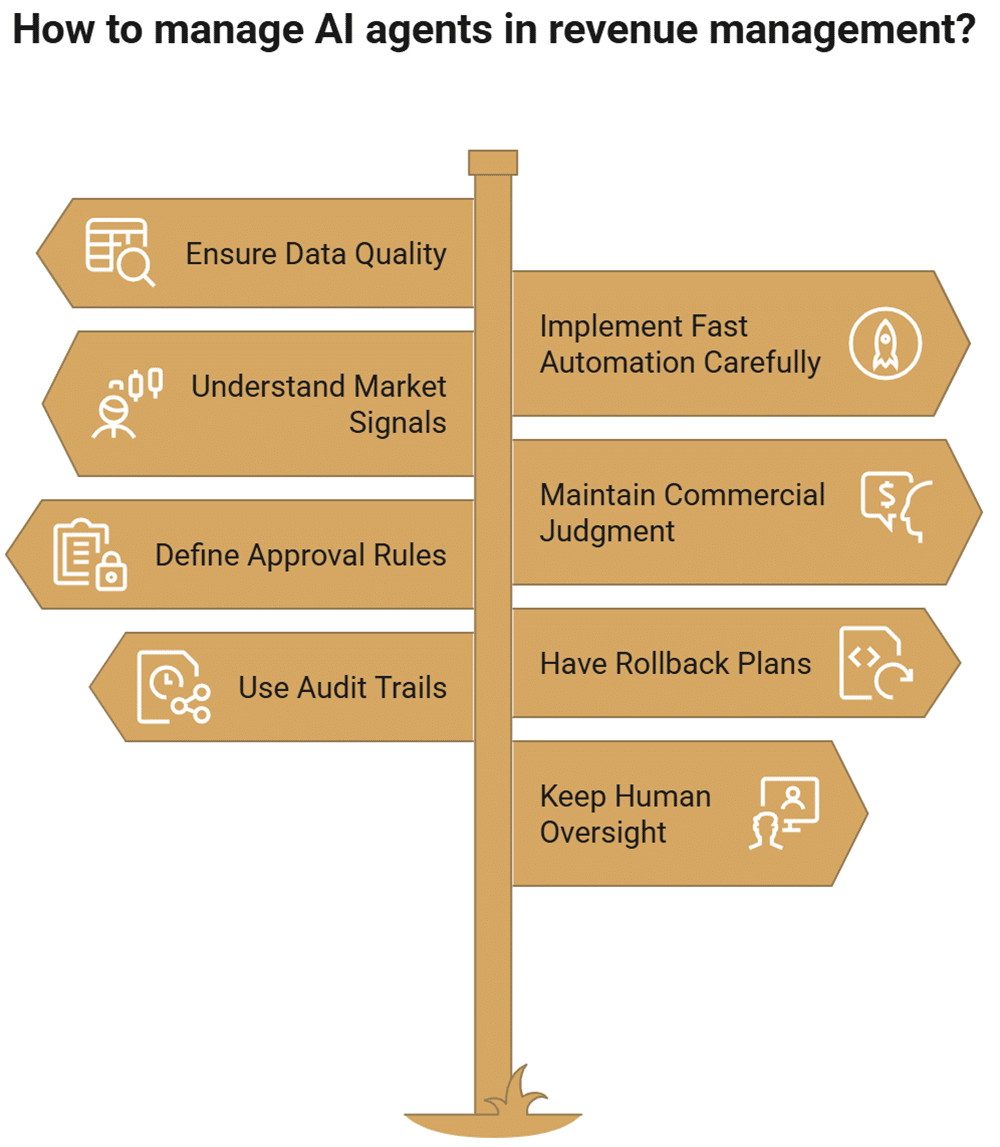
Governance is where AI projects live or die. Before granting an agent access to your pricing engine, three controls must be established:
- Hard Guardrails: Absolute rate floors, ceilings, and a maximum allowable percentage change per day that no instruction can override.
- Source Traceability: Every action taken by the agent must be logged with the specific signal or data point that triggered it.
- The Rollback Plan: A "kill switch" mechanism that allows the revenue team to revert to the previous day’s rates across all channels within minutes should an anomaly occur.
Implications for Independent Hotels
One of the most persistent myths in hospitality is that AI is reserved for large chains with deep pockets. In reality, independent hotels have a distinct advantage: the ability to design lean, agile workflows.
A boutique property in a city like Porto or New York does not need a data science department to benefit from AI. Instead, they should treat the AI agent as a "narrow commercial assistant." For a 50-room hotel, starting with a simple, daily pickup report generated by an agent can save a General Manager hours of work. The key is to start small, measure the "acceptance rate" of the agent’s suggestions, and gradually increase autonomy only after trust is earned through consistent performance.
Future Skills: What Revenue Managers Must Learn
As Massimiliano Terzulli of the Franco Grasso Revenue Team notes, "Anyone choosing to work in this field will need to have a strong familiarity with AI—understanding how it ‘thinks,’ what data it takes into account, where it can fail, and where it requires more training."
The profile of a successful revenue manager is shifting from a data-entry specialist to a high-level commercial strategist. Future-ready revenue professionals will need to master:
- Prompt Engineering: The ability to provide clear, context-rich instructions to AI agents.
- Algorithmic Literacy: Understanding the logic behind the agent’s decisions to identify when the model and market reality have diverged.
- Systemic Thinking: Mapping how a pricing change in one channel impacts the overall brand position, guest mix, and channel profitability.
Conclusion: The Path Forward
The integration of AI agents into hotel revenue management is not a question of "if," but "when." The winners in this new era will be the hotels that prioritize data quality, establish clear governance frameworks, and view AI as a tool to amplify, rather than replace, human expertise.

As Chris Crowley, Chief Revenue Officer at Duetto, suggests, the democratization of these tools will eventually allow properties of all sizes to benefit from sophisticated revenue science. However, until that maturity is reached, the burden of success remains with the hoteliers who choose to treat AI not as a "set-and-forget" solution, but as a collaborative partner in a structured, audited, and ever-evolving commercial strategy.
By focusing on the "readiness checklist"—ensuring clean data mapping, defining clear approval owners, and maintaining a robust rollback process—hotels can navigate the risks of the agentic shift and capture the significant efficiency gains that lie ahead. The future of revenue management is not about working harder; it is about building systems that do the heavy lifting while the human team focuses on the strategy that drives the bottom line.


 Ammar Sabilarrohman
 Rifan Muazin