 Asep Darmawan
As the hospitality industry moves deeper into 2026, the operational landscape has fundamentally shifted. Hoteliers are no longer merely competing on location or amenities; they are competing on the speed, intelligence, and agility of their digital infrastructure. Faced with persistent labor shortages, skyrocketing guest expectations for hyper-personalized contactless service, and the relentless pressure to manage real-time data across hundreds of digital channels, property leaders are reaching a pivotal juncture.
The decision to replace or upgrade a property management system (PMS) is no longer a routine IT task. It is a high-stakes, multi-year strategic commitment. Choosing the right system today locks a property into a technological trajectory for the next five to ten years—a period that will likely define the long-term viability and profitability of the asset.
Defining the Core: The PMS as a Strategic Engine
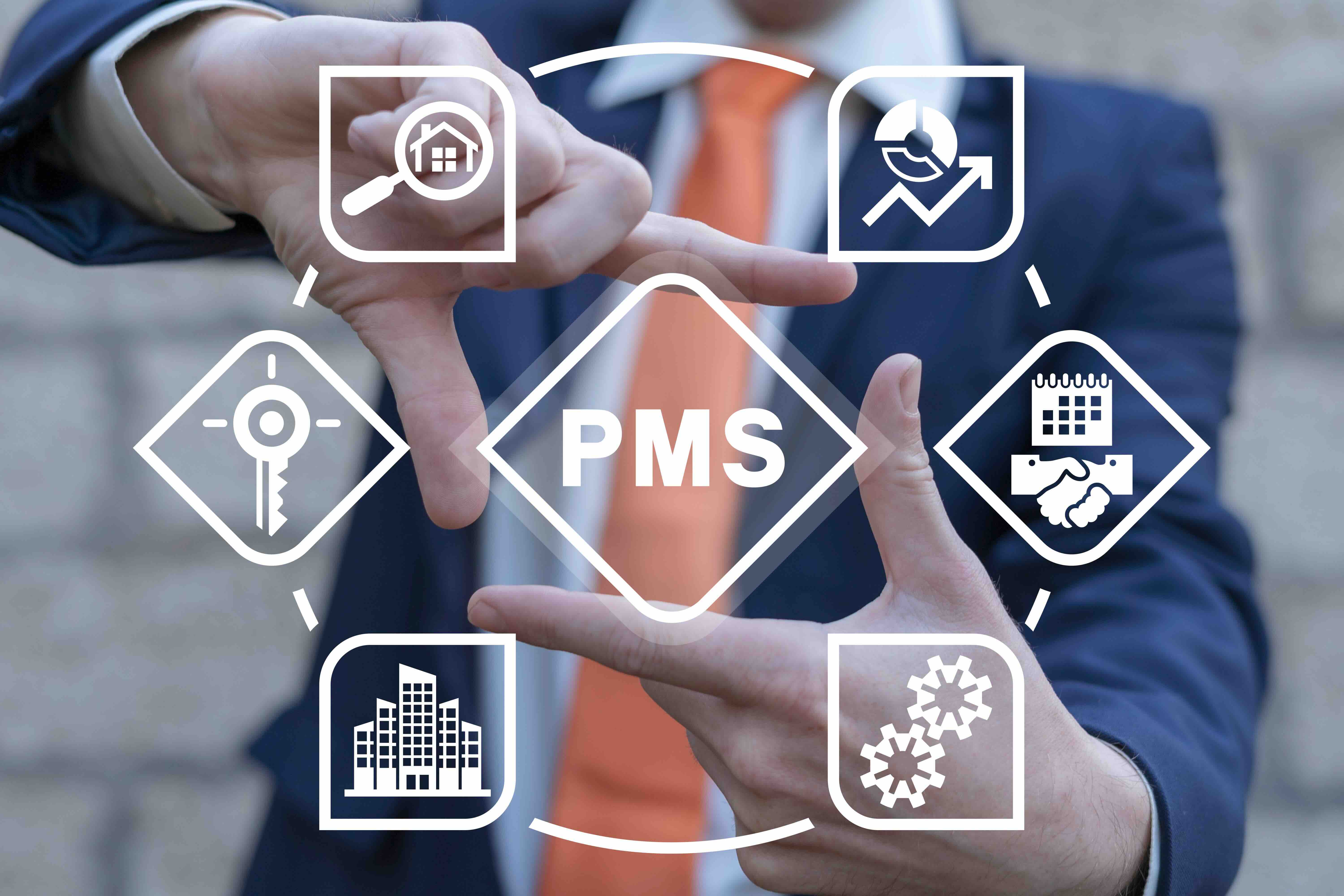
A property management system (PMS) is the heartbeat of a modern hotel. It serves as the "operating system" and the ultimate single source of truth, weaving together distinct departments—front office, housekeeping, revenue management, and point-of-sale (POS)—into one cohesive, responsive ecosystem.
A comprehensive PMS does more than record reservations; it functions as the central brain of the hotel. Its primary mission is to eliminate crippling data silos and empower staff to move away from administrative drudgery, allowing them to focus on what matters most: the guest experience. By automating manual entries and synchronizing inventory across online travel agencies (OTAs) in real-time, a modern PMS ensures that a room sold on a third-party site is instantly removed from the global inventory, preventing overbookings and revenue leakage.
The Chronology of PMS Evolution
To understand the current market, one must look at how we arrived here:
- The 1970s–1990s (The Era of Physical Hardware): The first PMS platforms were born from a need for basic reservation tracking. These were massive, monolithic on-site installations requiring dedicated server rooms, climate-controlled environments, and specialized IT staff.
- The 2000s–2015 (The Rise of Connectivity): As the internet matured, legacy systems were "bolted on" with web interfaces. While this allowed for basic online connectivity, the underlying architecture remained trapped in local hardware, creating the "night audit" bottleneck—a labor-intensive process that effectively paralyzed operations for hours each night.
- 2016–2023 (The Cloud Migration): The industry saw a massive migration toward SaaS-based cloud models. This allowed for browser-based access and signaled the death of the server closet for independent properties.
- 2024–2026 (The Era of Intelligence & Mobility): Today, we are in the era of the "Autonomous Hotel." A modern PMS is no longer just a database; it is an AI-driven interface that integrates IoT, mobile-first workflows, and open-API connectivity to adapt to the guest’s needs in real-time.
The Five Archetypes of PMS Deployment
When evaluating potential systems, decision-makers must look past surface-level UI features and examine the deployment model. The choice here dictates the total cost of ownership (TCO) and the ability to pivot as technology evolves.

1. Cloud-Based (SaaS) PMS
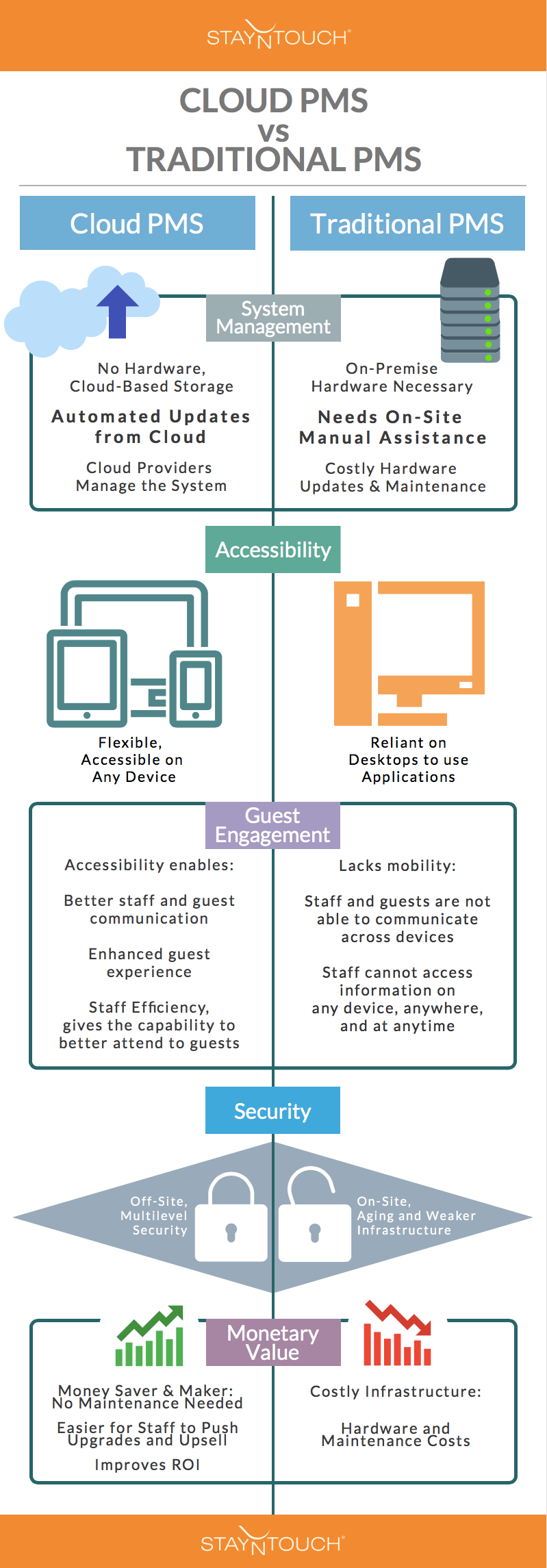
The gold standard for the modern hotel. All operational data is hosted on secure, vendor-managed servers. This model is essential for properties that need to synchronize room availability across hundreds of OTAs simultaneously. By removing the need for local hardware, cloud-based systems offer lower upfront capital expenditure (CapEx) and shift costs to predictable, subscription-based operational expenses (OpEx).
2. On-Premise (Legacy) PMS
While increasingly rare in new installations, legacy systems persist in large chains that have spent decades building proprietary data structures. While they offer independence from internet connectivity—a boon for remote, off-grid locations—they suffer from high maintenance costs, rigid structures, and an inability to integrate with modern third-party apps.

3. Mobile-First PMS
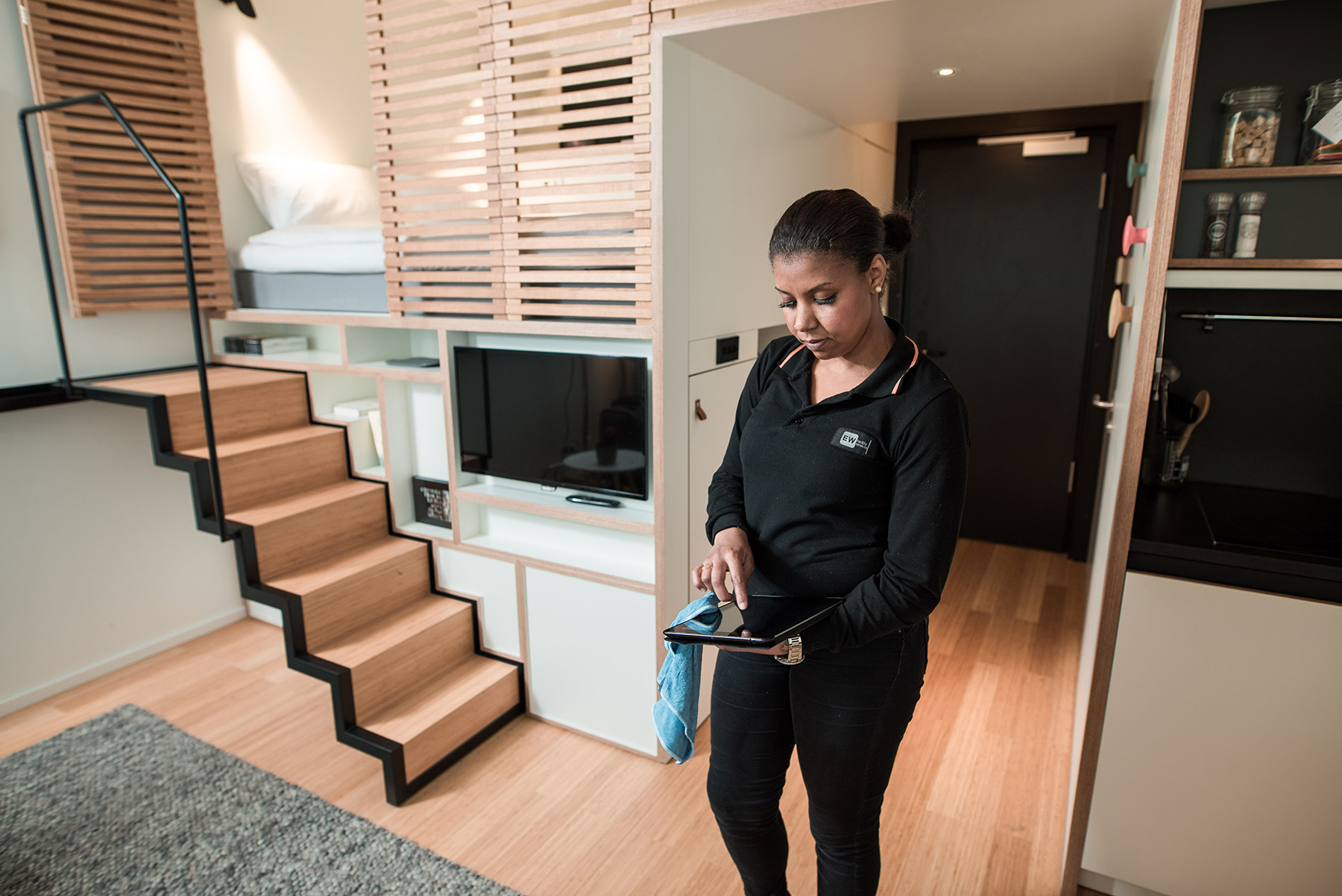
These systems, such as Stayntouch, are built specifically for tablets and mobile devices. They are designed to "break the desk," allowing staff to check in guests, inspect rooms, or handle maintenance requests from anywhere on the property. This is a critical advantage in an era where personalized, mobile-centric service is the expectation.
4. API-First (Open-System) PMS
In 2026, the "all-in-one" suite is often outperformed by "best-of-breed" ecosystems. An API-first PMS acts as a central hub, allowing hoteliers to plug in top-tier tools for revenue management, guest messaging, and automated housekeeping without sacrificing data integrity.
5. Hybrid PMS
A middle-ground solution that stores core data locally for redundancy while utilizing the cloud for reporting and integrations. This is often the bridge for large, established properties that are slowly transitioning away from legacy hardware.
Supporting Data: Why Modernization Matters
The industry is currently facing a "fatigue crisis." According to recent data, hotels utilizing legacy systems spend upwards of 25% more time on manual administrative tasks compared to their cloud-native counterparts.
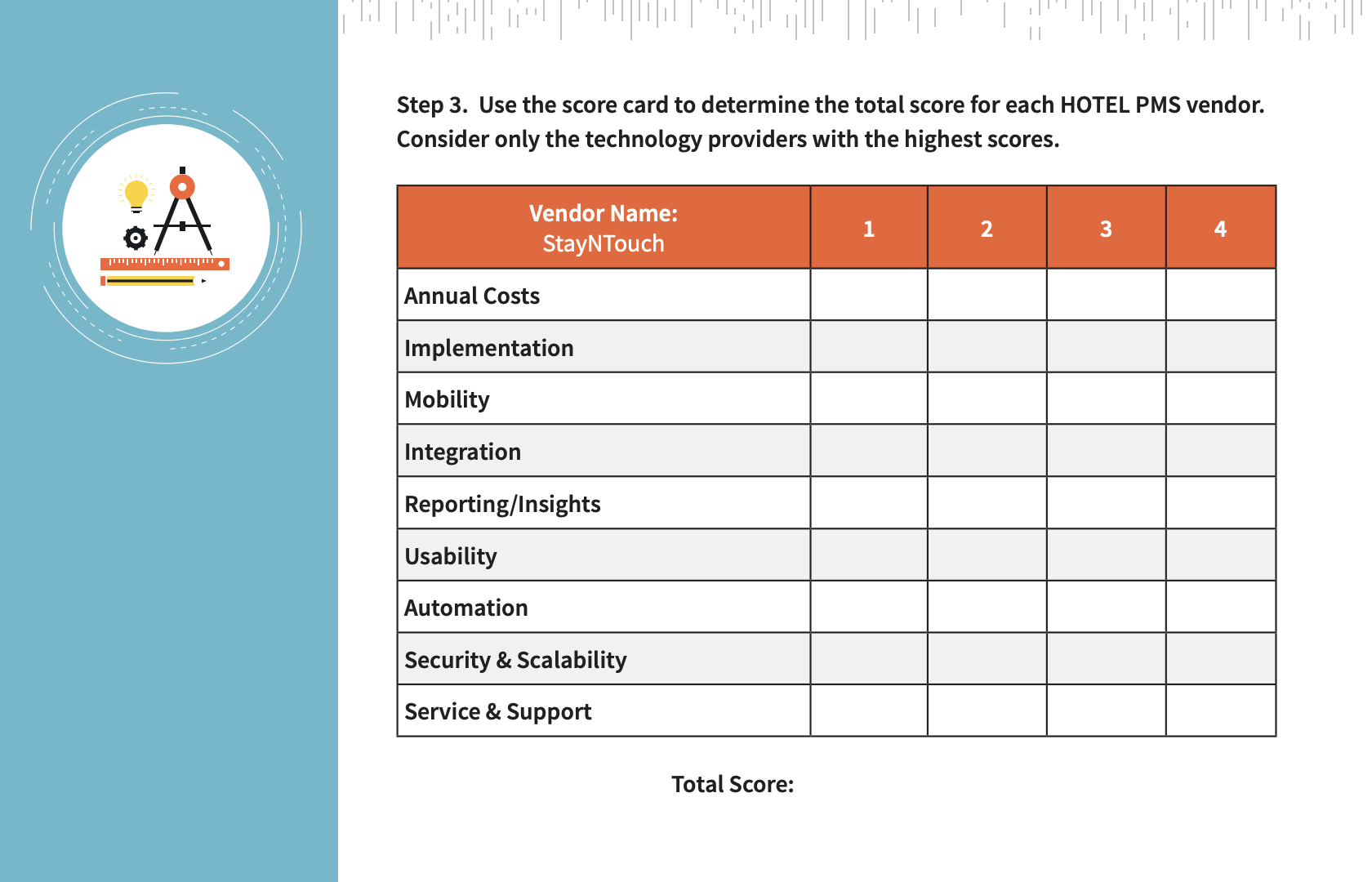
Furthermore, the integration of IoT and AI is yielding measurable results:
- Energy Efficiency: By linking the PMS to IoT-enabled thermostats, properties are seeing a 15–20% reduction in energy costs.
- Operational Velocity: Mobile-first systems have been shown to reduce check-in times by over 60%, significantly increasing guest satisfaction scores (GSS).
- Data Accuracy: API-driven synchronization eliminates the "overbooking gap," which historically caused a 2–3% revenue loss in mid-sized properties due to communication delays between OTAs and the front desk.
Implications for Future-Proofing
The implications of your current PMS decision are far-reaching. If you choose a system that is not "future-ready," you are effectively choosing to be left behind by competitors who are leveraging AI to automate the mundane and elevate the personal.

The Rise of AI-Driven Operations
In 2026, the conversation has shifted from "what is AI?" to "how is it driving profit?" Over 80% of hoteliers are expanding their use of AI. Modern PMS platforms are now using machine learning to:
- Predictive Staffing: Analyzing booking patterns to optimize labor schedules before the shifts even begin.
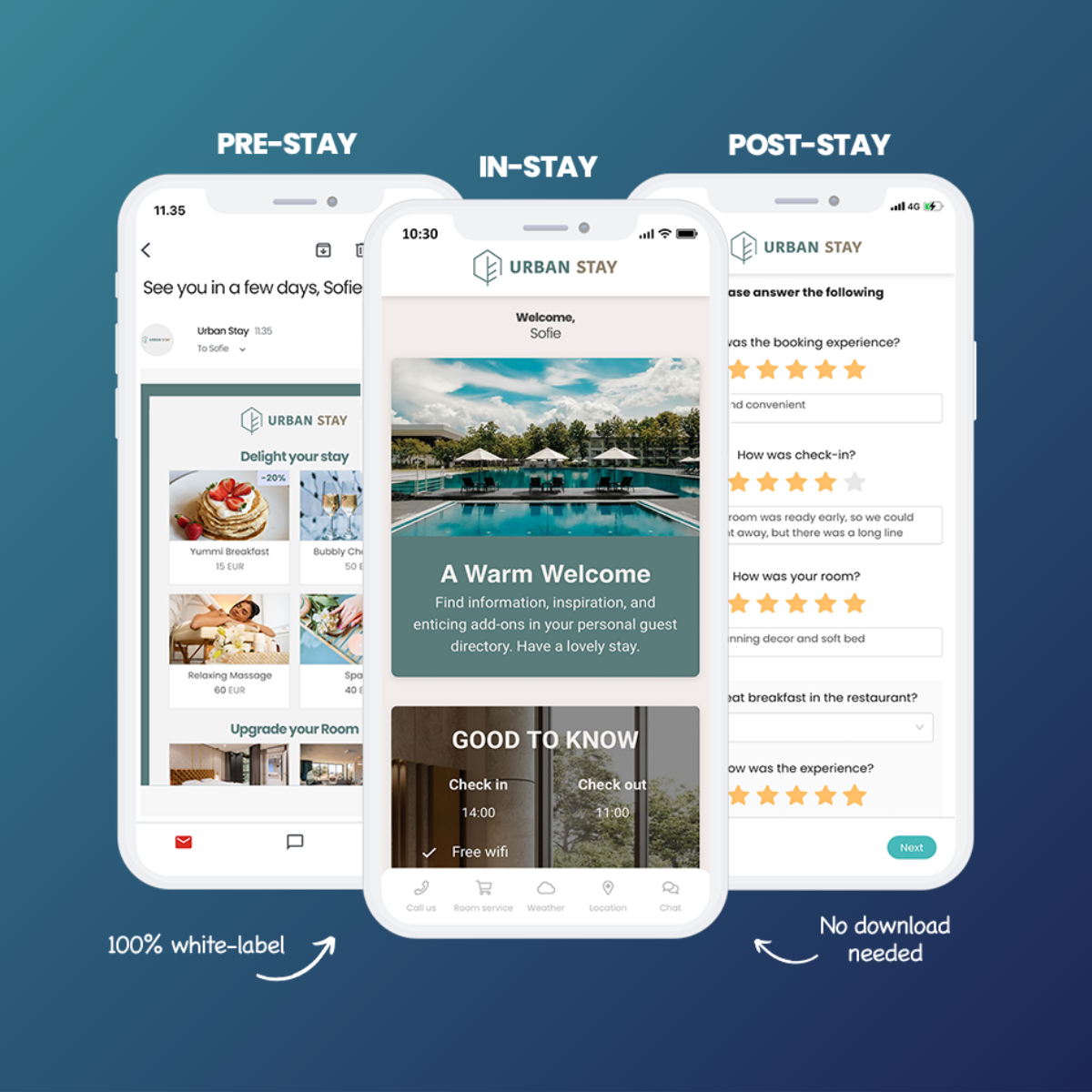
- Hyper-Personalization: Utilizing guest data to trigger automated, personalized offers—such as early check-in or specific room amenities—based on past stay history and loyalty status.
- Autonomous Audits: The dreaded night audit is being replaced by real-time, background data reconciliation, freeing staff to focus on the guests arriving the next morning.
Official Guidance for Decision-Makers
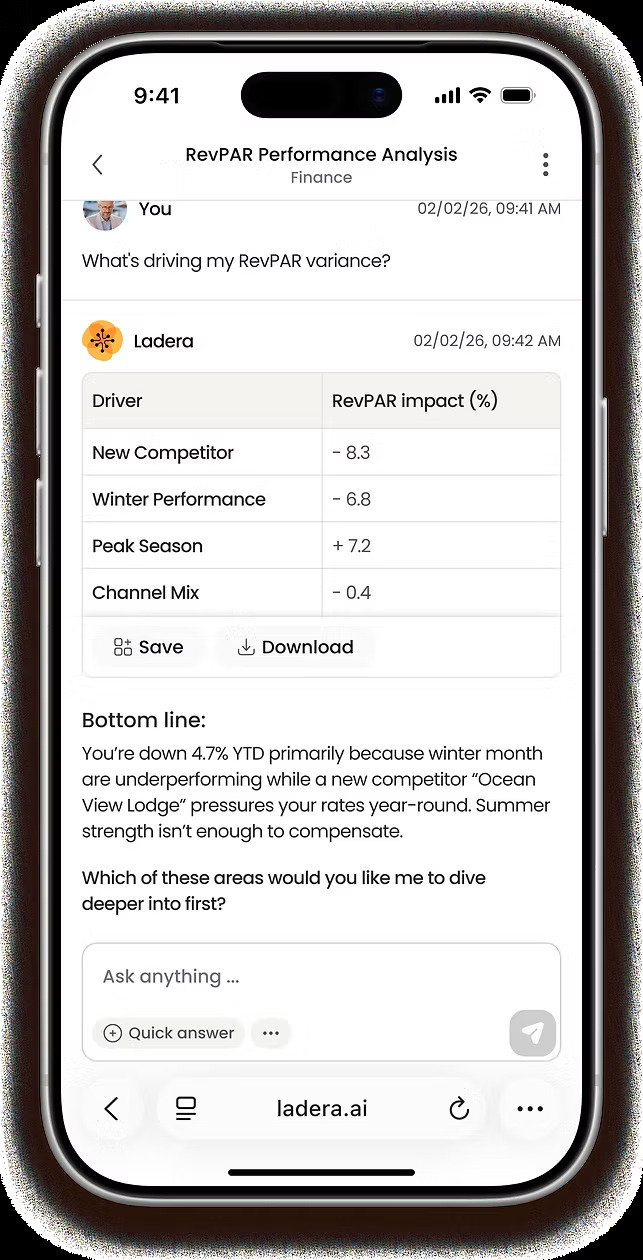
When evaluating your next PMS, do not rely on a brochure. Use a rigorous scorecard approach. Evaluate your potential partners based on:
- Scalability: Can the system grow from one property to a portfolio of fifty without a massive infrastructure overhaul?
- API Openness: How quickly can you integrate a new, innovative tool into the stack?
- Support Ecosystem: Does the vendor provide 24/7 technical support, or are you left to manage the system internally?
- Security/Compliance: Does the vendor meet the latest PCI-DSS and global data privacy standards?
Conclusion: The Path Forward
The hotel industry of 2026 demands a technology stack that is as dynamic as the guests it serves. A legacy system is no longer just a cost center—it is a competitive liability. By embracing a cloud-native, mobile-first, and API-driven PMS, hoteliers can dismantle the walls that have historically separated their staff from their guests.
As you look toward the next five to ten years, remember that your PMS is not just software; it is the infrastructure upon which your brand reputation is built. Choosing the right partner today is the single most important step in ensuring that your property remains not just relevant, but a leader in the global hospitality market.
For those ready to modernize, the time for evaluation is now. Whether you are a small boutique or a global chain, the transition to a modern PMS is the bridge between surviving the current operational bottlenecks and thriving in the next generation of guest service.


 Rifan Muazin
 Evan Lee Salim