Rifan Muazin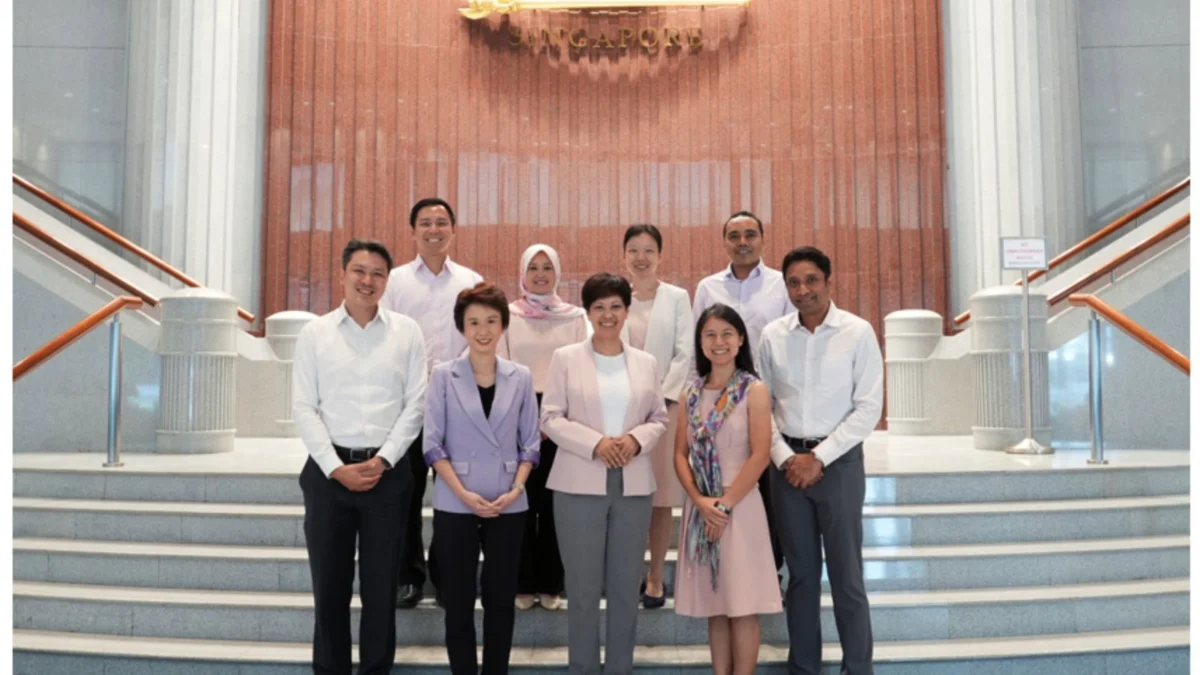
In a decisive move to address the nation’s demographic challenges, the Singaporean government has officially inaugurated the Marriage and Parenthood (M&P) Reset Workgroup. Tasked with navigating the complexities of a society where marriage and childbirth are increasingly delayed, the newly formed body represents a whole-of-government commitment to fostering an environment where starting a family is not only a viable choice but a supported societal aspiration.
This strategic initiative comes at a critical juncture. With Singapore’s total fertility rate (TFR) plummeting to a record low of 0.87 in 2025—a significant decline from 0.97 in 2024—the urgency of the situation cannot be overstated. The Workgroup, chaired by Minister in the Prime Minister’s Office Indranee Rajah, is tasked with examining the structural and cultural impediments that contribute to this downward trend.
The Demographic Imperative: Main Facts and Context
The decision to establish the M&P Reset Workgroup follows a series of parliamentary inquiries regarding the state of maternal health and family planning in Singapore. Minister Indranee Rajah, speaking on behalf of Prime Minister and Minister for Finance Lawrence Wong, highlighted a fundamental shift in the Singaporean life cycle: both men and women are choosing to enter marriage and parenthood later than in previous decades.
While this trend reflects evolving personal and professional priorities, it carries profound implications for the nation’s long-term sustainability. The primary concerns identified by the government include:
- Maternal Health Risks: Pregnancies occurring after age 40 are statistically associated with a higher incidence of maternal and fetal complications.
- Fertility Challenges: Natural conception rates decline with age, leading to a greater reliance on Assisted Reproductive Technology (ART).
- Workforce Dynamics: Delayed family formation often overlaps with the peak career-building years, creating friction between professional ambition and parental responsibilities.
The Workgroup is not merely an advisory body; it is designed to be a catalyst for a "whole-of-society" reset. By integrating insights from across nine key ministries, the government aims to move beyond traditional financial incentives and address the holistic ecosystem of parenthood—ranging from workplace culture to the cost of living and healthcare accessibility.
Chronology of the Shift
The formation of the Workgroup follows years of incremental policy adjustments that have struggled to curb the declining TFR.
- 2023–2024: Mounting public discourse regarding the "cost of living" and the "stress of modern parenting" dominates parliamentary sessions, leading to calls for a more comprehensive review of existing policies.
- Early 2025: Official data confirms the TFR has dipped to 0.87, signalling that previous measures—such as increased Baby Bonus grants and paternity leave enhancements—require a more structural, non-monetary rethink.
- Mid-2025: The M&P Reset Workgroup is officially formed, bringing together a cross-functional team of ministers and senior parliamentary secretaries to oversee a comprehensive policy review.
- The Future Horizon: The Workgroup is currently in the initial phase of its review, engaging with tripartite partners, businesses, and community stakeholders to develop actionable policy recommendations.
Supporting Data and Healthcare Realities
The medical dimension of this crisis is a top priority for the Ministry of Health (MOH). As the average age of first-time mothers in Singapore continues to rise, the healthcare infrastructure is undergoing a parallel transformation to manage "high-risk" pregnancies.
Public hospitals have already begun scaling up specialized care facilities, including advanced Neonatal Intensive Care Units (NICUs), to provide the necessary medical support for older mothers and their newborns. However, the government acknowledges that medical intervention is only one part of the solution.
Minister of State for Health, Rahayu Mahzam, emphasized the deeply personal nature of fertility struggles. The Workgroup is now reviewing the funding structures for fertility health services, with a specific focus on making fertility treatments more accessible and reducing the emotional and financial burden on couples. The aim is to ensure that those who decide to start a family later in life are not met with insurmountable institutional barriers.
The "Whole-of-Society" Approach: Official Responses
The strength of the M&P Reset Workgroup lies in its cross-functional composition. By involving representatives from across the cabinet, the government is ensuring that the "reset" is felt in every sector of daily life.
Caregiving and Preschool Accessibility
Minister of State Goh Pei Ming (Ministry of Social and Family Development) has underscored the need for a full review of preschool accessibility. The focus here is on "assurance"—ensuring that parents feel confident in the quality and affordability of childcare, which remains a primary stressor for dual-income households.
Workplace Practices and Tripartite Norms
Perhaps the most significant hurdle identified is the "always-on" culture prevalent in many Singaporean industries. Ministers Dinesh Vasu Dash and Shawn Huang (Ministry of Manpower) are leading the push for better work-life integration.
"Workplace culture plays a significant role in supporting employees to thrive both in their careers and in life beyond work," noted SPS Shawn Huang. The Ministry of Manpower (MOM) is actively promoting the Tripartite Guidelines on Flexible Work Arrangement Requests (TG-FWAR), which provides a framework for employees to negotiate flexible hours without compromising their career trajectories or business operational needs.
Social Norms and Community Support
The government is also acknowledging that policies alone cannot create a family-friendly society. Ministers like Zhulkarnain Abdul Rahim and Goh Hanyan are focusing on the "softer" side of the issue:
- Relationship Formation: Helping singles find meaningful connections through community initiatives.
- Societal Attitudes: Changing the narrative around parenthood so that it is viewed as a valued, supported, and desirable life stage.
- Business Engagement: As Senior Minister of State Low Yen Ling pointed out, the private sector is a critical partner. From shopping malls to retail brands, businesses are being encouraged to adopt more inclusive, family-friendly designs and offerings.
Implications: A New Era for Singaporean Families?
The implications of the M&P Reset Workgroup’s formation are far-reaching. By pivoting from a "financial incentive" model to an "ecosystem support" model, the government is signalling that the status quo is no longer sufficient.
1. The Professional Pivot
If the work of the Workgroup is successful, we may see a fundamental shift in the Singaporean workplace. Flexible work arrangements could move from being a "perk" to a standard operational requirement. For HR professionals, this means a significant transformation in how performance is measured, shifting from physical presence to output-based evaluation.
2. A Shift in Healthcare Focus
The review of fertility services suggests that the government is moving toward a more proactive, rather than reactive, stance on reproductive health. By normalizing the conversation around fertility health and providing better financial support, the government hopes to alleviate the "pressure cooker" environment that many couples currently face when deciding to conceive.
3. The "Village" Mentality
Perhaps the most ambitious goal of the Workgroup is the societal reset. By engaging the community, youth, and the business sector, the government is attempting to recreate the "village" that supports parents. If successful, this could reduce the social isolation that many young parents feel, potentially leading to higher birth rates over the long term.
4. Educational Pathways
The focus on education, led by Minister of State Jasmin Lau, suggests that the government is also looking at the competitive pressures placed on children. By fostering an environment where "different pathways are valued," the Ministry of Education (MOE) aims to reduce the "parenting anxiety" that often deters couples from having more than one child.
Conclusion
The launch of the Marriage and Parenthood (M&P) Reset Workgroup is an admission that Singapore has reached a demographic crossroads. The record-low fertility rate of 0.87 is a symptom of a complex, multifaceted issue that cannot be solved by a single grant or policy update.
By examining everything from the design of neighborhood heartlands to the fine print of flexible work requests, the government is attempting to recalibrate the Singaporean dream. The success of this Workgroup will likely depend on its ability to move beyond bureaucracy and influence the hearts and minds of the citizenry. As Minister Indranee Rajah noted, the government remains committed to supporting Singaporeans through every stage of this journey, but the true "reset" will require a collective effort from employers, community leaders, and the individuals themselves.
As the Workgroup begins its extensive review, the nation watches with anticipation. The goal is clear: to ensure that in the Singapore of tomorrow, the pursuit of a career and the joys of parenthood are not mutually exclusive, but complementary pillars of a thriving, resilient society.


 Ali Ikhwan
 Neng Nana